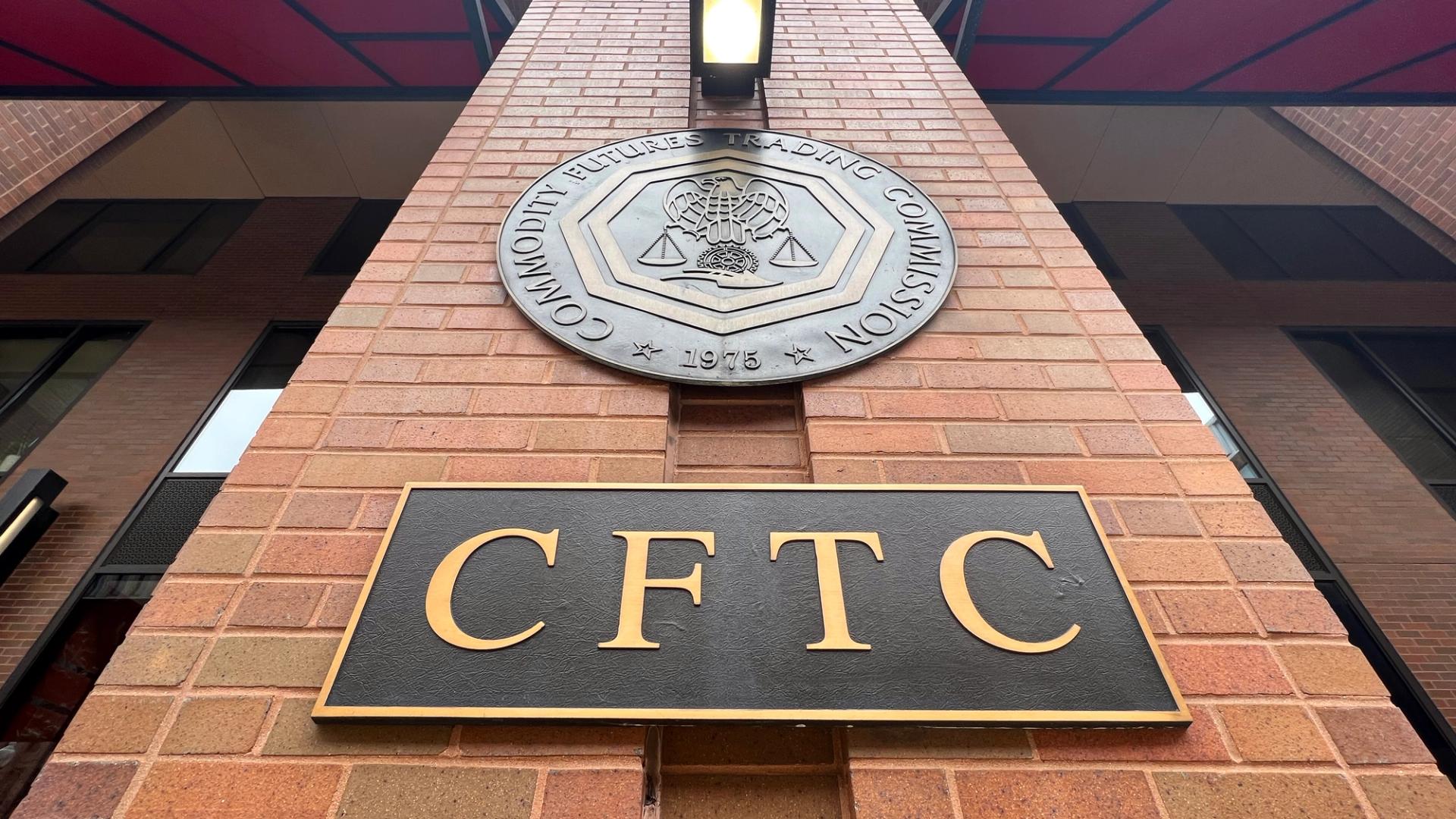
U.S. regulator warns prediction markets against cutting corners in event contracts
Analysis
Price Impact
LowThe article discusses regulatory actions by the cftc regarding prediction markets, not direct impact on major cryptocurrencies like btc or eth. while some prediction markets might use stablecoins or other crypto assets, the core issue is contract filing, which has indirect and minimal impact on the broader crypto market.
Trustworthiness
HighPrice Direction
NeutralThis news pertains to regulatory oversight of prediction markets and their contract submissions. it does not directly provide information or sentiment that would influence the price of major cryptocurrencies.
Time Effect
ShortThe impact of regulatory warnings is typically short-lived unless followed by significant enforcement actions. this advisory serves as a reminder and clarification, rather than an immediate market-moving event.
Original Article:
Article Content:
Policy U.S. regulator warns prediction markets against cutting corners in event contracts The Commodity Futures Trading Commission again issued an advisory that signals firms have been straying into cookie-cutter self-certification. By Jesse Hamilton | Edited by Nikhilesh De Jul 26, 2026, 1:00 p.m. 2 min read Make preferred on Share Share this article Copy link X icon X (Twitter) LinkedIn Facebook Email Make preferred on The U.S. Commodity Futures Trading Commission is taking issue with how prediction markets firms have sought to submit swaths of similar contracts. (Jesse Hamilton/CoinDesk) Summary Show The U.S. regulator of derivatives, the Commodity Futures Trading Commission, has advised prediction markets firms that they’re routinely stepping out of bounds when trying to set up large swaths of event contracts. The agency warned that it needs more specific information to evaluate contract submissions individually. The U.S. Commodity Futures Trading Commission, which has claimed a role as the leading regulator of prediction markets firms run by companies such as Kalshi, Coinbase, Polymarket and Crypto.com, issued an advisory on Friday reminding the businesses that they shouldn't cut corners with far-ranging contract certifications meant to encompass a wide array of events. The agency said that "broad, template-style certifications should not be submitted," marking the second time in recent months that the regulator has had to warn about overly generalized submissions. Many of the "designated contract markets" regulated by the CFTC "continue to self-certify event contracts" (in other words, prediction market contracts) as broad templates "without supplying the terms and conditions of each proposed permutation and a concise explanation and analysis with respect to the product’s terms and conditions, the underlying commodity, and the product’s compliance," the agency said. The regulator said skirting the process can undermine its ability to work out whether the firm "has supplied all information, explanation and analysis required" and has "adequately evaluated the settlement methodology, data sources, and core-principles compliance of all permutations of the contract." That said, the agency explained that "closely related event contracts may be certified as a class," citing legitimate ways to make consolidated filings with shared exhibits. The explosive growth of the event-contracts market — especially in the areas of sports bets and predicting political outcomes — is to some degree a figure-it-out-as-we-go situation, considering the relative inexperience of much of the industry and the uncertain legal footing of the CFTC. The CFTC's status as the primary regulator of prediction markets is itself still facing some legal ambiguity that the courts are expected to work out — potentially the U.S. Supreme Court at some point. While the regulator's chairman, Mike Selig, has made it an agency priority to fight a full-throated battle in state and federal courts across the country to insist the CFTC is in sole charge of overseeing event contract platforms, a large number of states have pursued the businesses on accusations of illegal sports gambling that should be overseen by the states. Also on Friday, the CFTC issued a notice to extend the regulatory status of Kraken's platform, the Kraken Derivatives Exchange, which has been under a "dormant" designation. The last trade was executed on that exchange in early 2025, and the CFTC's granting of the company's request means "allowing a registered entity to remain positioned for renewed activity." Kraken said it needed more time to evaluate its next steps after acquiring Bitnomial earlier this year. Read More: Prediction markets get tailored U.S. guidance from former foe CFTC Prediction Markets Regulation Latest Crypto News 1 Europe's high regulatory bar could spark new crypto industry M&A wave 3 hours ago 2 Shiba Inu surges 36% as South Korean traders fuel mystery rally 5 hours ago 3 Crypto exchange BitMart to shut down after nine years, BMX token crashes 58% 6 hours ago 4 Russia’s largest bank Sberbank plans crypto trading infrastructure by December 20 hours ago 5 North Korea arrests hackers accused of laundering stolen funds from country's bank via crypto 21 hours ago 6 Democratizing weather derivatives through tokenization could be crypto's most important real-world use case Jul 25, 2026 7 Robinhood Chain's real-world assets jump fivefold as tokenized stocks start trading in bigger size Jul 25, 2026 8 Senate Dems should accept the victory they won on Trump's crypto limits: White House Jul 24, 2026 9 Sam Altman-backed World Network secures $52.5 million in fresh funding to fight online AI deepfakes Jul 24, 2026 10 Institutional crypto trading platform LMAX is exploring sale, IPO Jul 24, 2026 Latest Research Crypto Flows, Share and the Selective Rotation Crypto Flows, Share and the Selective Rotation Markets repositioned since June, but Binance held share (~55% user funds, ~24% spot) and drew net inflows in early July while the tracked market saw outflows. By CoinDesk Research Jul 22, 2026 Markets repositioned since June, but Binance held share (~55% user funds, ~24% spot) and drew net inflows in early July while the tracked market saw outflows. Why it matters : Markets repositioned since June, but Binance held share (~55% user funds, ~24% spot) and drew net inflows in early July while the tracked market saw outflows. View Full Report More From Policy Europe's high regulatory bar could spark new crypto industry M&A wave Senate Dems should accept the victory they won on Trump's crypto limits: White House EU hits Russia with massive 21st sanctions package targeting $120B crypto network