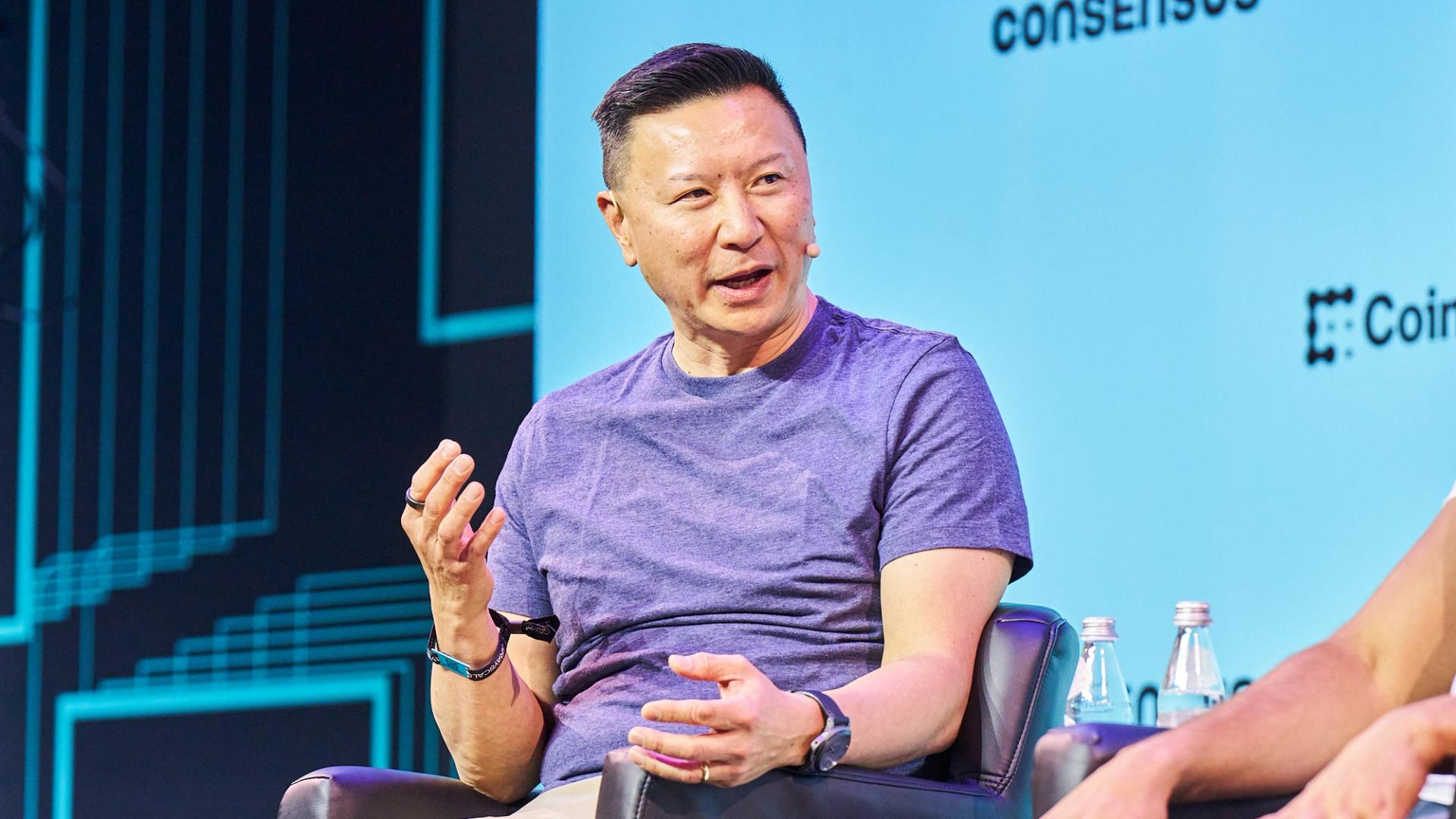
MoneyGram's CEO says blockchain works best when customers don't know it's there
Analysis
Price Impact
MedMoneygram's ceo's statement suggests a subtle but important shift in how blockchain is being integrated into traditional finance. the focus on invisible infrastructure rather than customer-facing crypto features implies a move towards broader, more seamless adoption. while not directly causing immediate price spikes, it could lead to increased institutional interest and utility for stablecoins like usdt and underlying blockchains like solana. however, the article focuses on moneygram's strategy and doesn't present new, disruptive information that would cause a high price impact on any specific coin.
Trustworthiness
HighPrice Direction
NeutralThe ceo's statement emphasizes moneygram's focus on improving existing financial infrastructure (remittances) rather than pushing speculative crypto assets. the goal is to make cross-border payments faster and cheaper for customers, with the blockchain technology operating in the background. this approach is more about operational efficiency and customer experience than direct price speculation on cryptocurrencies themselves. while it involves partnerships with networks like solana and mentions of stablecoins like mgusd, the core message is about integrating blockchain as an enabler, not a primary driver of immediate coin price appreciation. the mention of xrp is tangential, as moneygram is not explicitly stated as a direct partner with ripple for this initiative, but xrp is a significant player in cross-border payments, and any positive development in the space could indirectly influence it.
Time Effect
LongThe ceo's vision for moneygram's blockchain strategy involves a 3-5 year outlook for becoming a primary financial institution for its customers. the integration of blockchain as an underlying infrastructure is a long-term play for modernizing payments and democratizing financial services. therefore, any significant price impact from this strategy would likely be realized over an extended period as the technology matures and adoption increases.
Original Article:
Article Content:
Tech MoneyGram's CEO says blockchain works best when customers don't know it's there In an interview with CoinDesk, MoneyGram CEO Anthony Soohoo said that their blockchain strategy has evolved from early experimentation into a broader effort to modernize the company's global payments infrastructure. By Margaux Nijkerk | Edited by Cheyenne Ligon Jul 21, 2026, 1:38 p.m. 3 min read Make preferred on Share Share this article Copy link X icon X (Twitter) LinkedIn Facebook Email Make preferred on Summary Show MoneyGram CEO Anthony Soohoo said the company's blockchain strategy is focused on modernizing cross-border payments, by using blockchain infrastructure to make remittances faster, cheaper and more transparent while keeping the technology invisible to customers. While Stellar remains a core blockchain partner, MoneyGram is expanding its blockchain footprint through validator roles on Solana and Tempo and sees its MGUSD stablecoin as a way to build more financial products within its own ecosystem. MoneyGram has spent years experimenting with blockchain technology, but CEO Anthony Soohoo says the company’s latest crypto-related revelation is that it works best when customers don’t have to think about it. Speaking in an interview with CoinDesk, Soohoo said MoneyGram's blockchain strategy has evolved from early experimentation into a broader effort to modernize the company's global payments infrastructure. The remittance giant, which serves roughly 60 million active customers, sees blockchain less as a consumer-facing feature than as a way to make cross-border payments faster, cheaper and more transparent. "What you're always looking for is how to leverage technology to run your business more efficiently and effectively," Soohoo said. "The use case is what do our customers want, and how do we solve that for them?" MoneyGram's customers are primarily people sending money to friends and family abroad, making speed and cost two of the biggest priorities. Traditional cross-border payments can take days to settle and often rely on banking hours and multiple intermediaries, making the experience cumbersome and expensive. But the firm believes that blockchain can streamline that process by enabling around-the-clock settlement and lowering operating costs, saving the company hopes to eventually pass on to customers. In attempting to modernize and better meet its customers’ needs, MoneyGram has partnered with the Stellar network , which has underpinned many of the company's blockchain initiatives over the past five years. But the company has also started exploring other ecosystems : while Stellar remains a core partner, MoneyGram has also become a validator on Solana and Tempo. For MoneyGram, the immediate payoff isn't speculative crypto activity, it's replacing legacy financial rails. Today's cross-border settlement still largely depends on banking hours and weekday processing. Blockchain-based infrastructure, Soohoo argued, enables real-time settlement around the clock, reducing operational costs while improving the customer experience. "We believe if we do it right, we can achieve all three," he said, referring to helping customers save time, effort and money. Instant settlement also allows MoneyGram to lower back-office costs, savings the company hopes to eventually pass on through lower prices. Currently, MoneyGram’s fees start at $1.89 and vary depending on what country you send them to. Soohoo doesn't believe consumers need to understand the technology powering those improvements. He compared blockchain to the processors inside Apple's iPhone. "I can't tell you what processor is inside my iPhone," he said. "I just know it's faster." In the same way, he argued, remittance customers care about whether money arrives quickly and reliably, not whether it traveled over a blockchain. That philosophy also explains the company's recently introduced stablecoin strategy. Rather than building a token designed for institutional markets or crypto traders, MoneyGram's MGUSD is intended primarily for use inside the company's own payments ecosystem . Soohoo said owning the infrastructure gives MoneyGram greater control over costs and future product development, including wallet features, rewards programs and other financial services. "If someone's sending money from MoneyGram to MoneyGram, why shouldn't it be our own coin?" he said, describing the stablecoin as part of a broader effort toward vertical integration. Soohoo, who joined MoneyGram roughly 18 months ago after leading digital transformations at Walmart, said his own view of blockchain has expanded since arriving at the company. "The opportunity with blockchain and digital currencies is actually bigger than I had anticipated," he said. Still, he cautioned that many financial institutions remain overly focused on announcing blockchain initiatives rather than solving customer problems. "The common misconception...is that they get lost in the product," Soohoo said. "These are infrastructure conversations. They're not consumer conversations." Ultimately, MoneyGram's blockchain ambitions extend beyond remittances. Over the next three to five years, Soohoo said the company's goal is to become the primary financial institution for its customers, many of whom are underbanked, and use blockchain as one of the technologies that helps democratize access to financial services. "Our goal would be to democratize finance for the MoneyGram customer," he said. Read more: MoneyGram launches stablecoin on Stellar, joining rush toward digital dollar payments Newsletters MoneyGram Latest Crypto News 1 Jack Mallers steps down as XXI Capital CEO as Tether's plans to merge three bitcoin firms falls 1 hour ago 2 Bitcoin rally has broad-based support as institutions, whales, options traders pile in 2 hours ago 3 Clarity odds jump to 43% on Polymarket after unverified reports Trump agreed to ethics deal 2 hours ago 4 Crypto markets rally on Clarity progress report, Asian chip-stock rebound 2 hours ago 5 XRP jumps 4% as traders watch 'triangle breakout' toward $1.35 6 hours ago 6 Live markets: Bitcoin rises to five-week high above $66,400 on rising hope for Clarity Act 6 hours ago 7 UK Parliament begins inquiry into banking chokepoint for crypto businesses 7 hours ago 8 Bitcoin hits one-month high above $66,000 as the chip trade turns back into a tailwind 8 hours ago 9 Inside Cardano's 'Van Rossum' hard fork, and what it means for users 23 hours ago 10 Exodus to cut 25% of global workforce in payments shift 23 hours ago Latest Research TRON Network - Q2 2026 TRON Network - Q2 2026 In Q2; TRON's stablecoin dominance rose to 28.7%, USDT supply on TRON hit $89B ATH, $89M in protocol fees (2nd to Hyperliquid), TRX +3%, and deepening institutional & agentic reach. By CoinDesk Research 42 minutes ago Commissioned by Tron In Q2; TRON's stablecoin dominance rose to 28.7%, USDT supply on TRON hit $89B ATH, $89M in protocol fees (2nd to Hyperliquid), TRX +3%, and deepening institutional & agentic reach. Why it matters : In Q2; TRON's stablecoin dominance rose to 28.7%, USDT supply on TRON hit $89B ATH, $89M in protocol fees (2nd to Hyperliquid), TRX +3%, and deepening institutional & agentic reach. View Full Report More From Tech Live updates: Bitcoin rises to one-month high of $65,700 before pulling back with stocks Moonshot AI IPO push follows Kimi, Alibaba AI releases that shook bitcoin Bitcoin's biggest advocate, Michael Saylor, says new plan to clean up the blockchain is 'a bad idea'