U.S. government digital dollar set to be banned tonight under housing law's CBDC limit
Analysis
Price Impact
LowThe news concerns a ban on a u.s. government-issued digital dollar, not stablecoins like usdt. this ban aims to prevent government competition with private stablecoins, which could be seen as indirectly positive for stablecoins by reducing potential government competition, but the impact is limited due to the ban being on a speculative government digital dollar and not a direct competitor to usdt in its current form.
Trustworthiness
HighPrice Direction
NeutralWhile the ban on a u.s. digital dollar could be seen as a minor positive for stablecoins by removing a potential competitor, the immediate impact on existing stablecoins like usdt is negligible. the market has likely priced in the general sentiment against a government digital dollar for some time, and this specific event is unlikely to cause significant price fluctuations.
Time Effect
ShortThe ban takes effect immediately and is for a four-year period, expiring at the end of 2030. the direct market reaction, if any, would be observed in the short term around the implementation date.
Original Article:
Article Content:
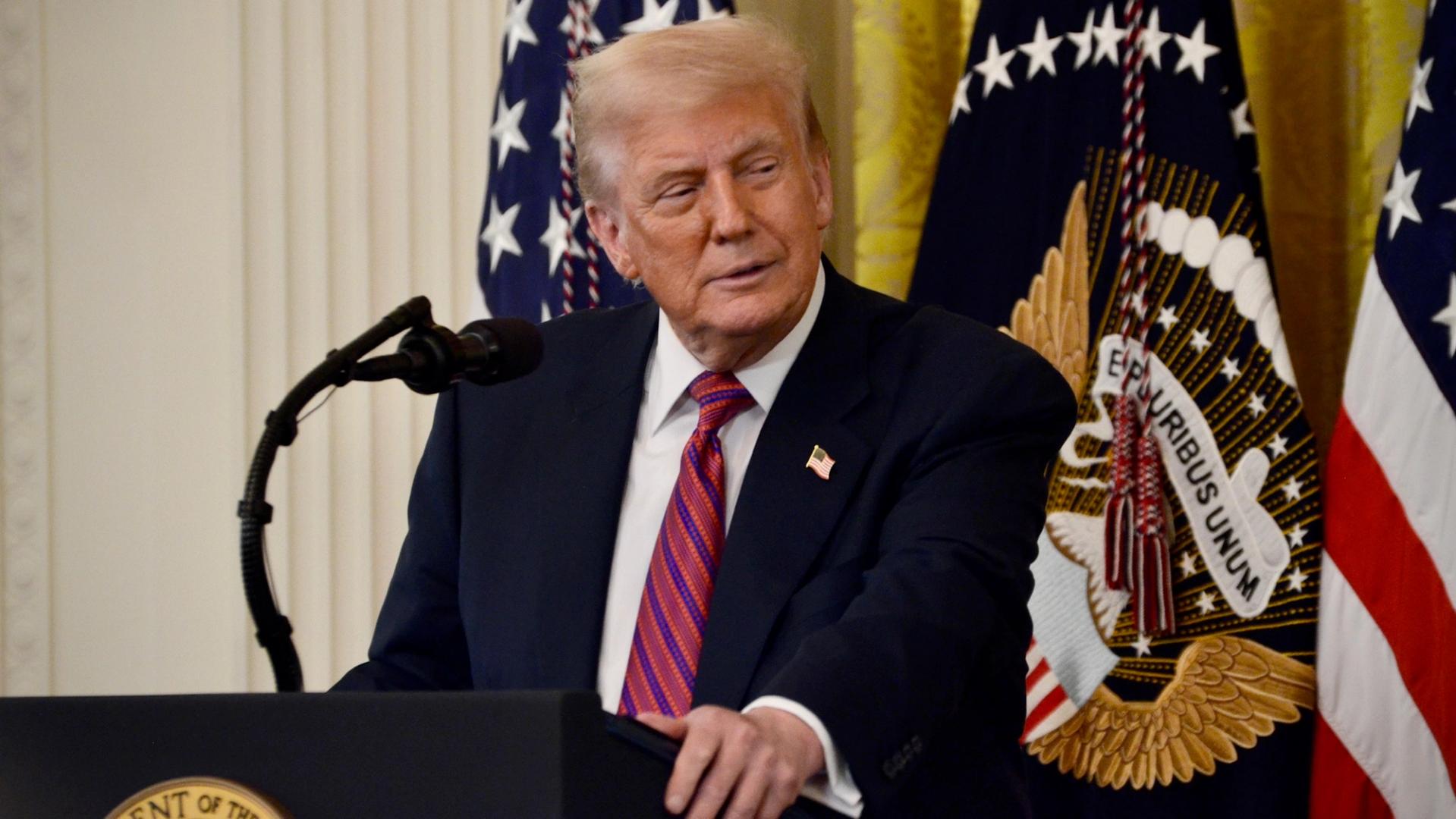
Policy U.S. government digital dollar set to be banned tonight under housing law's CBDC limit Despite President Donald Trump's refusal to sign Congress' bipartisan housing bill, it's set to go into effect at midnight, and its temporary CBDC ban along with it. By Jesse Hamilton | Edited by Nikhilesh De Jul 10, 2026, 4:02 p.m. 2 min read Make preferred on Share Share this article Copy link X icon X (Twitter) LinkedIn Facebook Email Make preferred on President Donald Trump's stand against signing the housing bill isn't stopping its CBDC ban from going into effect. (Jesse Hamilton/CoinDesk) Summary Show As Friday winds to a close, the U.S. housing-affordability bill will become law, along with an unrelated provision that imposes a four-year ban on a U.S. central bank digital currency. The restriction will block the Federal Reserve from issuing a digital dollar that could compete with private-sector stablecoins, though the central bank was not working toward that goal. The crypto industry's long animosity toward the idea of a U.S. central bank digital currency (CBDC) will be rewarded with a ban under the housing bill set to pass into law in the first moment of Saturday. For four years, the Federal Reserve won't be permitted to issue its own digital dollar, which Republican lawmakers have held up as a threat of potential overreaching government surveillance, though there hasn't yet been a serious effort in the U.S. to institute one. The restriction was part of Congress' bipartisan housing-affordability bill that President Donald Trump refused to sign into law . "I will not sign the Housing Bill, which has been fully approved by Congress and sent to the White House, in PROTEST over the fact that the United States Senate is not capable of passing THE SAVE AMERICA ACT," the president wrote in a Friday post on his Truth Social website . The U.S. Constitution, however, says that once the president is given a congressionally approved bill, it becomes law after a 10-day window whether he signs it or not. Trump hasn't chosen to formally veto the bill, so it's now set up for a midnight passage. The CBDC limit expires at the end of 2030, though there was little chance that a Fed digital currency would have been executed by then. There's been limited appetite at the central bank, where its previous leadership — even before the arrival of Trump's newest Fed chair, Kevin Warsh — had long said that such an effort would require backing from the White House and congressional authorization. There's never been wide support for a CBDC in Congress. But the idea — strongly opposed by the crypto industry for its potential to compete with privately issued stablecoins — has been pursued in other jurisdictions, such as Europe and China, and it became a popular political target for U.S. politicians. So Republicans managed to slip it into the unrelated housing legislation, after previously trying to include it in a range of bills including the Foreign Intelligence Surveillance Act. Despite the overall housing bill's popularity, Trump took an unexpected, last-minute stand against signing it, for which he'd previously scheduled a ceremony and had a stage erected. He declared that he wouldn't sign anything until lawmakers approved a bill that would impose new proof-of-citizenship and identity checks on voters — an effort without sufficient current support to pass in Congress. The president has argued that the absence of such a law will cost Republicans the midterm congressional elections, in which Democrats are currently favored to retake the majority in the House of Representatives. Trump's protest against any congressional activity that strays from his favored effort has raised questions about whether a completed Digital Asset Market Clarity Act could face a similar situation, if Congress manages to pass it this summer. Read More: Trump's refusal to sign housing bill could delay Congress and imperil Clarity Act Donald Trump CBDC Latest Crypto News 1 Hyundai becomes first major South Korean company to introduce internal stablecoin transfers 38 minutes ago 2 OKX, MetaMask, Matter Labs back dispute resolution court for AI agents 3 hours ago 3 Circle soars after securing U.S. trust bank approval in crypto expansion 4 hours ago 4 Japan's 'invest locally' plan likely to spur demand for assets like bitcoin, gold 4 hours ago 5 Crypto defies equity weakness as altcoin optimism builds into the weekend 5 hours ago 6 Polymarket seeks approval to bring margin trading to U.S. customers 6 hours ago 7 Bitcoin's $60,000-$70,000 range becomes third most traded range in history 6 hours ago 8 Metaplanet explores bringing bitcoin-backed digital credit to Japan 6 hours ago 9 Bitcoin gets a green light from a reliable momentum gauge. Here are key levels to watch 9 hours ago 10 Live updates: Bitcoin rises to $64,000 as SK Hynix opens for trade after $26.5 billion IPO 9 hours ago Latest Research Digital Assets: Quarterly Review and Outlook Q2 Digital Assets: Quarterly Review and Outlook Q2 Digital assets posted a third consecutive quarter of losses in Q2 2026, the longest losing streak since the 2022 bear market, as institutional capital rotated into AI equities and Bitcoin ETFs recorded their largest quarterly outflow since launch. Our report examines what drove the divergence, where structural adoption continued regardless, and what Q3 signals to watch. By CoinDesk Research 7 hours ago Digital assets posted a third consecutive quarter of losses in Q2 2026, the longest losing streak since the 2022 bear market, as institutional capital rotated into AI equities and Bitcoin ETFs recorded their largest quarterly outflow since launch. Our report examines what drove the divergence, where structural adoption continued regardless, and what Q3 signals to watch. Why it matters : Digital assets posted a third consecutive quarter of losses in Q2 2026, the longest losing streak since the 2022 bear market, as institutional capital rotated into AI equities and Bitcoin ETFs recorded their largest quarterly outflow since launch. Our report examines what drove the divergence, where structural adoption continued regardless, and what Q3 signals to watch. View Full Report More From Policy New Hampshire snuffs out trailblazing state-government bitcoin bond effort With SEC fight over, Coinbase's top legal exec Grewal moves on, and others reassigned Newest version of crypto Clarity Act may drop as soon as next week, sources say