Why Poland is the only EU country where crypto firms can't get a MiCA license
Analysis
Price Impact
LowThis news concerns regulatory hurdles in poland for crypto firms seeking mica licenses, not a direct price movement trigger for major cryptocurrencies. while it creates uncertainty for polish businesses, its impact on the global crypto market is minimal in the short term.
Trustworthiness
HighPrice Direction
NeutralThe news does not directly impact the price of major cryptocurrencies like bitcoin or ethereum. it is a specific regulatory issue affecting a subset of companies in one eu country.
Time Effect
ShortThe immediate effect is on polish crypto firms needing to decide on licensing locations. the longer-term effect could be a shift of businesses away from poland if the situation isn't resolved, but this is a gradual process.
Original Article:
Article Content:
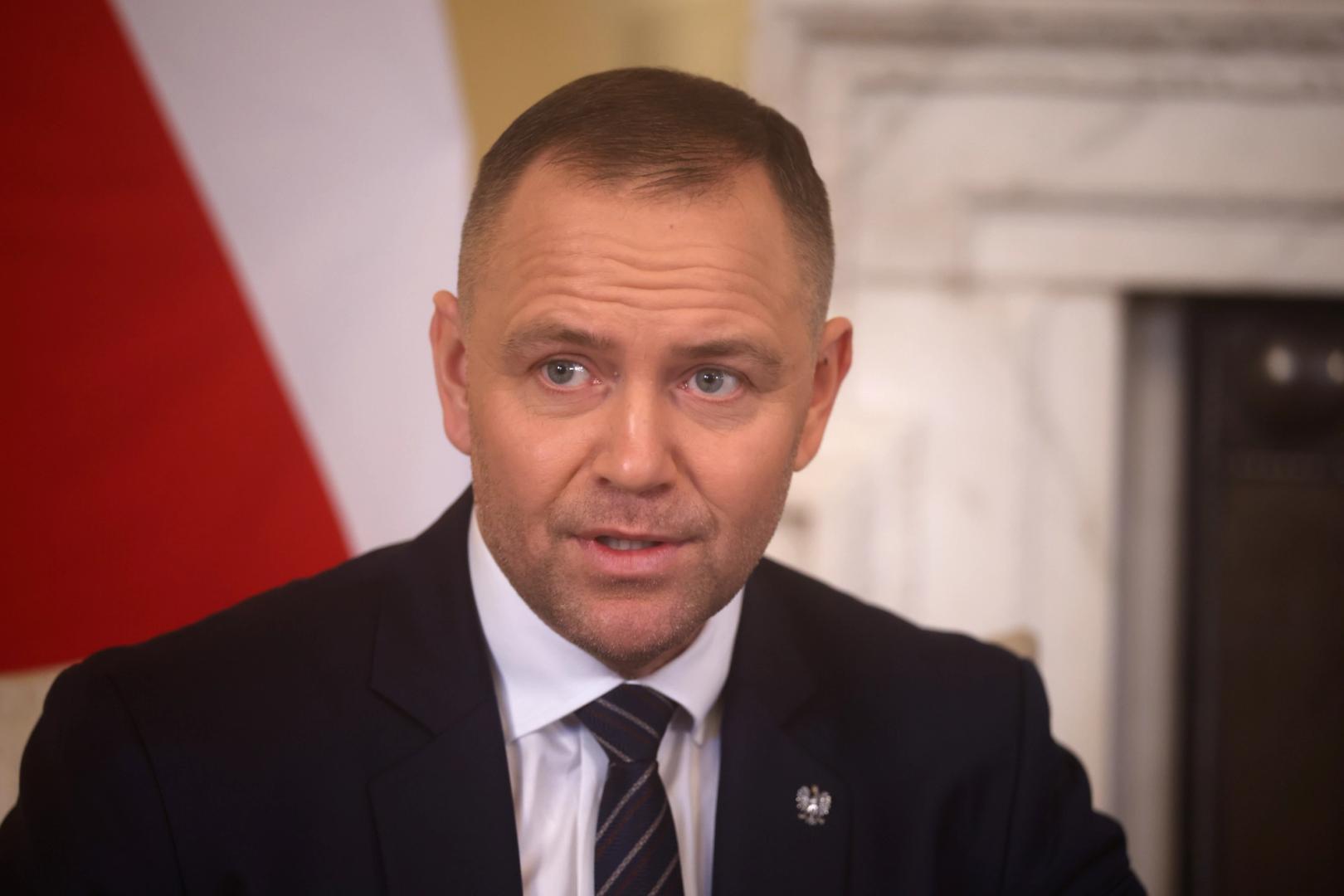
Policy Why Poland is the only EU country where crypto firms can't get a MiCA license President Karol Nawrocki refuses to sign a law that gives the regulator power to approve companies, forcing tech founders to look outside their own borders for permission to operate. By Olivier Acuna | Edited by Sheldon Reback , Aoyon Ashraf Updated Jul 1, 2026, 9:50 a.m. Published Jul 1, 2026, 6:30 a.m. 3 min read Make preferred on Share Share this article Copy link X icon X (Twitter) LinkedIn Facebook Email Make preferred on Polish President Karol Nawrocki (Dan Kitwood/Getty Images) Summary Show As the MiCA crypto rules take full effect, Poland is the only European Union country without a functioning domestic licensing regime, leaving about 2,000 local firms in regulatory limbo. President Karol Nawrocki has repeatedly vetoed the implementing law, forcing Polish crypto companies to seek MiCA licenses in other EU states or shut down operations. Industry executives warn that the political deadlock and high compliance costs could wipe out most Polish crypto startups, even as they support MiCA. Polish crypto firms are being forced to seek licenses abroad or risk shutting down after President Karol Nawrocki refused to sign legislation giving the country’s financial regulator authority to issue licenses under the European Union’s Markets in Crypto-Assets regulation. MiCA, the EU’s sweeping crypto rulebook, comes fully into force on Wednesday, ending a transition period that allowed companies to operate under older national regimes. Poland remains the only EU state without a fully functional domestic application and licensing system, even though the country has about 2,000 registered virtual asset service providers. Only a small number of Polish firms have secured MiCA licenses in other EU countries, raising the prospect that many smaller companies will either close, relocate or seek authorization abroad. "Due to the fact that the Polish legislation implementing the MiCA regulation has not yet entered into force, no Polish public authority has been designated as the competent authority for the supervision of activities covered by the MiCA Regulation, with the exception of issuers of electronic money tokens (EMTs)," Jacek Barszczewski, a spokesman for Poland's Financial Supervision Authority (KNF), said in an email. EMTs in Poland fall under a different regulatory framework. A MiCA license issued in any EU country gives the holder access to the entire 27-nation bloc as well as Iceland, Liechtenstein, and Norway. That means Polish companies are likely to apply in countries such as Lithuania, Latvia or Germany before passporting their services back home. "The business simply moves somewhere else," Wojciech Kaszycki, chief strategy officer of Warsaw-based fintech BTCS, told CoinDesk in a video interview. "None of the Polish companies can receive the authorization in Poland." Nawrocki says the law, which he rejected for a third time earlier this month, gives regulators excessive powers, including the ability to block crypto companies' websites and impose rules that could push businesses abroad. He's also said it favors banks and large corporations over startups while creating an overly complex regulatory framework. Kaszycki said he agreed with Nawrocki's criticism that parts of the law went beyond MiCA itself. The draft, which has been passed by both houses of parliament, allows the Financial Supervision Authority (KNF) to freeze customer funds for months and block websites before companies have exhausted legal appeals. Mateusz Kara, CEO of Morphic Financial Group, headquartered in London and with deep roots and operations in Poland, said the cost of a MiCA license and the political deadlock could “wipe out Polish crypto.” “It will change the business landscape of crypto entities a lot,” Kara told CoinDesk. “For example, in Poland, we have around 2,000 VASP entities. As far as I know, we are the only ones that have a MiCA license right now. So, I think you can imagine how many entities will need to shut down the business starting from the second half of this year.” Despite the political deadlock, BTCS' Kaszycki said he supports MiCA because Europe needs a common crypto rulebook. "It is a good beginning," he said. "But it needs to be improved." The current regulatory framework exerts excessive pressure on startups while making it easier for larger companies to cover the cost of compliance, he said. He also called for a regulatory program that would allow smaller firms to test products before meeting MiCA's full requirements. Kaszycki said European regulators will refine the framework and soon have an updated version of the legislation, which was passed by the European Parliament in 2023. For now, he said, EU financial watchdogs would ensure the current regulations are applied consistently across all member states. "It's the first version," he said. "Policymakers are already speaking with the market." MiCA Regulation Latest Crypto News 1 Bitcoin’s 20% June crash looks even deadlier on the charts. Here’s why 2 hours ago 2 Live markets: U.S. spot bitcoin ETFs had their worst month ever in June, shedding $4.5 billion 2 hours ago 3 Anthropic restores AI models Fable, Mythos after the U.S. lifts export controls 2 hours ago 4 XRP holds above $1 after leverage flush as network activity improves 4 hours ago 5 Taiwan’s sweeping crypto law raises the bar with licensing, reserve mandates, and tough penalties 4 hours ago 6 U.S. senators seek to block foreign adversaries from AI technology in new bill 10 hours ago 7 Trump pocketed more than $1 billion from crypto ties as industry headed toward slump 11 hours ago 8 Phantom doubles down on perpetual futures with hire of Hyperliquid market builders 12 hours ago 9 Companies spending the most on AI are growing jobs, Ramp study finds 13 hours ago 10 Why OpenUSD's 'real threat' that tanked Circle stock still faces a steep uphill battle for adoption 15 hours ago Latest Research Building the Zcash Machine: Tachyon and Quantum Readiness Building the Zcash Machine: Tachyon and Quantum Readiness Zcash’s Tachyon upgrade aims to scale shielded payments, improve quantum readiness, and test whether its funding, security, and governance can hold. By CoinDesk Research 23 hours ago Commissioned by GenZcash Zcash’s Tachyon upgrade aims to scale shielded payments, improve quantum readiness, and test whether its funding, security, and governance can hold. Why it matters : Zcash’s Tachyon upgrade aims to scale shielded payments, improve quantum readiness, and test whether its funding, security, and governance can hold. View Full Report More From Policy Taiwan’s sweeping crypto law raises the bar with licensing, reserve mandates, and tough penalties U.S. senators seek to block foreign adversaries from AI technology in new bill Trump pocketed more than $1 billion from crypto ties as industry headed toward slump