Why the OpenUSD's 'real threat' that tanked Circle stock still faces a steep uphill battle for adoption
Analysis
Price Impact
HighThe launch of openusd, backed by major players like stripe and coinbase, directly challenges circle's usdc business model by distributing reserve income to partners. this has led to a significant price drop for circle's stock, indicating a high impact on the perception and potential market share of usdc.
Trustworthiness
MedPrice Direction
BearishThe immediate stock selloff suggests bearish sentiment around usdc's future dominance. however, the long-term impact is uncertain due to adoption challenges. the competition could lead to price pressure or a diversification of stablecoin usage.
Time Effect
LongThe article suggests that the true impact on usdc will unfold over time as the openusd network launches and attempts to gain user and partner adoption. building a network effect is a long-term game, and initial enthusiasm does not guarantee sustained success.
Original Article:
Article Content:
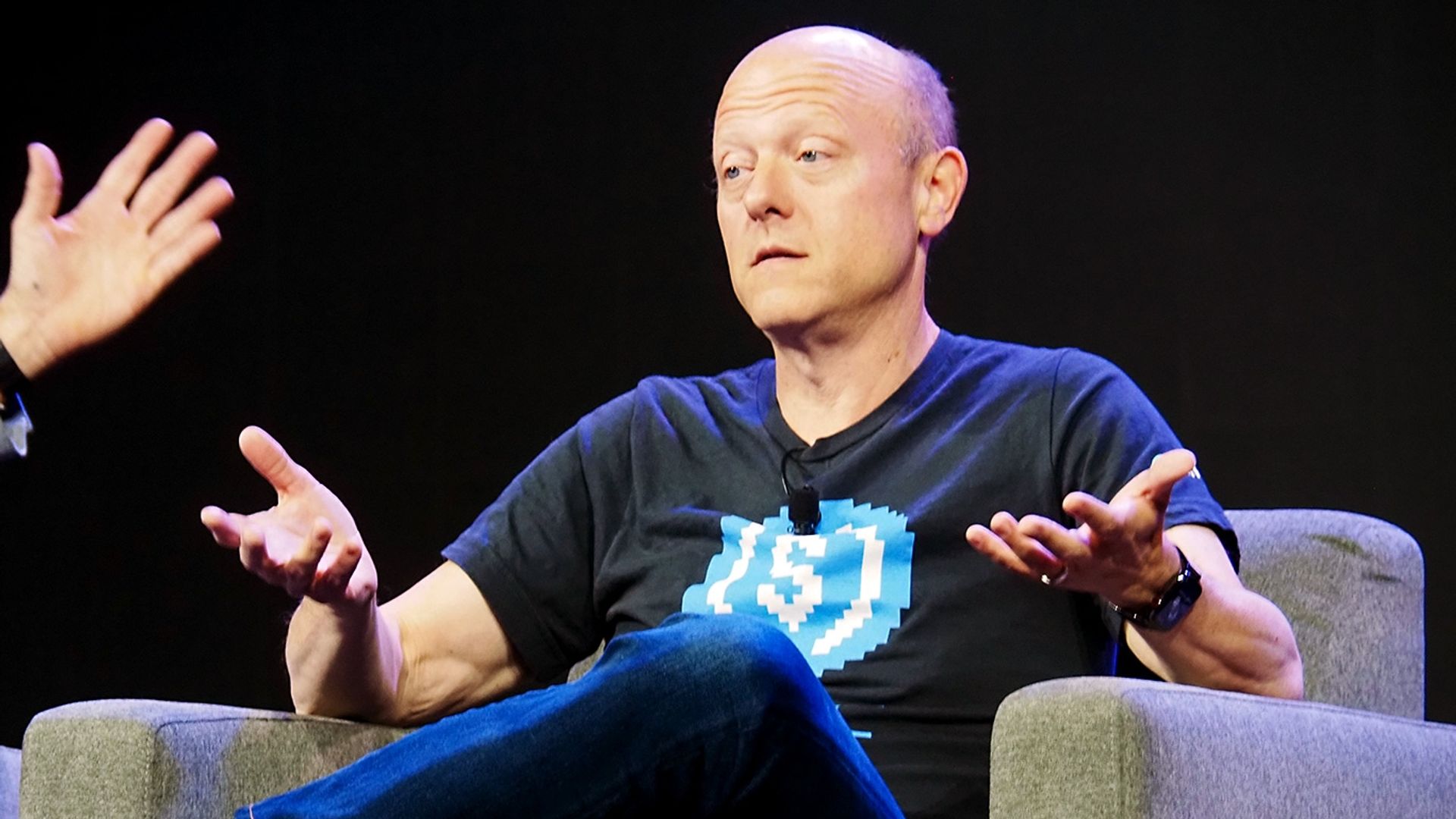
Finance Why the OpenUSD's 'real threat' that tanked Circle stock still faces a steep uphill battle for adoption The Stripe- and Coinbase-backed stablecoin consortium can challenge Circle's business model, but analysts say building a network is harder than assembling big-name partners. By Krisztian Sandor , Helene Braun | Edited by Aoyon Ashraf Jun 30, 2026, 6:39 p.m. 4 min read Make preferred on Share Share this article Copy link X icon X (Twitter) LinkedIn Facebook Email Make preferred on Circle CEO Jeremy Allaire (Danny Nelson/CoinDesk) Summary Show Circle shares slumped after the launch of the Open Standard consortium and its Open USD stablecoin, which aims to challenge Circle’s USDC by sharing reserve income with partners. Analysts say the selloff may be an overreaction, noting that earlier consortium-backed stablecoins like Paxos’ USDG have struggled to gain market share and that OUSD still faces major questions on structure, incentives and adoption. The move intensifies scrutiny of Circle’s economics and its partnership with Coinbase, while underscoring a broader shift in stablecoin competition toward distribution platforms such as exchanges, payment processors and wallets. Circle shares (CRCL) cratered on Tuesday after the new Open USD stablecoin network rattled investors, but analysts say it's too early to conclude the consortium poses a serious threat to USDC. The Open Standard, backed by more than 140 companies including Stripe, Coinbase, Visa, Mastercard and BlackRock, immediately attracted attention because it attacks one of Circle's key advantages: its network of institutional partners. Some went as far as to call it an "existential threat" to Circle, whose business model relies primarily on retaining the interest earned on the assets backing USDC. OUSD, by contrast, would distribute that yield to partners rather than keep it for the issuer. "The marquee partner names clearly suggest a real threat to Circle's business," Rob Hadick, general partner at venture capital firm Dragonfly, told CoinDesk. He added that Stripe's broad suite of financial products could give the consortium an edge by allowing it to "uniquely undercut Circle's economics." Others are more cautious in their take, at least for now. "It has a strong line-up on paper, which will impact the near-term sentiment of CRCL until OUSD is launched later this year," Clear Street managing director Owen Lau said. Still, he argued that the Circle's 16% selloff on Tuesday went too far. "I think it is an overreaction," he told CoinDesk. Circle selloff (TradingView) He pointed to Paxos' Global Dollar Network (USDG), another consortium-backed stablecoin that shares reserve income with partners but has yet to gain significant market share. It has grown to a $3 billion supply since its launch in late 2024, lagging far behind USDC's $73 billion and USDT's $145 billion, according to CoinDesk data. "The bigger question is how OUSD can convince consumers and end users to adopt them," Lau said. "We don't really know the answer until it is fully launched so that we can gauge the market cap and usage." Hadick also cautioned that building an industry consortium is rarely straightforward. "Consortiums are hard and they break easily," he said. "Incentives are broad and often misaligned." "So while the [Circle] stock selloff seems clearly reasonable, I also don't expect this to be an easy or straightforward road for Open Standard and expect it to be harder to get to scale than expected," Hadick added. Details still missing Others cautioned that the announcement left several important questions unanswered. Noelle Acheson, author of the Crypto Is Macro Now newsletter, said Open Standard has assembled an impressive list of partners and is led by Bridge co-founder Zach Abrams, "who knows what he's doing." "But the release is vague on some key issues," she wrote, pointing to unanswered questions around Open Standard's ownership structure, the licensing framework for the issuer, which blockchains Open USD will launch on and how reserve income will be distributed among partners. Omid Malekan, an adjunct professor at Columbia Business School, argued that the announcement reflects what he called the "logo spray and pray" phase of stablecoin adoption. "Putting your name on a list is easy," he wrote on X. "Actually changing corporate behavior (and business models) is hard." The key question, he argued, is whether stablecoins can improve participants' bottom lines. Coinbase-Circle relationship The announcement also put fresh focus on Circle's relationship with Coinbase. The two companies jointly founded the Centre Consortium that started USDC issuance and continues to share economics tied to the stablecoin's reserve income under a commercial agreement. That deal is reportedly up for renewal in August. Dragonfly general partner Omar Kanji suggested the announcement makes a potential breakup between Circle and Coinbase appear more plausible, though he ultimately expects the companies to renew their agreement with revised economics while continuing to compete in some areas. Luca Prosperi, CEO of M0 Foundation, viewed Open USD as another sign that the stablecoin market is moving away from winner-take-all dynamics. "The future is resisting Circle's monopoly," he wrote, describing the consortium as "Global Dollar on Stripe's execution engine" while arguing that "nothing changes for the long-term thesis." Shifting stablecoin competition The debate also highlights how investors may need to rethink exposure to the stablecoin sector. Jeff Dorman, CIO of investment firm Arca, argued that the opportunity extends beyond issuers such as Circle and Tether to the exchanges, payment firms, wallets, custodians and blockchain networks that distribute and settle digital dollars. As stablecoins move deeper into mainstream finance, he said, those distribution channels may ultimately prove to be the bigger winners. "The stablecoin opportunity extends far beyond Circle, Tether, or any single issuer," he told CoinDesk. "Investors often ask what the next trillion-dollar blockchain use case will be, he said. "Increasingly, the answer appears to be money itself, but it's challenging to find the best pure play way to invest in this." Circle Stablecoins Latest Crypto News 1 SEC giving novel ETFs a rethink as it opens comment period on overhauling U.S. rules 48 minutes ago 2 Chinese exile once linked to Trump strategist gets 30-year sentence in $1 billion fraud 2 hours ago 3 Jefferies warns of crypto market volatility as Clarity Act faces Senate test 3 hours ago 4 Circle slides 13% as Stripe, Coinbase and BlackRock back rival stablecoin network 4 hours ago 5 MetaMask launches Money Account with stablecoin yield and spending in one wallet 4 hours ago 6 Tokenized securities need competition, not gatekeepers 5 hours ago 7 Nasdaq expands distribution of its market data into blockchain infrastructure 5 hours ago 8 Bitcoin’s quiet $59,000-$60,000 range is starting to look dangerous 6 hours ago 9 New York Life's $800 billion asset manager makes tokenization debut with Centrifuge fund 7 hours ago 10 Bitcoin $4.4 billion supply overhang emerges as institutional demand wilts 7 hours ago Latest Research Building the Zcash Machine: Tachyon and Quantum Readiness Building the Zcash Machine: Tachyon and Quantum Readiness Zcash’s Tachyon upgrade aims to scale shielded payments, improve quantum readiness, and test whether its funding, security, and governance can hold. By CoinDesk Research 8 hours ago Commissioned by GenZcash Zcash’s Tachyon upgrade aims to scale shielded payments, improve quantum readiness, and test whether its funding, security, and governance can hold. Why it matters : Zcash’s Tachyon upgrade aims to scale shielded payments, improve quantum readiness, and test whether its funding, security, and governance can hold. View Full Report More From Finance Circle slides 13% as Stripe, Coinbase and BlackRock back rival stablecoin network New York Life's $800 billion asset manager makes tokenization debut with Centrifuge fund Securitize heads to NYSE debut after investors approve SPAC merger