Tokenization won't disrupt banking rails but improve them, Wall Street executives say
Analysis
Price Impact
MedThe article discusses how tokenization is improving existing financial systems rather than disrupting them. this indicates a positive but not explosive outlook for major cryptocurrencies that could be involved in tokenization efforts, like ethereum, solana, and potentially others. the focus is on integration, suggesting a gradual adoption rather than immediate price spikes.
Trustworthiness
HighPrice Direction
BullishThe sentiment from wall street executives suggests an increasing integration of blockchain technology into traditional finance through tokenization. this bodes well for cryptocurrencies and tokens that facilitate these processes, implying a steady, positive trend as adoption grows.
Time Effect
LongThe executives emphasize that this is an 'evolution' and a 'gradual change' rather than an overnight replacement. the integration of tokenization into existing financial infrastructure and the convergence of traditional and decentralized finance will take time to fully manifest, indicating a long-term positive effect.
Original Article:
Article Content:
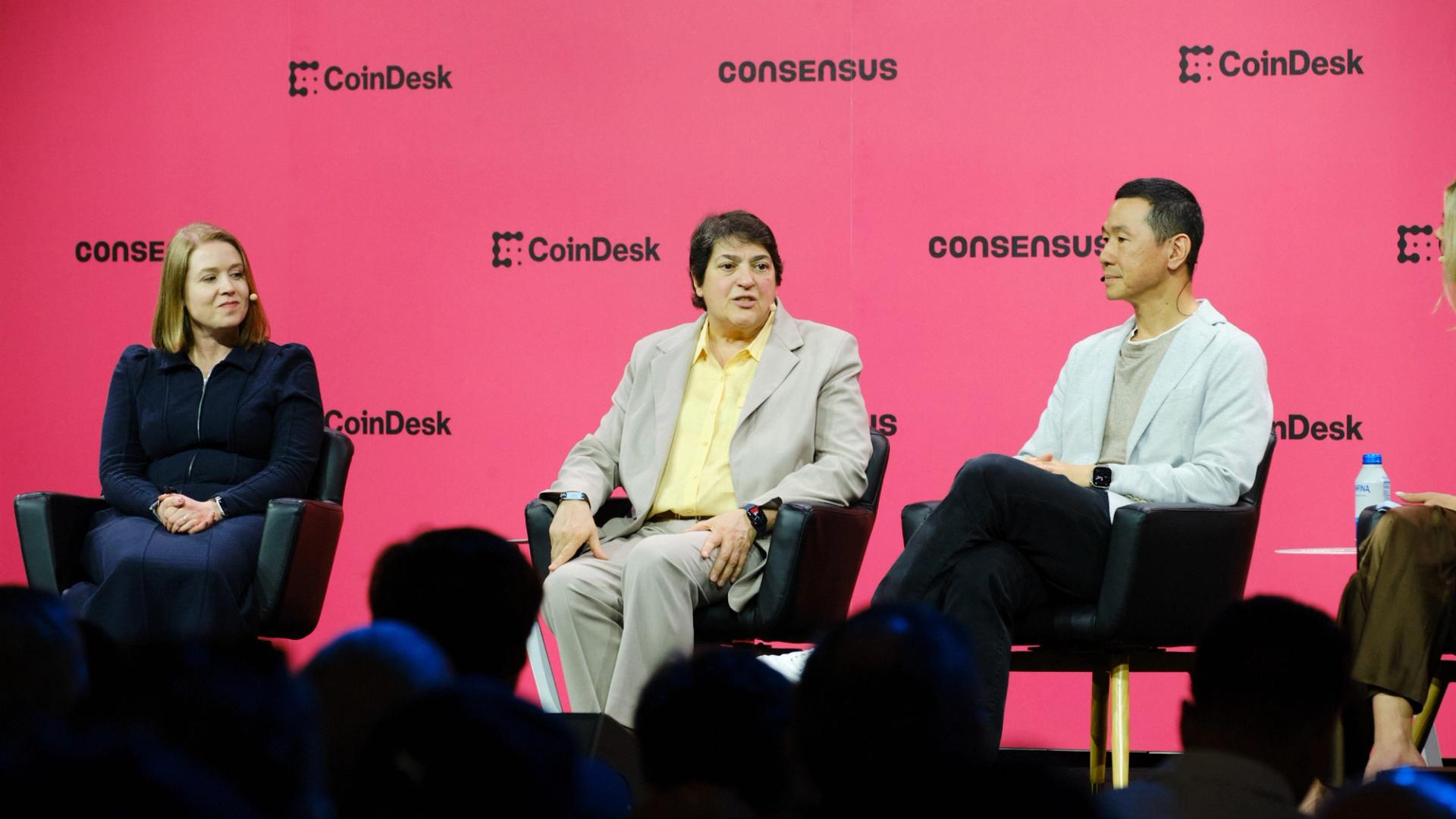
Finance Share Share this article Copy link X icon X (Twitter) LinkedIn Facebook Email Tokenization won't disrupt banking rails but improve them, Wall Street executives say Executives from Citigroup, JPMorgan and DTCC said at Consensus that genuine client demand is driving real-world use of tokenized assets. By Krisztian Sandor , AI Boost | Edited by Stephen Alpher May 5, 2026, 6:55 p.m. 2 min read Make preferred on Kara Kennedy, Global Head of Market Development of J.P. Morgan (left), Nadine Chakar, Global Head of Digital Assets of DTCC (center) and Evan Auyang, Group President of Animoca Brands speak at Consensus 2026 in Miami (CoinDesk) What to know : Major Wall Street institutions, including Citigroup, JPMorgan and DTCC, say blockchain-based tokenization is quietly moving into production, handling real volumes for real clients rather than remaining a pilot technology. Banks are integrating blockchain rails into existing market infrastructure to enable 24/7, real-time movement of money and securities, reshaping corporate treasury, collateral management and cross-border payments. Executives stress that tokenization will evolve the financial system rather than replace it outright, preserving key intermediaries even as traditional finance and decentralized systems steadily converge. Miami Beach, FL — Tokenization is not replacing the system overnight, but it is steadily reshaping the plumbing underneath, Wall Street executives said at Consensus 2026 in Miami. Digital asset leaders from Citi, JPMorgan and DTCC said during a panel discussion that blockchain-based rails are moving into production, with real volumes and real clients shaping how the technology is deployed. A year ago, Citi's tokenized deposit system was handling millions. "Now we’re moving billions," said Ryan Rugg, who leads digital assets for the bank’s treasury and trade solutions unit. The demand, she said, is coming from clients who want to move money around the clock, not just during banking hours. JPMorgan is seeing a similar pattern. Its blockchain platform, Kinexys, has processed more than $1 trillion in transactions, said Kara Kennedy, who leads market development for the bank’s digital assets unit. The focus is less on building parallel systems and more on stitching blockchain rails into existing infrastructure to enable faster settlement and continuous operations, she said. DTCC, which sits at the center of U.S. market plumbing, is taking a longer view. The firm is working to bring parts of its $150 trillion securities infrastructure onto a shared digital layer, with initial rollout plans already underway. "You can’t just replace what exists," said Nadine Chakar, who heads digital assets at DTCC. "This is an evolution." That approach reflects a broader shift in the market. Early tokenization efforts often looked for problems to solve. Now, firms are targeting specific pain points, especially in areas such as collateral, cross-border payments, and liquidity management. For large corporations, the ability to move funds in real time — across time zones and holidays — is changing how treasury functions operate. Instead of pre-positioning cash days in advance, firms can react instantly to margin calls or investment opportunities. Still, the panelists pushed back on the idea that blockchain will remove intermediaries altogether. Core functions like risk management, compliance and settlement guarantees remain hard to replicate in fully decentralized systems. "We will always need some level of intermediation," Chakar said. Crypto-native players, however, see a longer arc. Evan Auyang, president at Animoca Brands, said the industry is still in a transition phase, with blockchain gradually proving its efficiency before a bigger structural change. "The nature of blockchain is that it’s transformative," Auyang said, pointing to faster processes like loan approvals that can shrink from weeks to days. But he added that fully native onchain markets are "not ready yet," given the scale of existing systems and regulatory constraints. At the same time, he argued, the direction is hard to ignore. "If there’s efficiency and cost savings, it will be adopted," he said, adding that traditional finance and decentralized systems are now "converging." Consensus Miami 2026 Tokenization AI Disclaimer: Parts of this article were generated with the assistance from AI tools and reviewed by our editorial team to ensure accuracy and adherence to our standards . For more information, see CoinDesk's full AI Policy . More For You Western Union’s Solana-based stablecoin could reshape its payment model, analyst says By Francisco Rodrigues | Edited by Stephen Alpher 1 hour ago Western Union launched USDPT, a dollar-backed stablecoin on Solana, issued by Anchorage Digital Bank, for 24/7 settlement with agents and partners. What to know : Western Union launched USDPT, a dollar-backed stablecoin on Solana, issued by Anchorage Digital Bank, for 24/7 settlement with agents and partners. Analyst Angus Scott says USDPT shows stablecoins disrupt traditional payments, pressuring legacy remittance and bank settlement models. Solana's fast, low-fee, 24/7 operations allow USDPT to handle small consumer payments... Read full story Latest Crypto News Bitcoin extends gains to $81,500 as tokenization push lifts Bullish, Galaxy, Centrifuge 4 minutes ago Rep. Steven Horsford pitches PARITY Act as 'durable floor' for crypto tax at Consensus Miami 1 hour ago Solana’s 'Alpenglow' upgrade could arrive next quarter, co-founder Yakovenko says 1 hour ago Western Union’s Solana-based stablecoin could reshape its payment model, analyst says 1 hour ago Figure targets Fannie Mae and Freddie Mac in mortgage push, citing massive cost cuts for borrowers 1 hour ago Ripple CEO Brad Garlinghouse says Clarity better than chaos as Senate hits key moment 2 hours ago Top Stories Consensus Miami Day 1: Real-time coverage and highlights from on the ground 5 hours ago Crypto's value is from being outside regulatory apparatus, says Arthur Hayes 3 hours ago Coinbase cuts 14% of staff as AI reshapes how crypto companies operate 7 hours ago Crypto.com’s high-rolling head of marketing to leave after almost six years 5 hours ago Crypto platform Bullish to buy Equiniti for $4.2 billion, building tokenized securities infrastructure 8 hours ago Bitcoin crosses $81,000, ETH, SOL, DOGE steady as options desks bid on further price jump 13 hours ago