Why this ex-Solana exec is using a Wall Street trick to level the playing field in DeFi
Analysis
Price Impact
LowThe article discusses an ex-solana executive's initiative to improve fairness in defi infrastructure, specifically addressing latency issues. while solana (sol) is mentioned as the executive's former affiliation, the core innovation is not directly tied to the sol token's performance or utility. the impact on sol's price is therefore likely to be indirect and minimal.
Trustworthiness
HighPrice Direction
NeutralThe article focuses on infrastructure improvements and market fairness within defi rather than on immediate catalysts for price appreciation or depreciation of any specific cryptocurrency. while positive for the overall ecosystem, it doesn't provide direct price prediction for sol or other coins.
Time Effect
LongThe initiative described is about building new infrastructure and changing market dynamics over time. the effects of such changes on the broader defi space, and potentially on individual tokens like sol if they adopt these standards, would be a long-term development.
Original Article:
Article Content:
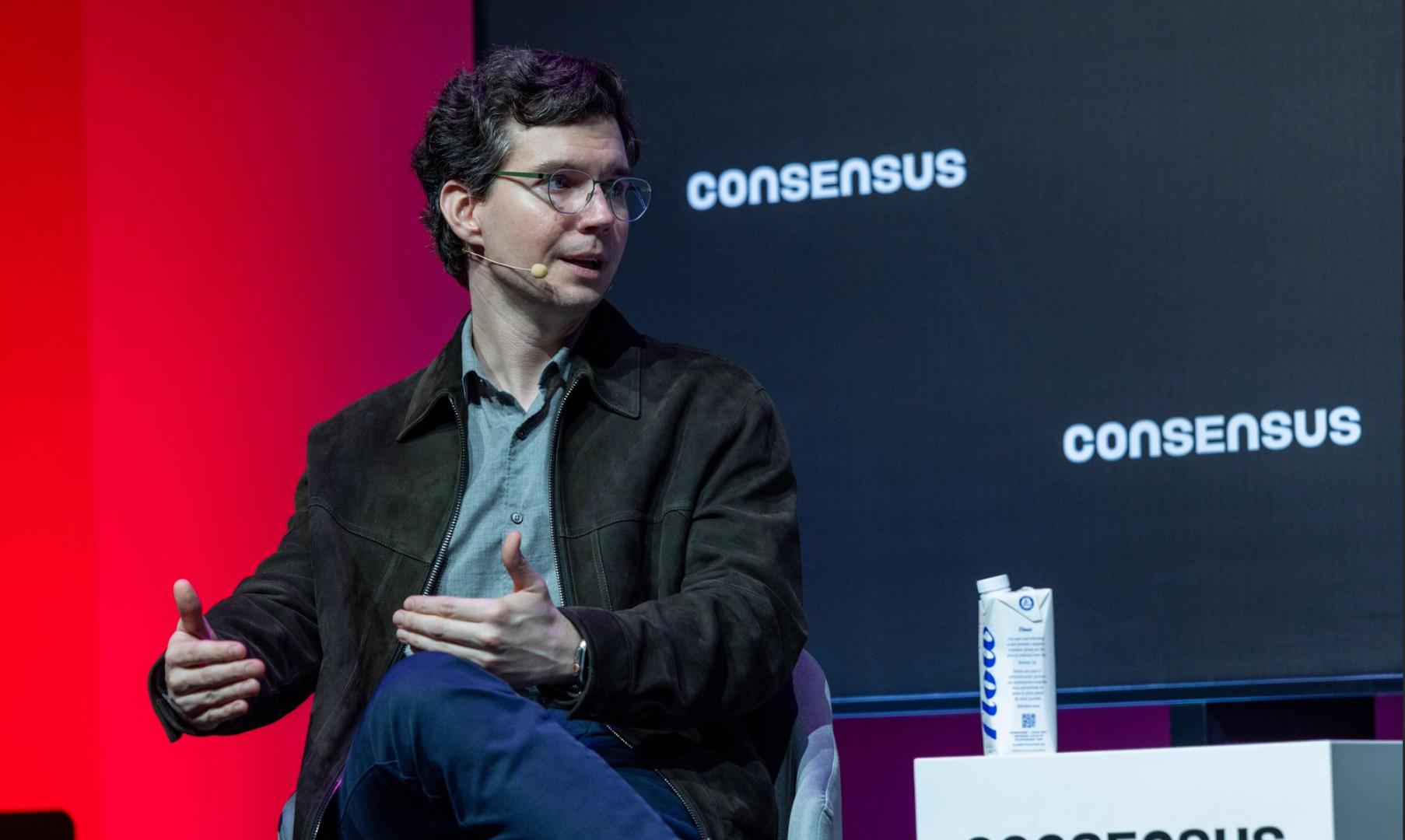
Tech Share Share this article Copy link X icon X (Twitter) LinkedIn Facebook Email Why this ex-Solana exec is using a Wall Street trick to level the playing field in DeFi DoubleZero’s private fiber network aims to eliminate latency advantages like Hyperliquid’s Tokyo edge, but exchanges have yet to show an interest. By Sam Reynolds | Edited by Sheldon Reback Apr 15, 2026, 9:47 a.m. Make preferred on Austin Federa, co-founder of Double Zero (CoinDesk) What to know : DoubleZero is building infrastructure to bring stock exchange-type fairness to crypto by taking latency, the time it takes for an order to reach a trading platform, out of the system. The company, led by former Solana Foundation executive Austin Federa, argues that many DeFi venues, like Hyperliquid, are decentralized in governance but not truly distributed in infrastructure, allowing traders near key data centers to gain millisecond-level advantages. DoubleZero contends that predictable, verifiable latency — rather than raw speed — will become a competitive differentiator. Austin Federa quit as the Solana Foundation's head of strategy in 2024 to tackle what he saw as unfairness in the crypto trading environment. Eighteen months later, his company, DoubleZero, says it's ready. DoubleZero aims to eliminate proximity to an exchange's servers as a competitive advantage for traders. The private fiber network removes latency, the time it takes for an order to reach the platform from a trader's desk, as a factor and introduces a more equitable environment even though regulators — and traders — aren't asking for it yet. The problem, Federa says, is that crypto conflates decentralized with distributed. DeFi protocols are decentralized by virtue of their open-source code and permissionless validator sets, but when milliseconds determine who wins a trade, the laws of physics push validators to cluster in the same data centers anyway. On platforms like Hyperliquid, for example, Tokyo-based traders enjoy a roughly 200-millisecond edge over rivals abroad . "Hyperliquid may be a decentralized system from a governance and user perspective, but it is not a distributed system," Federa said in an interview with CoinDesk. "It is still co-located in the same environment, even if it's run by multiple different entities." It's a problem traditional finance has already faced. When the New York Stock Exchange developed its Mahwah, New Jersey data center over a decade ago, it engineered cable-length equalization to within a nanosecond because asymmetric access was bad for business, not because regulators required it. Simply, traders who felt disadvantaged would route their orders elsewhere. Read more: A former Solana exec is taking a page out of Wall Street playbook to make global crypto trades faster DoubleZero's solution is timestamping. The network aggregates private bandwidth from operators to route blockchain data over dedicated links, while giving venues tools to timestamp orders across global entry points and reconstruct a fair sequence similar in aim to the cable equalization used by the NYSE. The challenge isn't just speed, but verifiability. On a venue running over the public internet, a trader whose order arrives late has no way to distinguish ordinary network congestion from something more deliberate. "Is that true because the public internet drops packets all the time, or is that true because you saw my transaction and said, 'Hey, this guy's pretty good, I don't want to include this block,'" Federa said. "The counter-factual is really hard to prove." DoubleZero's pitch is that a managed network with deterministic latency makes that distinction provable. Physics still applies: A New York trading desk routing through DoubleZero to reach Hyperliquid in Tokyo will not outrun a nearer competitor in AWS’s ap-northeast-1 region. But the gap shrinks, and more importantly, the variance shrinks. Traders get not just lower latency but predictable latency, which is the property high-frequency trading firms actually pay for in traditional markets. Federa's broader point is that crypto is misreading what makes traditional markets fair. Regulators matter, but they're not the main driver. FINRA, the body that polices most of Wall Street's day-to-day conduct, is technically a voluntary self-regulatory organization. The Securities and Exchange Commission and Commodity Futures Trading Commission serve as backstops with enforcement teeth, but the day-to-day work of keeping markets fair is done by exchanges themselves. They do it because their business depends on it. Venues that get a reputation for asymmetric access lose volume to venues that don't. If he's right, DeFi's latency problem isn't waiting on regulators. It's waiting on the moment a major venue decides fairness is a competitive advantage worth paying for. Crypto has spent a decade proving you can build decentralized systems. The next decade will test whether anyone wants to build distributed ones, where the advantage isn't based on where in Tokyo your server sits. "No one wants to trade on an unfair platform," Federa said. Crypto Trading More For You Bitcoin developers are trying to build quantum defenses. Your coins could pay the price. By Omkar Godbole | Edited by Sam Reynolds 3 hours ago A proposal has been updated on Bitcoin's official repository, calling for freezing of quantum-vulnerable coins. What to know : The BIP-361 would require bitcoin holders to migrate their coins to quantum-resistant addresses or risk having them permanently frozen by the network. The plan, prompted by warnings that future quantum computers could crack Bitcoin’s current cryptography, would phase out vulnerable address types over several years and ultimately invalidate legacy ECDSA... Read full story Latest Crypto News A new class of crypto treasury companies is forming around Strategy’s high-yield stock 2 minutes ago EToro to acquire crypto wallet Zengo in $70 million deal 17 minutes ago Ethereum treasury firm Bitmine reports $3.8 billion Q1 loss in latest filing 3 hours ago Bitcoin developers are trying to build quantum defenses. Your coins could pay the price. 3 hours ago XRP climbs toward $1.38 as Japan's Rakuten integrates token for payments 4 hours ago Ether-bitcoin ratio bounces from 2026 lows, signaling broader crypto recovery 5 hours ago Top Stories SOL, ADA, DOGE pull back, bitcoin holds above $74,000 as Asia recoups Iran war losses 5 hours ago The next Fed chair has crypto exposure in his portfolio. Here are the details 14 hours ago Goldman Sachs files for bitcoin income ETF in crypto push 18 hours ago JPMorgan CFO warns stablecoins risk becoming ‘regulatory arbitrage’ play 20 hours ago Visa and Zodia Custody join Stripe’s new blockchain for machine payments 21 hours ago Bitcoin climbs to highest level since Feb. 5 crash that sent price plunging to $60,000 19 hours ago