How U.S. sports teams can launch their fan-token strategies right now
Analysis
Price Impact
HighThe us regulatory clarity for fan tokens could lead to significant adoption by major us sports franchises, directly boosting the value and utility of existing and new fan tokens. this could unlock substantial demand and investment.
Trustworthiness
HighPrice Direction
BullishThe new regulatory framework in the us makes fan tokens legally recognized as digital collectibles and tools, removing a major barrier to entry for us sports teams. this is expected to drive significant adoption, demand, and thus price appreciation for fan tokens.
Time Effect
LongThe article suggests a strategic shift and a 'playbook' for us sports teams, implying a long-term integration of fan tokens into sports economics and fan engagement, with lasting effects on token value.
Original Article:
Article Content:
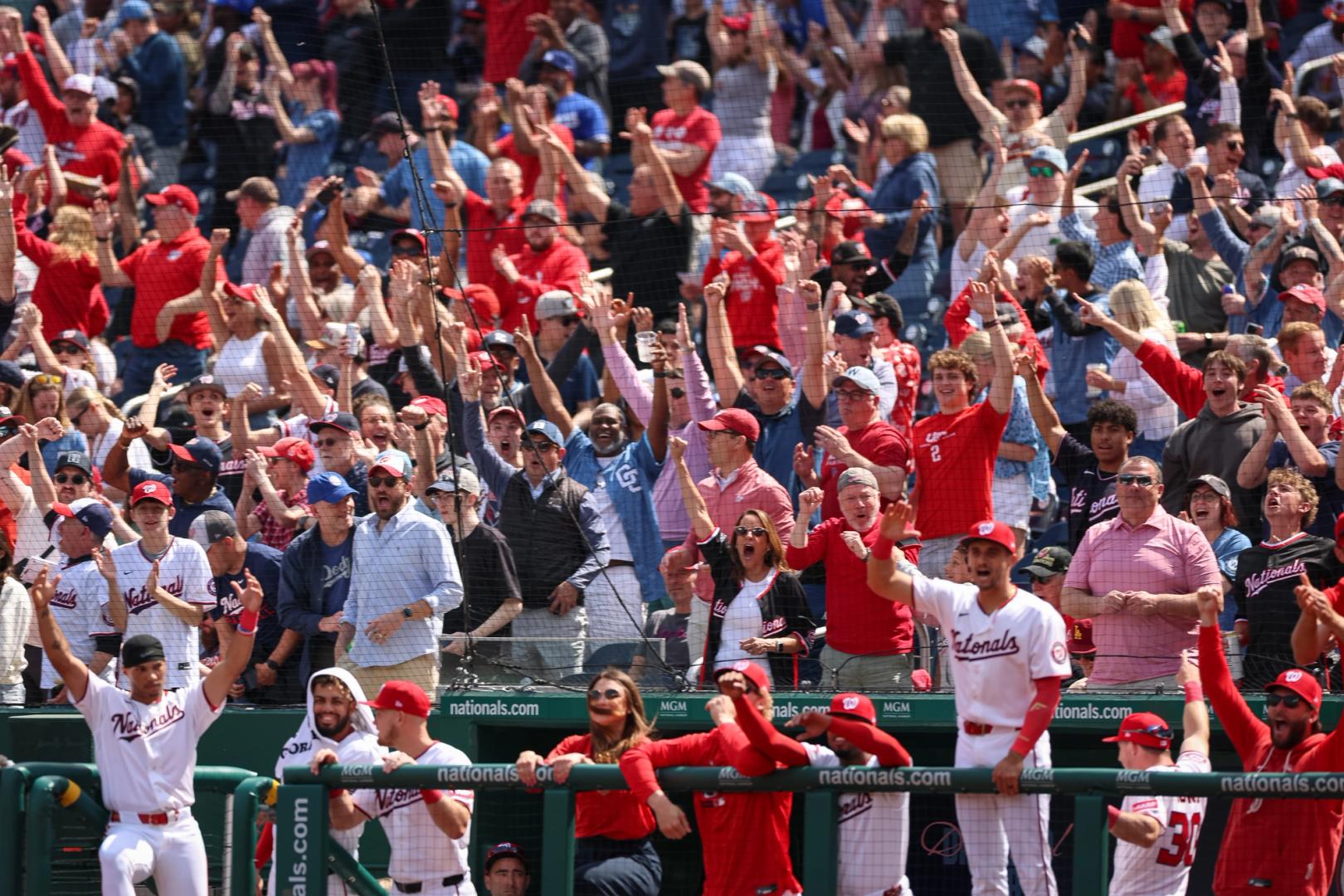
Opinion Share Share this article Copy link X icon X (Twitter) LinkedIn Facebook Email How U.S. sports teams can launch their fan-token strategies right now Dreyfus, CEO of Chiliz, examines the implications of the SEC and CFTC’s recent joint guidance on digital assets and what the regulatory clarity means for the future of blockchain fan engagement. By Alexandre Dreyfus | Edited by Betsy Farber Apr 11, 2026, 5:00 p.m. Make preferred on Los Angeles Dodgers v Washington Nationals April 3, 2026 (Photo by Scott Taetsch/Getty Images). For years, the conversation about fan tokens in the United States followed a familiar and frustrating pattern. Executives at major sports franchises were interested. Their fans were curious. The technology was ready. But without clear regulatory guidance on how fan tokens would be classified under U.S. law, the risk of launching a program was simply too high for organizations with billions in brand equity to protect. That era is over. On March 17, 2026, the U.S. Securities and Exchange Commission and the Commodity Futures Trading Commission issued joint, binding guidance that formally classifies fan tokens as digital collectibles and digital tools, two distinct, legally recognized asset categories. The document, presented at the DC Blockchain Summit and titled Application of the Federal Securities Laws to Certain Types of Crypto Assets , is not an informal staff opinion or a tentative signal. It is final guidance issued simultaneously by the two most powerful financial regulatory bodies in the country. And it names Socios.com and Fan Token, trademarks owned by Chiliz , explicitly on pages 16 and 17 as concrete examples of the newly defined categories. For American sports franchises in the NFL, NBA, MLB, and beyond, the message is clear: the playbook is written. The only question now is who executes first. Understanding what you're working with The joint guidance divides the crypto asset landscape into five categories: Digital Commodities, Digital Collectibles, Digital Tools, Stablecoins and Digital Securities. Fan tokens sit across two of these. As digital collectibles , fan tokens represent expressions of fan identity and loyalty. Think of them as digital membership cards or match tickets, assets that carry cultural weight and signal belonging to a community. They are not investments in the traditional sense. They don't represent equity or profit-sharing. They represent affiliation, like a jersey or a season ticket, but reimagined for a digital-native audience. As digital tools , fan tokens are utility instruments. They unlock real, functional value: voting in club polls, accessing merchandise discounts, entering exclusive experiences and engaging with the team in ways that passive fandom simply cannot offer. The value is participatory. It's what the token enables, not what it might be worth on a secondary market. This distinction matters enormously. It's the difference between a legal gray area and a clearly defined commercial product that a franchise's legal, marketing and partnership teams can build around with confidence. What European football already knows American sports organizations are stepping into a space that European football has been developing for years, and the results are instructive. Clubs across Europe's top leagues have used Socios.com to launch fan tokens that engage supporters far beyond matchday. Socios.com uses blockchain-based Fan Tokens to enable fans to vote on team-related matters, such as jersey designs and pre-game rituals, an innovation that not only enhances fan loyalty but also opens new revenue streams by tapping into the growing demand for participatory experiences . The market dynamics are equally compelling. fan token price action is often driven by major sporting events and fan engagement, which can cause them to decouple from Bitcoin and broader market cycles, because in these periods, performance and anticipation around a club matter more than macro crypto sentiment . Meaning, a fan token program isn't just a product launch; it's an engagement mechanism that intensifies precisely when fans are most activated: during playoff runs, championship chases and historic moments. The numbers bear this out. During Tottenham's Europa League 2025 run, rising expectations after the quarter-final win led $SPURS to rally sharply, gaining +83% versus bitcoin's +13%. A similar dynamic emerged with Paris Saint-Germain in the 2025 Champions League , where advancement to the semi-finals drove $PSG to +40% compared to bitcoin's +17%. Consider what these dynamics would look like layered onto the NFL playoffs, an NBA championship run, or a World Series. The built-in drama and emotional intensity of American sports aren't just entertainment products. In the fan token economy, they are catalysts. The American opportunity is uniquely powerful American sports fans, in particular, are among the most digitally engaged on earth . They are already accustomed to spending money on team-branded experiences, from premium ticketing to merchandise drops to fantasy sports and sports betting. Fan tokens are a natural extension of that existing behavior, now formalized within a legally recognized framework. When a team owns its digital ecosystem, it owns its connection to the fan. This is the strategic insight that should drive every franchise's fan token thinking. In an era where platforms like social media act as intermediaries between teams and their audiences, a fan token program on Socios.com represents something different: a direct, owned relationship with the fan community, one that generates engagement data, revenue and loyalty simultaneously. Tokenization breaks geographical barriers , allowing investors and fans worldwide to own a stake in sports franchises, players or stadiums – a democratized model that attracts micro-investors who may not have had the financial means to participate in the sports economy before . For American sports franchises and organizations with genuinely global fan bases, this presents a global revenue and engagement channel that previously had no viable regulatory pathway. The 4-step playbook for launching right now So how does a U.S. franchise actually move from interest to launch? Here's the framework that makes the most strategic sense given where the market is today. Step 1: Define your fan token identity From a brand perspective, what does your fan token represent? What voting decisions will you give fans a voice in? What exclusive experiences can token holders access? Fans will engage with a token that lets them vote on jersey details for a special edition game or unlocks a pre-game experience they genuinely want. Step 2: Align internal stakeholders early The SEC-CFTC guidance has answered the most critical legal question, but internal alignment is essential. Brief your legal team on the specific classifications within the joint guidance. Brief your partnerships team on the revenue implications – fan tokens represent a new, recurring commercial relationship with your fan base. Brief your digital team on how the program integrates with your existing ecosystem. The franchises that will move fastest are those that treat this as a cross-functional initiative from day one, not a siloed experiment. Step 3: Build for the global fan, not just the local one The NBA's global fan base rivals that of any European football club. NFL fandom is growing rapidly across the U.K., Germany and beyond. The United States is well-positioned to compete globally, as leagues accelerate their own international ambitions, the NFL will have staged nearly 25 games overseas by the close of the 2025 season. A fan token program doesn't just serve the fans inside your stadium. It serves the supporter in Tokyo who wears your jersey to bed, the fan in Lagos who sets his alarm to watch your games live and the community in São Paulo that has followed your franchise for two decades without ever visiting the country. Socios.com's global infrastructure, now backed by regulatory clarity on both sides of the Atlantic, following the EU's MiCA authorization for Socios Europe Services, means that your fan token launch is simultaneously a domestic product and a global distribution event. The cost of waiting U.S. sports franchises have watched their international counterparts partner with Socios.com and launch fan token programs for years. Teams in European football have built new revenue streams, deepened fan relationships across global audiences and experimented with novel forms of digital engagement. That gap is now closeable. The franchises that move in 2026 will set the standard, capture first-mover advantage in their respective sports and cities and build fan communities that are meaningfully harder to replicate once established. The franchises that wait will find themselves explaining to their boards why they let a new revenue and engagement category get defined by their competitors. The regulatory barrier was the last credible reason to wait. The framework is in place. The asset class has been recognized. The trademarks are named. The American playbook for fan tokens is being written right now, by the franchises bold enough to pick up the pen. Tokenization Note: The views expressed in this column are those of the author and do not necessarily reflect those of CoinDesk, Inc. or its owners and affiliates . Больше для вас Encryption Supremacy: Zcash and Privacy in the Age of Scale Автор CoinDesk Research 31 мар. 2026 г. Commissioned by GenZcash Most crypto privacy models weaken as blockchain data grows. Encryption-based models like Zcash strengthen. CoinDesk Research maps the five privacy approaches and examines the widening gap. Почему это важно : As blockchain adoption scales, the metadata available to machine learning models scales with it. Obfuscation-based privacy approaches are structurally degrading as a result. This report provides a comprehensive comparison of all five major crypto privacy architectures and a framework for evaluating which models remain durable as AI capabilities improve. View Full Report More For You The magic word for digital assets adoption and success: choice By Tom Sullivan | Edited by Betsy Farber Apr 10, 2026 For the digital asset ecosystem of the future to flourish, investors need options, explains Sullivan. Read full story Latest Crypto News Bitcoin may be forming a base at $65,000 as 'paper hands' have been flushed out 2 hours ago Oil futures up 7% on Hyperliquid as Trump orders Naval blockade of Hormuz 2 hours ago Market makers are fleeing public blockchains to protect their secret trading playbooks 3 hours ago Bitcoin slips below $71,000 as Trump orders U.S. to join Iran in blockade of Strait of Hormuz 3 hours ago Bitcoin analysts flag triggers for a massive surge to $88,000 even as war risks linger 3 hours ago Super PAC tied to Tether makes first ad buy from firm founded by Tether's U.S. CEO 4 hours ago Top Stories Tron’s Justin Sun slams Trump-backed WLFI for treating users as ‘personal ATM’ after $75 Million DeFi loan 5 hours ago Trump token sees whale accumulation ahead of Mar-a-Lago gala; senators raise questions over event 6 hours ago Federal judge blocks Arizona from bringing criminal charges against Kalshi Apr 10, 2026 Trump-backed WLFI token drops 12% to record lows after team defends multi-million lending position Apr 10, 2026 Crypto perpetuals predict the direction of Wall Street’s Monday open with 89% accuracy, data shows Apr 11, 2026 Bitcoin and other cryptos fall as U.S., Iranian negotiators fail to reach war resolution 14 hours ago