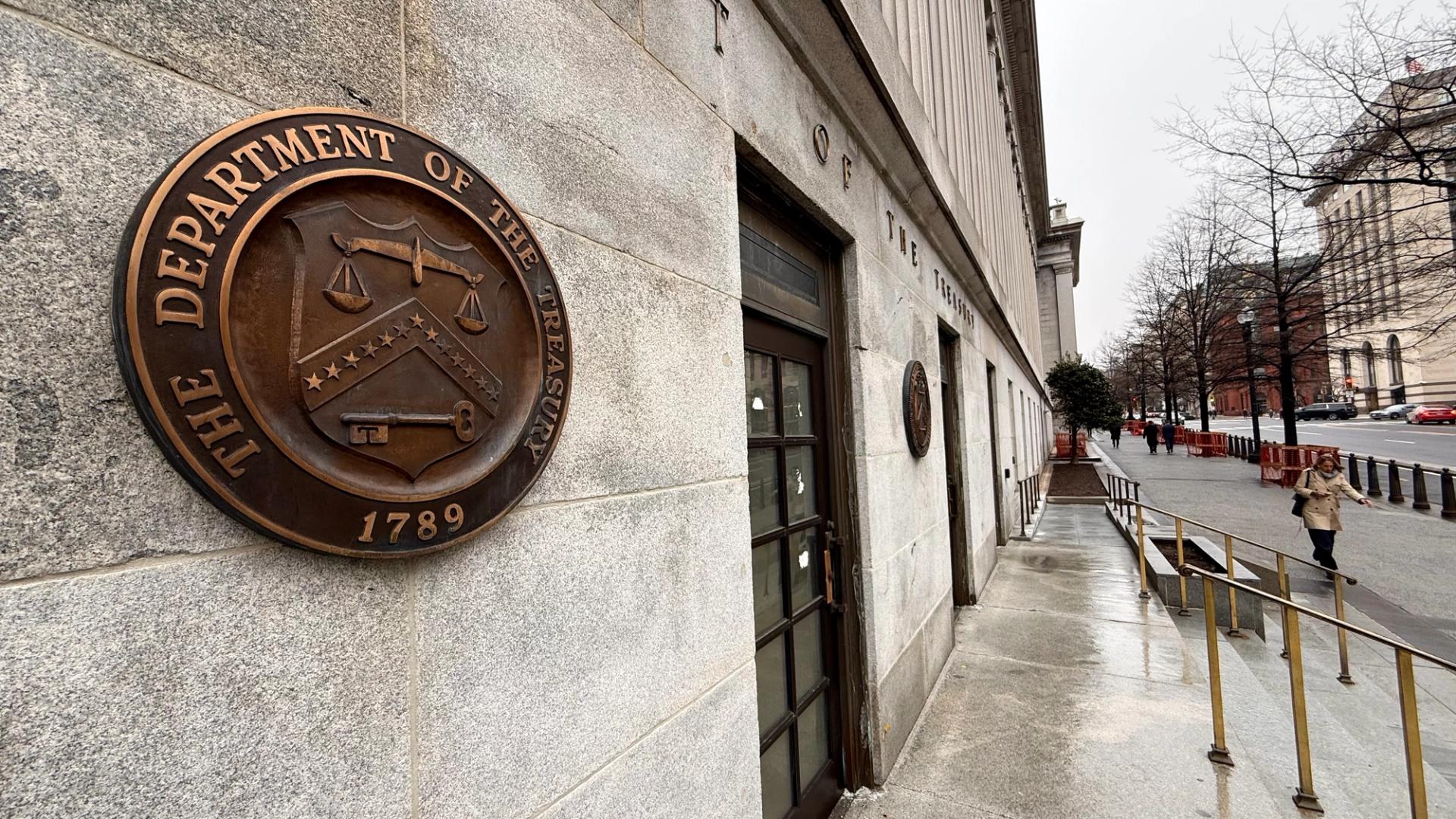
U.S. Treasury to propose demands that stablecoin firms be set to police bad transactions
Analysis
Price Impact
MedNew regulations requiring stablecoin issuers to police illicit transactions could increase operational costs and compliance burdens for stablecoin providers. this might indirectly affect the stability of some stablecoins if issuers face significant financial strain or operational challenges. however, the overall impact on major stablecoins like usdt and usdc is likely to be moderate, as these issuers are likely already investing heavily in compliance measures.
Trustworthiness
HighPrice Direction
NeutralWhile increased regulatory scrutiny on stablecoins could lead to a more robust and trustworthy ecosystem in the long run, the immediate price impact is uncertain. for major stablecoins, the impact might be minimal as they are likely to adapt. for smaller or less compliant stablecoins, there could be downward pressure if they struggle to meet the new standards. overall, the market might adopt a 'wait and see' approach, leading to a neutral short-term price direction.
Time Effect
LongThe full implementation of the genius act is expected by 2027, and these proposed rules are a step towards that. the effects of enhanced regulatory frameworks and compliance measures will likely unfold over the long term, influencing the stability, adoption, and perceived security of stablecoins.
Original Article:
Article Content:
Policy Share Share this article Copy link X icon X (Twitter) LinkedIn Facebook Email U.S. Treasury to propose demands that stablecoin firms be set to police bad transactions The U.S. is pitching new rules for stablecoin issuers to treat them like every other financial firm that must maintain armor against illicit uses, CoinDesk has learned. By Jesse Hamilton | Edited by Nikhilesh De Apr 8, 2026, 3:45 p.m. Make preferred on The U.S. Department of the Treasury is set to propose rules governing illicit-finance protections for stablecoin issuers. (Jesse Hamilton/CoinDesk) What to know : The U.S. Department of the Treasury is about to issue proposed rules that would set standards for stablecoin issuers to battle money laundering and sanctions violations. According to a summary of the proposals reviewed by CoinDesk, the Treasury's FinCEN and OFAC arms will pursue a joint rulemaking that sets out how issuers would have to comply with last year's GENIUS Act, including setting up controls to prevent illicit transactions and to be able to freeze and reject suspicious activity. The effort would defer to the issuers' understanding of their own businesses and suggests that any issuer maintaining a robust system of controls shouldn't have to worry about future enforcement actions. A firm issuing stablecoins in the U.S. would have an array of new duties to head off criminals and keep government watchdogs informed about malicious actors, according to rules poised for proposal by the U.S. Department of the Treasury that were reviewed by CoinDesk. A joint proposal from the Treasury's Financial Crimes Enforcement Network (FinCEN) and Office of Foreign Assets Control (OFAC) will outline the deep controls that stablecoin businesses would have to put in place, including abilities to "block, freeze and reject" transactions and internal protections to comply with the Bank Secrecy Act that governs most of the U.S. financial system. In one of the most significant moves yet to implement last year's Guiding and Establishing National Innovation for U.S. Stablecoins (GENIUS) Act — the first major crypto-sector law for the U.S. — the two arms of the Treasury Department that police illicit finance are setting out a tailored approach for stablecoin firms, which will be opened for a public comment period and potential revisions before it's finalized. But the agencies are also sending a message of deference to the industry, suggesting the companies understand their own hazards best. A summary of the joint proposal reviewed by CoinDesk said it's focused on effectiveness "and that financial institutions are best positioned to identify and evaluate their money laundering, terrorist financing and illicit finance risks." The department's effort contends that a firm that's running appropriate money-laundering preventions is generally safe from enforcement actions unless it's showing "a significant or systemic failure to maintain that program." On that money-laundering front, FinCEN would expect stablecoin issuers' programs to be able to halt specifically flagged transactions and to know where to devote "more attention and resources toward higher-risk customers and activities." When the U.S. authorities are pursuing a specific target, the regulated issuers subjected to this proposed rule would have to scour their own records for any activity tied to individuals or entities flagged by FinCEN. Also, the issuers will be expected to act as allies in the agency's pursuit of entities identified as "primary money laundering concerns." As recently as 2023, the agency had sought to tag crypto mixers such as Tornado Cash under that label, though earlier this year, the Treasury Department reversed course to suggest that mixers could serve legitimate and legal privacy uses. On the sanctions front, OFAC would require stablecoin issuers run risk-based safeguards for stablecoin activity on primary or secondary markets, and the policies must spot and reject transactions "that may violate or would violate U.S. sanctions." Sanction missteps — including past flagrant violations — have been a critical concern of crypto industry detractors, including recent scrutiny focused on the world's biggest exchange, Binance . Treasury Secretary Scott Bessent said in a statement that his department's latest efforts "will protect the U.S. financial system from national security threats without hindering American companies’ ability to forge ahead in the payment stablecoin ecosystem.” The crypto industry and its stablecoin leaders — including Tether, Circle, Ripple and the firm partially owned and controlled by the family of President Donald Trump, World Liberty Financial — have been awaiting regulation that helps further establish their bespoke assets as safe and reliable. Some tensions remain in the wider crypto community, which has had a tumultuous relationship with governments since its beginnings, when its founding principles aimed to keep cryptocurrencies outside of government control. The decentralized finance (DeFi) sector remains a space that seeks to cut away intermediaries and maintain direct interactions, but the illicit-finance controls for that arena are still unresolved in the ongoing negotiations among the industry, securities sector and lawmakers over the Digital Asset Market Clarity Act in the U.S. Senate. While the Treasury's stablecoin proposal and others from U.S. financial regulators are beginning to sketch out the guardrails, wide swaths of crypto activity still need to be addressed. Earlier this year, a third arm of the Treasury — the independent Office of the Comptroller of the Currency that regulates national banks and trusts — proposed its standards and procedures for issuers it'll watch as the primary federal regulator. This week, its sister regulator, the Federal Deposit Insurance Corp. did the same with a largely parallel proposal . The GENIUS Act is meant to go into full effect by 2027. Well before that, firms have been pursuing charters and partnerships to get involved in stablecoins. The Trump-tied World Liberty, for instance, applied for a charter as a trust bank in January and manages the USD1 stablecoin. The company is under fresh scrutiny this week after reportedly being unaware that its AB DAO partner was involved in a project with potential ties to Cambodia’s Prince Group, the target of major U.S. investigations, sanctioning and the seizure last year of a record $14 billion in bitcoin BTC $ 71,256.15 . Those types of business relationships at stablecoin issuers would be under stringent new industry-managed controls in the Treasury Department's pending proposal. Regulation Stablecoins More For You Encryption Supremacy: Zcash and Privacy in the Age of Scale By CoinDesk Research Mar 31, 2026 Commissioned by GenZcash Most crypto privacy models weaken as blockchain data grows. Encryption-based models like Zcash strengthen. CoinDesk Research maps the five privacy approaches and examines the widening gap. Why it matters : As blockchain adoption scales, the metadata available to machine learning models scales with it. Obfuscation-based privacy approaches are structurally degrading as a result. This report provides a comprehensive comparison of all five major crypto privacy architectures and a framework for evaluating which models remain durable as AI capabilities improve. View Full Report More For You White House study bolsters crypto's stance in stablecoin yield fight against bankers By Olivier Acuna | Edited by Nikhilesh De , Jesse Hamilton 1 hour ago White House economists said banning rewards wouldn't significantly boost banks' financial health, amplifying the crypto industry view in the Clarity Act debate. What to know : A new study from White House economists downplays the benefit banks would get from banning stablecoin yield — a position that aids the crypto sector's argument in the ongoing talks over the Clarity Act in the Senate. The White House has been eager to reach the finish line on the... Read full story Latest Crypto News Bitcoin is above $70,000 on Iran ceasefire, but rally is turning cautious for good reasons 39 minutes ago Standard Chartered is looking to take over crypto custody provider Zodia: Bloomberg 49 minutes ago RWA network Pharos lands a $1 billion valuation in $44M funding round ahead of mainnet debut 1 hour ago Adam Back denies he’s Satoshi Nakamoto after NYT report claims he’s Bitcoin’s creator 1 hour ago White House study bolsters crypto's stance in stablecoin yield fight against bankers 1 hour ago Quantum threat to Bitcoin is real, but manageable, according to Wall Street broker Bernstein 2 hours ago Top Stories Morgan Stanley's bitcoin ETF opens today, giving BlackRock’s $55 billion IBIT fund its toughest rival yet 3 hours ago Attacking bitcoin mining with a quantum computer would require the energy of a star, academics say 10 hours ago Ceasefire lifts bitcoin, but animal spirits may not return just yet 4 hours ago Iran eyes crypto toll for oil tanker transits through Strait of Hormuz, according to FT 2 hours ago CZ says SBF asked for billions 'like a Bologna sandwich' as FTX collapsed 15 hours ago Bitcoin buyers gobbled up nearly 850,000 BTC between $60,000 and $70,000 4 hours ago In this article BTC BTC $ 71,256.15 ◢ 4.55 %