Traders are the big winners as 24/7 stocks will finally end the after-hours price 'manipulation'
Analysis
Price Impact
Trustworthiness
Price Direction
Time Effect
Original Article:
Article Content:
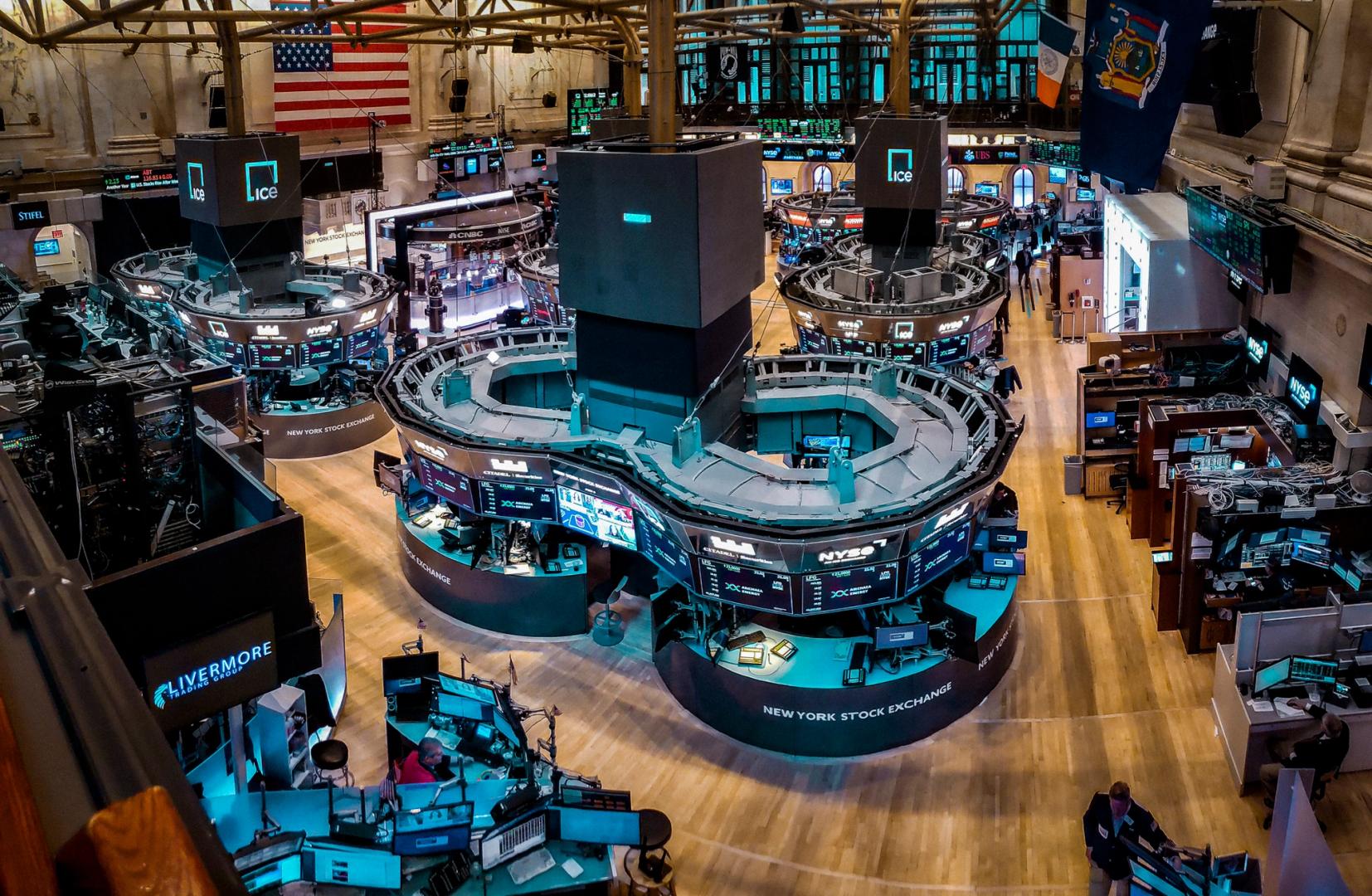
Markets Share Share this article Copy link X icon X (Twitter) LinkedIn Facebook Email Traders are the big winners as 24/7 stocks will finally end the after-hours price 'manipulation' Round-the-clock markets promise freedom for investors and pressure for intermediaries who traditionally wielded immense power during off-hours By Olivier Acuna | Edited by Nikhilesh De , Aoyon Ashraf Apr 4, 2026, 2:00 p.m. Make preferred on The most important question today is who will be the biggest winners and losers of stock trading going 24/7. (By Tobias Deml-Wikimedia Commons) What to know : As major U.S. exchanges move toward 24/7 trading, some claim that the current system allows brokers to exploit thin after-hours liquidity and to use opening auctions to influence prices and trigger client stop-losses. Academic studies and recent SEC and FINRA enforcement actions suggest that price discovery is less efficient and more vulnerable to spoofing and other manipulative tactics outside regular trading hours. Proponents argue that round-the-clock markets would shift power from intermediaries to traders, especially retail investors, by allowing them to react to news in real time rather than being sidelined during market closures. If the closing bell has long been a business model, then 24/7 trading is an attempt to break it. As the NYSE, Nasdaq, CME and Cboe race to introduce round-the-clock trading, the question is who stands to gain and who could lose. The answer is quite simple, Mati Greenspan, CEO and founder of Quantum Economics, told CoinDesk: “The biggest losers in 24/7 stock trading won’t be traders: they’ll benefit massively. It'll be the middlemen who’ve long made money when traders can’t trade.” Greenspan, also a market analyst, alleged that when markets reopen after what he called a big event, “a handful of firms decide the first tradable price. Oftentimes, they will explicitly use a price that triggers stop losses for their clients, closing them out at a loss and making a profit for the broker who is essentially trading against the client.” When Greenspan was asked whether brokers coordinate around pricing during market closures, he was blunt in his claim: “Yes, manipulation outright.” “They basically get to control prices, often with hours to strategize," he said. “Often hunting stops losses. When big news happens on weekends, the house tends to take liberties with pricing at the opening bell.” His comments come as several major U.S. exchanges are looking to offer around-the-clock trading services. The NYSE said it is seeking SEC approval for 24/7 trading. Nasdaq announced similar plans in December. CME plans to roll out 24-hour crypto futures in 2026, pending approval, and Cboe recently expanded U.S. index options to 24/5 trading. 'Plausible deniability' While Greenspan's comments could be seen as accusatory, it's not hard to see why such practices could be prominent in the after-hours market. When the usual trading hours come to a close, at 4 p.m. ET, the thin liquidity can make prices easier to influence. “After the 4 p.m. closing bell, you simply don’t have the same liquidity,” said Joe Dente, a floor broker at the New York Stock Exchange. “People have gone home and the liquidity is not there, so you’re going to see larger spreads.” Wider spreads and thinner order books, he said, create an environment where price movements can be exaggerated compared with the regular session. Academic research also supports the view that extended trading sessions are structurally different from core market hours. A widely cited joint UC Berkeley–University of Rochester study found that after-hours price discovery is “much less efficient,” citing lower volume and thinner liquidity that limit the speed at which information is incorporated into prices. When asked whether manipulation already occurs during those periods, Dente said it is “possible,” but he also pointed out that “the event of 24-hour trading is going to leave things open to manipulation," referring to conditions already seen in after-hours markets Greenspan, meanwhile, noted that these alleged manipulation practices are “not exactly above board, so they [brokers who might be taking part in such actions] tend to maintain plausible deniability.” This is where the line between actual manipulation and proof that such practises occur starts to blur. A widely cited SSRN study on opening price manipulation shows how brokers can influence prices during the pre-open auction by submitting and canceling large orders, temporarily pushing stocks away from their fundamental value before broader liquidity returns. The research found that such manipulation can create distorted opening prices that are later corrected once the full market begins trading, leaving investors who bought at the inflated price with losses. Because these distortions occur before normal trading volume returns, the resulting price moves can appear indistinguishable from ordinary market volatility. Still another broker, familiar with overnight trading practices and who asked not to be named because they were not authorized to speak publicly, said thin overnight liquidity can occasionally make it easier for coordinated strategies to influence prices in less widely traded stocks. And this is not just anecdotal evidence. In late 2025, the SEC settled charges over a multi-year spoofing scheme involving deceptive orders used to move prices in thinly traded securities. Regulators also fined Velox Clearing $1.3 million for failing to detect “layering” and “spoofing” in volatile stocks. Meanwhile, the U.S. Financial Industry Regulatory Authority (FINRA), in its 2026 Annual Regulatory Oversight Report , cited firms for “failing to maintain reasonably designed supervisory systems and controls, including with respect to the identification and reporting of potentially manipulative activity conducted in after-hours trading.” A win for retail? Whether it's hard to point out how widespread these accusations are, one thing is for sure: if trading goes 24/7, traders will be the ultimate winners, particularly retail traders. In today's electronic markets, traders who respond fastest to market news have a structural advantage. “There’s always an edge for whoever has the fastest computers and the best program writers,” said Dente, noting that algorithms can react to news and orders “in a nanosecond.” For individual investors, he added, keeping up with that speed is difficult. “How does the human person keep up with that?” And reacting to these events becomes even harder for smaller investors when the market is closed, leaving those retail or smaller traders at a massive disadvantage. Pranav Ramesh, head of quantitative research for options at Nasdaq and co-founder of Leadpoet, said thin markets can amplify those risks. “Broker coordination may often show up as industry-wide alignment around routing and execution practices, especially where a large share of retail flow ends up with a small number of wholesalers,” he said. “Outside regular hours, scrutiny can be harder because the market is thinner and there are fewer straightforward reference points for investors to benchmark execution quality,” Ramesh said in his personal capacity. Sources familiar with broker routing and liquidity practices told CoinDesk that price-setting power in thin sessions is real, particularly when major news breaks while markets are closed. According to those sources, coordination around routing, spreads and execution practices during extended gaps has historically been easier precisely because retail traders cannot participate. This is precisely what around-the-clock trading will solve for traders, according to Greenspan, who said 24/7 markets would blunt fintech firms' advantage by removing the weekend vacuum entirely. The recent Middle East conflict has been a perfect example of how this can open up more trading opportunities when markets remain closed. Decentralized exchange, Hyperliquid, which trades on blockchain 24/7, has seen growing interest from traders betting on traditional financial assets, including oil and gold, during the weekend, when traditional exchanges are closed. It has become so popular that weekly derivatives trading volume on the platform topped $50 billion, while it generated $1.6 million in revenue over 24 hours, outpacing the entire Bitcoin blockchain's revenue. The platform has also recently added an S&P 500 perpetual contract. Needless to say, major exchanges will also likely benefit from trading fees if they open for 24/7 trading. Whether round-the-clock trading ultimately weakens brokers’ influence on price setting remains to be seen. What is clear is that exchanges and investors stand to gain from markets that never close. “Traders can react in real time without being at the mercy of the middlemen — the brokers,” said Greenspan. Read more: Bitcoin's weekend selloff may be over with CME's 24/7 crypto trading move NYSE DeFi More For You Encryption Supremacy: Zcash and Privacy in the Age of Scale By CoinDesk Research Mar 31, 2026 Commissioned by GenZcash Most crypto privacy models weaken as blockchain data grows. Encryption-based models like Zcash strengthen. CoinDesk Research maps the five privacy approaches and examines the widening gap. Why it matters : As blockchain adoption scales, the metadata available to machine learning models scales with it. Obfuscation-based privacy approaches are structurally degrading as a result. This report provides a comprehensive comparison of all five major crypto privacy architectures and a framework for evaluating which models remain durable as AI capabilities improve. View Full Report More For You Five data sources say the same thing about bitcoin market. It's thinning from the inside By Shaurya Malwa | Edited by Omkar Godbole 2 hours ago CryptoQuant data shows overall bitcoin demand is contracting at -63,000 BTC per month even as institutional buyers accelerate purchases, with large holders distributing nearly 188,000 BTC over the past year. What to know : Institutional buyers, including ETFs and Strategy, are accumulating bitcoin near record levels, but broader market selling from whales, miners and other holders is overwhelming that demand. Multiple on-chain and sentiment indicators show a thinning demand structure, with large holders aggressively distributing, U.S. institutional appetite muted and bitcoin trading only about... Read full story Latest Crypto News Solana's quantum-threat readiness reveals harsh tradeoff: security vs speed 2 hours ago Five data sources say the same thing about bitcoin market. It's thinning from the inside 2 hours ago Judge continues Nevada ban on Kalshi sports markets 6 hours ago Here's what 'cracking' bitcoin in 9 minutes by quantum computers actually means 11 hours ago Schwab plans spot bitcoin, ether trading launch in first half of 2026 18 hours ago Circle under fire after $285 million Drift hack over inaction to freeze stolen USDC 18 hours ago Top Stories U.S. March jobs smash expectations, with 178,000 added Apr 3, 2026 The 'time pain' trap: why bitcoin’s bear market might need a few more months of ‘boring’ to hit a true floor Apr 2, 2026 Ethereum Foundation stakes another $93 million ether, reaching its 70,000 ETH target Apr 3, 2026 CFTC sues Illinois, Arizona, Connecticut over states' sports prediction market efforts Apr 2, 2026 Coinbase wins initial bank regulator nod for trust charter, boosting custody push Apr 2, 2026 Bitcoin trims big loss, stocks erase 2% decline, as Iran signals cooperation on key shipping route Apr 2, 2026