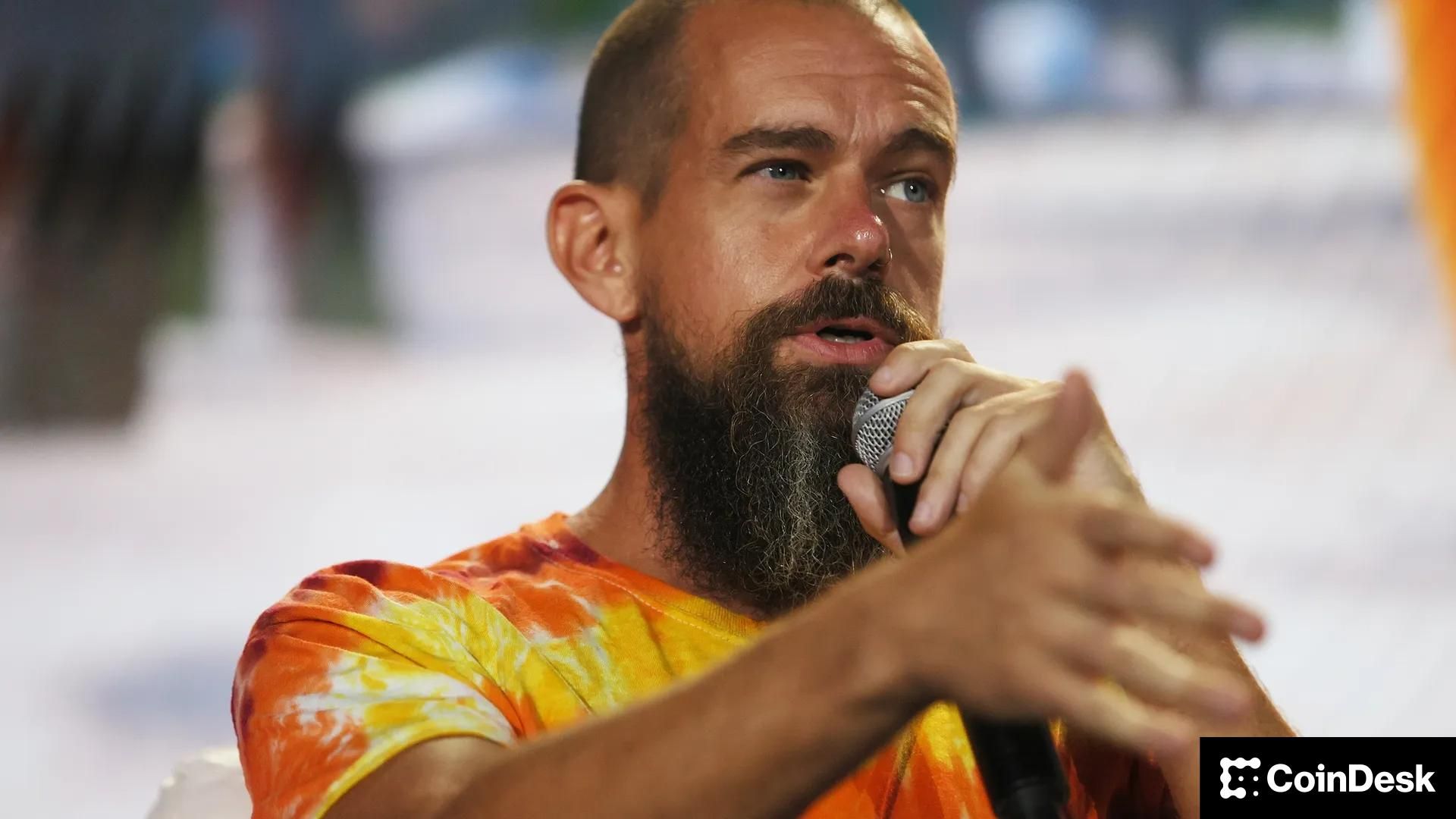
Bitcoin purist Jack Dorsey says that his firm is reluctantly giving in to stablecoin craze
Analysis
Price Impact
MedJack dorsey, a prominent bitcoin advocate, expressing reluctance to support stablecoins due to customer demand indicates a pragmatic market shift. while he personally favors bitcoin, block's (formerly square) adoption of stablecoins acknowledges their growing utility and user preference, potentially drawing some interest away from pure bitcoin plays but also increasing overall crypto ecosystem adoption.
Trustworthiness
HighJack dorsey's statements are highly credible as he is the ceo of block and a well-known figure in the bitcoin community. his opinions and company's strategic decisions carry significant weight.
Price Direction
NeutralDorsey's personal preference for bitcoin remains, and block's move is driven by customer demand and competitive pressure rather than a fundamental shift in belief about bitcoin's long-term superiority. this suggests a balancing act rather than a strong directional signal for either asset.
Time Effect
LongThis decision reflects a growing trend in the crypto market where stablecoins are becoming integral to user experience and utility, especially for payments and trading. this long-term integration will continue to shape how users interact with cryptocurrencies.
Original Article:
Article Content:
Finance Share Share this article Copy link X icon X (Twitter) LinkedIn Facebook Email Bitcoin purist Jack Dorsey says that his firm is reluctantly giving in to stablecoin craze The shift comes as stablecoins surge in popularity and competitors like Stripe and PayPal add stablecoin options, increasing market pressure. By Francisco Rodrigues | Edited by Aoyon Ashraf Mar 7, 2026, 5:24 p.m. Make us preferred on Google What to know : Block CEO Jack Dorsey says the company will support stablecoins due to customer demand, despite previously advocating for Bitcoin as the sole internet money protocol. The shift comes as stablecoins surge in popularity and competitors like Stripe and PayPal add stablecoin options, increasing market pressure. Dorsey maintains that Bitcoin's decentralized model remains his preferred choice for an open financial protocol. Block CEO Jack Dorsey says his company will support stablecoins, despite having long argued that Bitcoin should serve as the internet’s native money protocol. In an interview with WIRED , Dorsey acknowledged the change while making clear it reflects customer demand rather than a shift in personal belief. “I don’t like that we’re going to support stablecoins but our customers want to use them,” he said. “I don’t think it’s wise to go from one gatekeeper to another.” The move marks a pragmatic turn for one of Silicon Valley’s most vocal Bitcoin advocates. For years, Dorsey framed Block’s crypto strategy around Bitcoin alone, backing mining hardware development and integrating the asset into products such as Cash App. The company first introduced the option for users to buy and sell bitcoin on the Cash App, and the company received a BitLicense from New York regulators the following year. Block started a Bitcoin development arm and funded Bitcoin and Lightning Network developers in 2019, and started accumulating bitcoin for its corporate treasury in 2020. It currently holds 8,888.3 BTC, worth more than $600 million. Stablecoins have surged in the meantime. Fiat currency-pegged tokens now circulate widely across crypto markets and cross-border payments, with their total market capitalization reaching $318 billion, according to CoinMarketCap data. Competition is also intensifying. Payment companies, including Stripe and PayPal , have already integrated stablecoin infrastructure, increasing pressure on Block to offer similar options to avoid losing users, though Dorsey didn’t mention these during the interview. This isn't the first time Dorsey's Block has reluctantly endorsed stablecoins. In November last year, Block’s Cash App announced it was adding support for stablecoins, making them “interoperable with a customer’s USD cash balance.” Stablecoin deposits, the firm said, would instantly be converted into U.S. dollars in users’ balances. That development was notable as back in 2024, when Facebook was working on its since-scrapped Libra stablecoin and the Libra Association behind it, Dorsey said with a definitive “Hell no,” that he would not be joining the crypto payments scheme. At the time, Dorsey notably said the project “was born out of a company’s intention, and it’s not consistent with what I personally believe and what I want our company to stand for.” In true bitcoin purist fashion, he continues to argue that Bitcoin’s decentralized design makes it the best candidate for an open financial protocol. The comments come after the company cut its workforce by roughly 40% , citing structural changes driven by artificial intelligence. While the layoffs sparked controversy over whether the company had overhired, Dorsey brushed off the question during the WIRED interview and doubled down on the AI angle. “These [AI] tools are presenting a future that entirely changes how a company is structured,” Dorsey said in the interview, noting that the layoffs weren't about fixing the company's cost and revenue per employee, because his firm was "already ahead" of all of its competitors on those metrics. “I don't know what the ultimate outcome is, but I do know it's going to have a dramatic effect,” Dorsey added. Block Jack Dorsey Stablecoins More For You Pudgy Penguins: Challenging the Pokemon and Disney Legacy in the Global IP Race By CoinDesk Research Feb 27, 2026 Commissioned by Pudgy Penguins CoinDesk Research looks into how Pudgy Penguins disrupts traditional toys market via a phygital model. With 2M+ units sold, they scale via global partnerships and events. What to know : Disrupting a Stagnant Market : Pudgy Penguins is utilizing a "Negative CAC" model to challenge the traditional $31.7B licensed toy industry by treating physical merchandise as a profitable user acquisition tool rather than just a final product. View Full Report More For You Kalshi, Polymarket seeking $20 billion valuations in fundraising talks: WSJ By Francisco Rodrigues | Edited by Aoyon Ashraf 55 minutes ago Kalshi, approved by the Commodity Futures Trading Commission, was last valued at $11 billion, while Polymarket was valued at $9 billion. What to know : Kalshi and Polymarket are exploring fundraising rounds that could value each company at approximately $20 billion, doubling their valuations from late 2025. Kalshi, approved by the Commodity Futures Trading Commission, was last valued at $11 billion, while Polymarket was valued at $9 billion. Both platforms are leading the prediction markets sector, with Kalshi's open interest at over $400 million and Polymarket's at $360 million, alongside notable weekly volume figures. Read full story Latest Crypto News Top Wall Street minds see AI rotation ahead as bitcoin seeks role in new cycle 25 minutes ago Kalshi, Polymarket seeking $20 billion valuations in fundraising talks: WSJ 55 minutes ago Circle moves $68 million in just 30 minutes by using its own stablecoin for internal payments 2 hours ago Those who cheered U.S. Bitcoin reserve have spent year watching Trump's order languish 2 hours ago Bitcoin slips below $68,000 as dollar posts steepest weekly gain in a year 11 hours ago Bitcoin could crash by another 30% as four-year cycle gains strength, investment firm says 11 hours ago Top Stories Why bitcoin couldn't hold $70,000 despite its best week of Wall Street news in months 21 hours ago BlackRock private credit fund is latest to crack, hitting crypto prices and DeFi markets 23 hours ago Binance tells Senate probe no accounts sent crypto directly to Iran Mar 6, 2026 SEC, Justin Sun reach settlement over Tron lawsuit Mar 5, 2026 U.S. judge freezes BlockFills assets in dispute over 70 bitcoin with creditor Dominion Capital Mar 5, 2026