AI agents will be primary users of blockchain, NEAR co-founder says
Analysis
Price Impact
MedThe co-founder of near, a prominent blockchain, suggesting ai agents will be primary users of blockchain could boost interest in near and similar infrastructure-focused projects. however, the impact is moderated as it's a long-term vision and not an immediate catalyst.
Trustworthiness
HighThe source is a co-founder of a major blockchain project (near), giving significant weight to his opinions on the future of the technology. the reasoning is logical, aligning with current ai advancements and potential blockchain utility.
Price Direction
BullishThis narrative positions blockchain as a critical backend infrastructure for the burgeoning ai ecosystem. if ai agents become the dominant users, blockchains that provide robust, scalable, and efficient settlement layers like near could see increased demand and adoption.
Time Effect
LongThe co-founder explicitly states this is a vision for 'a few years' and highlights the long-term convergence of ai and crypto infrastructure. this is not an immediate price driver but a foundational shift.
Original Article:
Article Content:
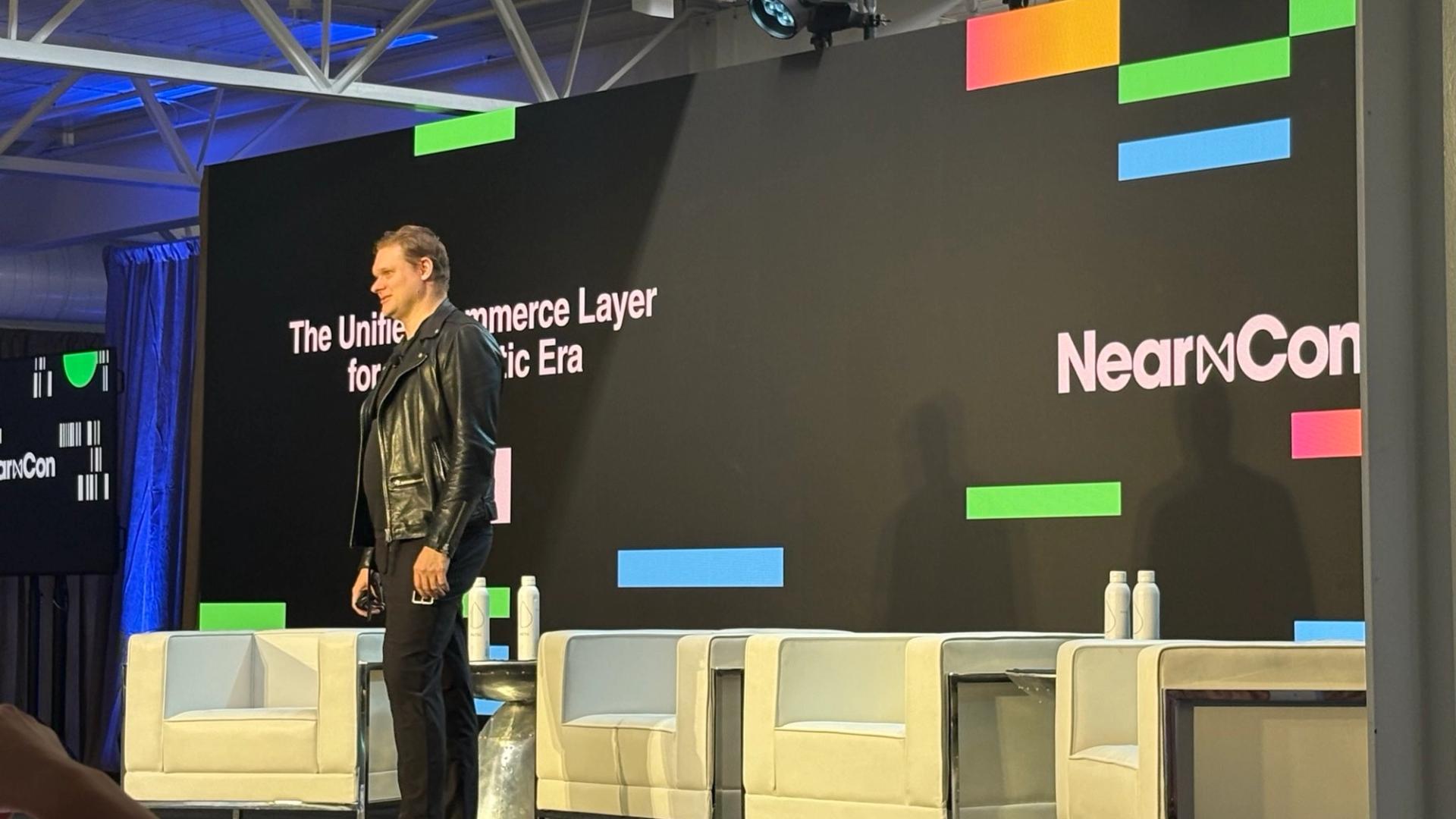
Tech Share Share this article Copy link X icon X (Twitter) LinkedIn Facebook Email AI agents will be primary users of blockchain, NEAR co-founder says Polosukhin argues that AI will become the primary interface layer for everything online, including crypto, abstracting away wallets, explorers and transaction hashes. By Margaux Nijkerk | Edited by Stephen Alpher Mar 3, 2026, 5:28 p.m. Make us preferred on Google What to know : For years, the crypto industry has searched for its next breakout moment — something on the scale of DeFi summer or the NFT boom. Artificial intelligence, meanwhile, has quietly embedded itself into daily life. Developers use ChatGPT as a co-pilot. Consumers rely on AI assistants to draft emails, plan travel and increasingly manage workflows. Crypto, by comparison, still feels infrastructural. Illia Polosukhin, co-founder of NEAR, believes that divide is about to collapse — but not in the way many expect. SAN FRANCISCO, CA - For years, the crypto industry has searched for its next breakout moment — something on the scale of DeFi summer or the NFT boom. Meanwhile, artificial intelligence has quietly embedded itself into daily life. Developers use ChatGPT as a co-pilot. Consumers rely on AI assistants to draft emails, plan travel, and increasingly manage workflows. Crypto, by comparison, still feels infrastructural. Illia Polosukhin, co-founder of NEAR, believes that divide is about to collapse — but not in the way many expect. “The users of blockchain will be AI agents,” Polosukhin said in an interview. “AI is going to be on the front end, and blockchain is going to be the back end.” His framing cuts against much of crypto’s recent experimentation with AI, which has largely centered on speculative tokens, memecoins and agent-themed trading bots. Instead, Polosukhin argues that AI will become the primary interface layer for everything online, including crypto, abstracting away wallets, explorers and transaction hashes. “The goal is to make your AI hide all the blockchain,” he said. “The fact that we have [blockchain] explorers is effectively a failure, because we don’t abstract the technology.” In this view, blockchain doesn’t disappear — it recedes. AI agents interact with protocols directly , executing payments, managing assets, coordinating services and even voting in governance systems. Humans, meanwhile, interact with the AI. “AI is the front end, not just for blockchain, but for everything,” Polosukhin said. “In a few years, it’s going to be just AI, like the operating system.” That shift, he argues, could explain why crypto hasn’t had an “AI moment” comparable to the consumer explosion of generative tools. “Blockchain is inherently financial,” he said. “It will be limited to finance, but everything we do in our life is finance.” Rather than competing with AI platforms, crypto’s role may be to provide neutral financial rails beneath them: settlement, ownership, verifiability and programmable incentives. Still, Polosukhin is critical of how the industry has approached both AI and governance so far — comments that come just days after Ethereum co-founder Vitalik Buterin proposed “AI stewards” to help reinvent DAO governance. “In blockchain, we propose technical solutions before asking: what is the core problem?” he said. He points to decentralized autonomous organizations, or DAOs, as an example. “DAOs have dramatically failed because they have been unbounded, not really designed to solve any problem,” he said, arguing that governance tools, including AI-assisted voting agents, only make sense if they’re tied to clearly defined economic or coordination needs. Another friction point between the AI and crypto communities has been culture. “The memecoins are ruining [the industry's] reputation,” Polosukhin said, arguing that rampant speculation and scams have alienated serious AI researchers. “AI people are banning crypto effectively because of memecoins.” The longer-term convergence, however, may be less about token launches and more about infrastructure. As AI systems increasingly act on users’ behalf, like paying bills, hiring services, allocating capital, they will require trusted execution, privacy and programmable financial coordination. “Blockchain is about neutral markets and neutral infrastructure,” Polosukhin said. If AI becomes the operating system of the internet, crypto’s future may not lie in being the app users open, but in becoming the invisible settlement layer their AI agents quietly depend on. Read more: NEAR Launches Near.com super app, touting AI capabilities and confidential transactions AI Near protocol More For You Pudgy Penguins: Challenging the Pokemon and Disney Legacy in the Global IP Race By CoinDesk Research Feb 27, 2026 Commissioned by Pudgy Penguins CoinDesk Research looks into how Pudgy Penguins disrupts traditional toys market via a phygital model. With 2M+ units sold, they scale via global partnerships and events. What to know : Disrupting a Stagnant Market : Pudgy Penguins is utilizing a "Negative CAC" model to challenge the traditional $31.7B licensed toy industry by treating physical merchandise as a profitable user acquisition tool rather than just a final product. View Full Report More For You OKX jumps into AI agent race with new OnchainOS toolkit By Sam Reynolds , AI Boost | Edited by Oliver Knight 8 hours ago Developer layer aims to stitch together wallets, swaps and data feeds for autonomous bots. What to know : OKX has launched an AI-focused upgrade to its OnchainOS developer platform, positioning it as infrastructure for autonomous crypto trading agents. The new AI layer unifies wallet infrastructure, liquidity routing, and on-chain data feeds so agents can execute high-level trading instructions across more than 60 blockchains and 500-plus decentralized exchanges. Developers can access OnchainOS's AI capabilities via natural-language "AI Skills," Model Context Protocol integrations, and REST APIs, with the system already handling 1.2 billion daily API calls and about $300 million in trading volume. Read full story Latest Crypto News Aave governance rift deepens as major governance group exits $26 billion DeFi protocol 3 minutes ago Eric Trump’s American Bitcoin buys 11,298 ASIC miners, increasing mining capacity by 12% 11 minutes ago Bank of Japan expands blockchain settlement sandbox and says CBDC efforts are ongoing 19 minutes ago Bitcoin attempting to make a stand as global stock markets melt down on Iran war 1 hour ago End of bitcoin 'HODL': public miners going all-in on AI, signaling more BTC selling 1 hour ago CFTC chief Selig to clear path for U.S. perpetual futures in coming weeks 1 hour ago Top Stories ‘Scam token’ case against Uniswap dismissed by U.S. district judge in NYC 6 hours ago Bitcoin supply approaching 20 million: The final million will take another 114 years to mine 9 hours ago Dollar surge pressures crypto markets after escalation in Iran conflict 5 hours ago Core Scientific sells $175 million in bitcoin as AI pivot accelerates 8 hours ago Japan prime minister Sanae Takaichi disavows Solana meme coin after it crashes by 75% 7 hours ago Weekend warriors: How HyperLiquid became retail’s bear market playground Mar 2, 2026