CFTC chief Selig to clear path for U.S. perpetual futures in coming weeks
Analysis
Price Impact
HighThe cftc clearing the path for u.s. perpetual futures could lead to increased institutional adoption and trading volume, potentially boosting prices for major cryptocurrencies like btc and eth. this also signals a more favorable regulatory environment in the us.
Trustworthiness
HighThe statement comes directly from the cftc chairman, mike selig, and is corroborated by his appearance alongside the sec chairman, indicating a coordinated regulatory effort. the timeline mentioned ('within the next month or so') adds to the credibility.
Price Direction
BullishThe introduction of regulated perpetual futures in the u.s. is expected to attract more capital into the crypto market, as it provides a more familiar and regulated derivative product for institutional investors. this increased demand is likely to drive prices up.
Time Effect
ShortThe cftc chairman mentioned 'within the next month or so,' indicating that the impact could be felt relatively soon as policies are finalized and implemented.
Original Article:
Article Content:
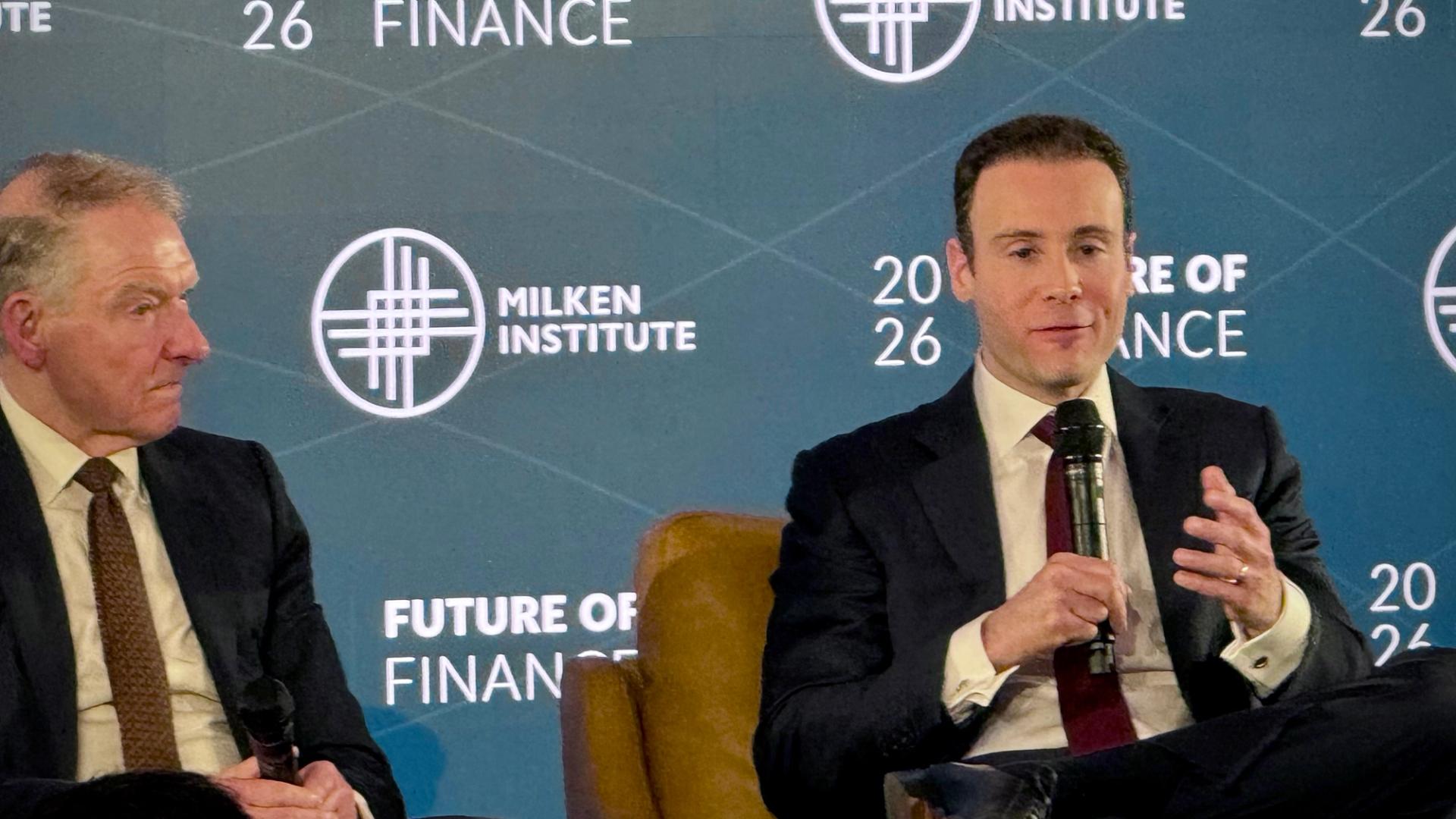
Policy Share Share this article Copy link X icon X (Twitter) LinkedIn Facebook Email CFTC chief Selig to clear path for U.S. perpetual futures in coming weeks The Commodity Futures Trading Commission chairman, appearing beside his Securities and Exchange Commission counterpart, said several crypto policies are coming. By Jesse Hamilton | Edited by Nikhilesh De Mar 3, 2026, 3:38 p.m. Make us preferred on Google U.S. Commodity Futures Trading Commission Chairman Mike Selig (right) said perpetual futures are coming to the U.S. (Jesse Hamilton/CoinDesk) What to know : U.S. Commodity Futures Trading Commission Chairman Mike Selig said his agency is close to coming out with policies allowing crypto perpetual futures. It's among several near-term digital assets policies the regulator is close to revealing alongside the Securities and Exchange Commission, its partner in Project Crypto, he said. The CFTC chief also said rules are coming for the prediction markets. WASHINGTON, D.C. — Crypto perpetual futures have largely developed offshore because of the U.S. reluctance to pursue industry regulations, said U.S. Commodity Futures Trading Commission Chairman Mike Selig, and his agency will soon provide guidance on how that business should be handled. Such derivatives contracts, which don't expire and are often associated with leverage, have been an area of high interest to the industry. U.S. exchange Kraken, for instance, recently announced a move into perpetual futures for tokenized stocks for non-U.S. users. Selig's agency is "working towards getting professional futures, true professional futures here in the U.S. within the next month or so," he said at a Milken Institute event in Washington on Tuesday. "We expect to announce that very soon." "The prior administration drove a lot of these firms and the liquidity offshore," he noted. That was a theme of his remarks and those from his U.S. Securities and Exchange Commission counterpart, Chairman Paul Atkins. As they've often done lately to underline their shared mission on digital assets, which they call Project Crypto, the two appeared together on stage and highlighted their unified approach . One of the things the two are pursuing are "innovation exceptions" to allow for crypto experimentation without fear of regulatory crackdown. Selig said they'll also soon define how decentralized finance (DeFi) developers are approached after years of prosecution and regulatory uncertainty. Selig, who can act on his own because he's currently the only member on the CFTC's five-member commission, also said prediction markets — an overlapping cousin of the crypto sector — will get "guidance in the very near future" from the regulator. "We're going to be setting very clear standards." And he said the agency is also working on a more fulsome rulemaking process to soon give that position more permanent footing than guidance, which is procedurally easy to eliminate and rewrite. Oversight of the events-contracts firms, including such leaders as Polymarket and Kalshi, is under dispute, with state gambling regulators pressing their own authorities over the firm's sports contracts. Selig stepped forward to combat that in courts, arguing the CFTC's position as a lead regulator of such firms' activities. "They can exist in parallel," he said Tuesday of the two regulatory regimes. Atkins, though, delved into one of the drawbacks of the regulators' current work: legal standing. Despite Atkins' earlier confidence that the SEC can forge ahead without new laws directing its crypto work, he said on Tuesday, "We really do need statutory certainty." "We need the sense of Congress," he said. A U.S. Supreme Court decision two years ago removed a significant degree of authority that federal regulators enjoyed in court disputes over their actions, so agencies going it alone on policy guidance doesn't carry the weight it once did. Agencies such as the SEC and CFTC can more easily be challenged, and their positions also easily reversed by future officials arriving at the commissions. The U.S. Senate is still working on the Digital Asset Market Clarity Act that's meant to establish a regulatory system for the U.S crypto markets. That legislative effort remains jammed up in negotiations involving the industry, bankers, lawmakers from both parties and the White House. Its chances for passage in 2026 grow more difficult with each day, as midterm elections approach and available Senate floor time dwindles. Read More: The chief of the SEC is headlining an event sponsored by a crypto firm at war with it U.S. Commodity Futures Trading Commission Mike selig U.S. Securities and Exchange Commission Paul Atkins perpetual contracts More For You Pudgy Penguins: Challenging the Pokemon and Disney Legacy in the Global IP Race By CoinDesk Research Feb 27, 2026 Commissioned by Pudgy Penguins CoinDesk Research looks into how Pudgy Penguins disrupts traditional toys market via a phygital model. With 2M+ units sold, they scale via global partnerships and events. What to know : Disrupting a Stagnant Market : Pudgy Penguins is utilizing a "Negative CAC" model to challenge the traditional $31.7B licensed toy industry by treating physical merchandise as a profitable user acquisition tool rather than just a final product. View Full Report More For You ‘Scam token’ case against Uniswap dismissed by U.S. district judge in NYC By Olivier Acuna | Edited by Oliver Knight 4 hours ago District Judge says that due to the protocol’s decentralized nature, the identities of the scam token issuers are basically unknown, leaving plaintiffs with no identifiable defendant. What to know : A federal judge in New York has dismissed all remaining claims in a proposed class action against Uniswap Labs, its CEO and venture backers, ruling they cannot be held liable for alleged scam tokens traded on the protocol. Judge Katherine Polk Failla found that, because Uniswap is a decentralized, permissionless protocol run by autonomous smart contracts, developers and investors are not responsible for third parties’ misuse of the platform. Legal experts say the decision is an early, precedent-setting ruling for DeFi that underscores the difficulty of assigning civil liability to protocol creators and may influence how courts approach future crypto and criminal cases. Read full story Latest Crypto News Here is why Harvard trimmed bitcoin and bought ether and why the move is bullish for crypto 16 minutes ago CoinDesk 20 performance update: AAVE plunges 10%, leading index lower 1 hour ago Ondo Finance tokenized stocks platform on Binance wins regulatory approval in Abu Dhabi 1 hour ago Visa and Bridge plan stablecoin-linked card expansion to over 100 countries 2 hours ago Bitcoin could slide further on liquidity squeeze, but long-term bull case intact: Sygnum CIO 2 hours ago Oil shock and inflation fears drag down bitcoin 3 hours ago Top Stories Bitcoin falls below $67,000 as U.S. equities slide and oil pushes higher 6 hours ago Dollar surge pressures crypto markets after escalation in Iran conflict 4 hours ago ‘Scam token’ case against Uniswap dismissed by U.S. district judge in NYC 4 hours ago Bitcoin supply approaching 20 million: The final million will take another 114 years to mine 7 hours ago Core Scientific sells $175 million in bitcoin as AI pivot accelerates 6 hours ago Japan prime minister Sanae Takaichi disavows Solana meme coin after it crashes by 75% 5 hours ago