RWA issuers prioritize capital formation over liquidity, according to Brickken survey
Analysis
Price Impact
LowThis article focuses on the tokenization of real-world assets (rwas) and its primary drivers (capital formation over liquidity), not directly on the price of specific cryptocurrencies like btc or eth. while rwa tokenization is a growing sector within crypto, the immediate impact on major cryptocurrencies is indirect and likely to be low in the short term.
Trustworthiness
HighThe article is based on a survey conducted by brickken, a tokenization platform, and quotes industry professionals. it also references plans from major exchanges like nyse and nasdaq, providing a factual basis for its claims. the information appears well-researched and attributed.
Price Direction
NeutralThe article discusses the strategic priorities of rwa issuers (capital formation vs. liquidity) and regulatory hurdles. it does not predict or suggest any immediate bullish or bearish price movements for major cryptocurrencies. the focus is on the infrastructure and adoption of tokenization itself.
Time Effect
LongThe long-term implications of rwa tokenization for the broader financial ecosystem and crypto markets could be significant, potentially leading to increased adoption and integration. however, the immediate price impact on existing cryptocurrencies is expected to be gradual.
Original Article:
Article Content:
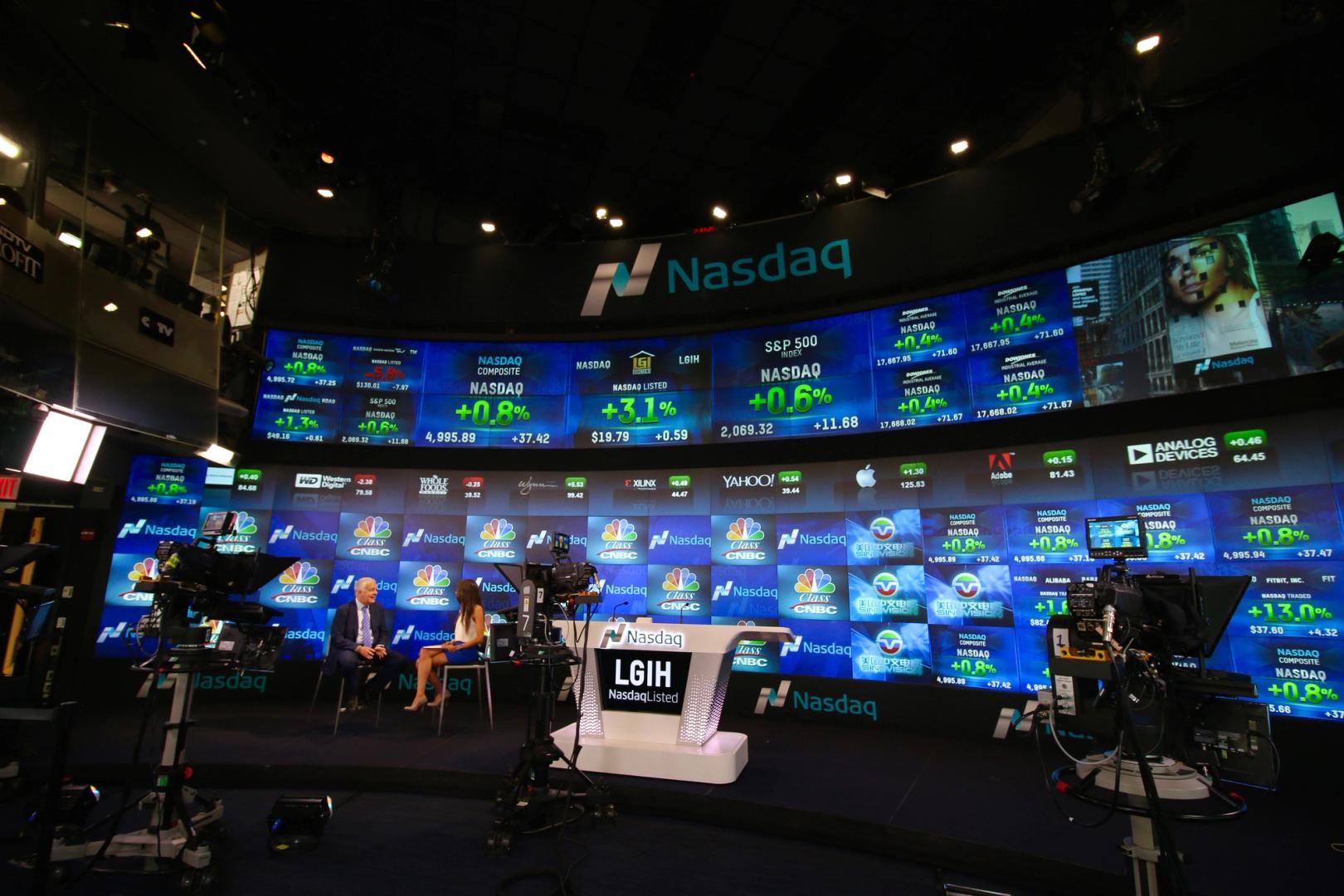
Finance Share Share this article Copy link X icon X (Twitter) LinkedIn Facebook Email RWA issuers prioritize capital formation over liquidity, according to Brickken survey Exclusive fourth quarter data shows 69.2% of issuers are live, while 84.6% report regulatory friction shaping tokenization rollout. By Olivier Acuna | Edited by Stephen Alpher Feb 20, 2026, 3:55 p.m. Make us preferred on Google Nasdaq, NYSE and the CME are all planning to launch tokenized stock trading 24/7. (By Luca Marfè -Wikimedia Commons/Modified by CoinDesk) What to know : A new Brickken survey finds most real-world asset issuers are using tokenization primarily to improve capital formation and fundraising efficiency, not to unlock secondary market liquidity. While major exchanges like CME, NYSE and Nasdaq push toward 24/7 trading for tokenized assets, many issuers remain in a validation phase focused on regulatory structures, issuance processes and compliant asset quality. Regulation is the main drag on tokenization efforts, even as activity expands beyond real estate into equities, IP and entertainment, with industry leaders emphasizing issuance infrastructure as the key bridge between traditional and decentralized finance. A new fourth quarter 2025 survey from tokenization platform Brickken suggests that the majority of real-world asset (RWA) issuers are using tokenization to raise capital rather than to unlock secondary market liquidity, according to a report shared with CoinDesk. Among respondents, 53.8% said capital formation and fundraising efficiency is their main reason for tokenizing, while 15.4% said the need for liquidity was their main incentive. Another 38.4% said liquidity was not needed, while 46.2% said they expect secondary market liquidity within six to 12 months. STORY CONTINUES BELOW Don't miss another story. Subscribe to the Crypto Daybook Americas Newsletter today . See all newsletters Sign me up By signing up, you will receive emails about CoinDesk products and you agree to our terms & conditions and privacy policy . “What we’re seeing is a shift away from tokenization as a buzzword and toward tokenization as a financial infrastructure layer,” Jordi Esturi, CMO at Brickken, told CoinDesk. “Issuers are using it to solve real problems: capital access, investor reach, and operational complexity.” Brickken’s report comes as major U.S. stock exchanges announce plans to expand trading models for tokenized assets, including 24/7 markets. CME Group said they will offer around-the-clock trading for its crypto derivatives by May 29, while the New York Stock Exchange (NYSE) and Nasdaq shared their plans to offer 24/7 tokenized stock trading. Esturi said the exchanges’ plans have more to do with business model evolution than with an issuer demand disconnect. “It’s less about getting ahead of demand and more about exchanges evolving their business model,” he said. “Exchanges increase revenue by increasing trading volume, and extending trading hours is a natural lever.” At the same time, many issuers are still in what he described as the phase of validation, during which they prove regulatory structures, test investor appetite and digitize issuance processes. “Liquidity is not yet their primary focus because they are building foundations,” he emphasized, adding that they view tokenization as “the upstream engine that feeds trading venues.” The Brickken CMO also said that without compliant, structured, high-quality assets entering the market, secondary trading platforms have nothing meaningful to trade. “The true value creation happens at the issuance layer,” Esturi noted. Optional liquidity versus mandatory While 38.4% of surveyed issuers said liquidity was not required, Esturi pointed out the difference between “optional liquidity and mandatory liquidity,” noting that many private market issuers operate on long-term horizons. “Liquidity is inevitable, but it must scale in parallel with issuance volume and institutional adoption, not ahead of it.” Ondo, which began with tokenized U.S. Treasuries and now has more than $2 billion in assets, is focused on stocks and ETFs specifically because of their “strong price discovery, deep liquidity and clear valuation,” Chief Strategy Officer Ian de Bode said in a recent interview with CoinDesk. “You tokenize something either to make it easier to access or to use it as collateral,” de Bode said. “Stocks fit both, and they price like assets people actually understand, unlike a building in Manhattan. If TradFi moves to 24/7, that’s a godsend,” de Bode added. “It’s our biggest bottleneck.” The survey shows that tokenization is already operational for many participants: 69.2% of respondents reported completing the tokenization process and being live, 23.1% are in progress, and 7.7% are still in the planning phase. Regulations are still an issue Regulation is a major concern among those surveyed: 53.8% of respondents said regulation slowed their operations, while 30.8% reported partial or contextual regulatory friction. In total, 84.6% experienced some level of regulatory drag. By comparison, 13% cited technology or development challenges as the hardest part of tokenization. “Compliance isn’t something issuers are dealing with after launch; it’s something they’re taking into account and configuring from day one,” said Alvaro Garrido, founding partner at Legal Node. “We see an increasing demand for legal structures tailored to the specific project needs and underlying technology.” The report also suggests tokenization is expanding beyond real estate. Real estate accounted for 10.7% of assets tokenized or planned for tokenization, compared with 28.6% for equity/shares and 17.9% for IP and entertainment-related assets. Respondents spanned sectors including technology platforms (31.6%), entertainment (15.8%), private credit (15.8%), renewable energy (5.3%), banking (5.3%), carbon assets (5.2%), aerospace (5.3%) and hospitality (5.2%). “The real bridge between TradFi and DeFi is not ideological,” said Patrick Hennes, head of digital asset servicing at DZ PRIVATBANK. “It is issuance infrastructure that translates regulatory requirements, investor protection and asset servicing standards into programmable systems.” Tokenized Equity Tokenization Crypto Derivatives More For You Zoomex: Precise Systems of Fairness and Transparency by Design By CoinDesk Jan 31, 2026 Commissioned by Zoomex Read full story Higit pang Para sa Iyo Goldman Sachs, Franklin Templeton, and Nicki Minaj: Inside Trump’s surreal Mar-a-Lago crypto summit Ni Helene Braun , Nikhilesh De | Edited by Aoyon Ashraf 1 oras ang nakalipas Crypto, real estate and politics collided at Trump’s Mar-a-Lago club as insiders debated tokenization and regulation. Ano ang dapat malaman : The World Liberty Financial forum at Mar-a-Lago brought together major figures from traditional finance, crypto and real estate in an intimate, Trump-branded setting that blurred politics and markets. While panels touched on digital assets and the future of tokenized real estate, many speakers, including members of the Trump family, focused on grievances with banks and broader critiques of the existing financial system. High-profile guests such as Binance founder Changpeng Zhao, Goldman Sachs CEO David Solomon, FIFA president Gianni Infantino and rapper Nicki Minaj underscored the event’s mix of financial influence, celebrity and political loyalty more than concrete crypto developments. Basahin ang buong kwento Latest Crypto News Bitcoin pops then drops as Supreme Court strikes down Trump tariffs 46 minutes ago Goldman Sachs, Franklin Templeton, and Nicki Minaj: Inside Trump’s surreal Mar-a-Lago crypto summit 1 hour ago CoinDesk 20 performance update: AAVE falls 3.3%, leading index lower 1 hour ago What next for XRP as volatility sinks to 2024 lows 2 hours ago Bitcoin gains, is still 'signficantly undervalued,' Bitwise says. 'Extreme fear' dominates. 3 hours ago Dual South Korean listings send Ethereum layer-2 token AZTEC surging 82% 4 hours ago Top Stories Bitcoin logs worst first 50-day start to a year on record 10 hours ago Ripple's Brad Garlinghouse says CLARITY bill has '90% chance' of passing by April 9 hours ago Inside the meeting: White House favors some stablecoin rewards, tells banks it's time to move 17 hours ago Bitcoin difficulty jumps 15% largest increase since 2021, despite price slump 9 hours ago Metaplanet CEO rebuts critics over bitcoin strategy and transparency 10 hours ago Eric Trump reitrates claim bitcoin is just getting started on its road to $1 million 22 hours ago