Prediction markets vs. insider trading: Founders admit blockchain transparency is the only defense
Analysis
Price Impact
HighThe re-framing of prediction markets from gambling to 'monetizing information' and a potential 'multi-trillion dollar asset class' is a significant bullish catalyst. blockchain transparency's role in mitigating insider trading boosts trust and lays groundwork for institutional adoption.
Trustworthiness
HighThe article is from coindesk, a reputable crypto news source, quoting founders and ceos at consensus hong kong 2026, a major industry event.
Price Direction
BullishThe evolution of prediction markets, enabled by blockchain transparency, moves them towards a recognized financial category. this increased legitimacy and potential for massive capital inflow, particularly into defi and smart contract platforms, is inherently bullish for the underlying crypto assets like eth and sol.
Time Effect
LongMaturation into a 'recognized financial category' and gaining full institutional acceptance are processes that unfold over a longer period, though the current discussion indicates foundational progress.
Original Article:
Article Content:
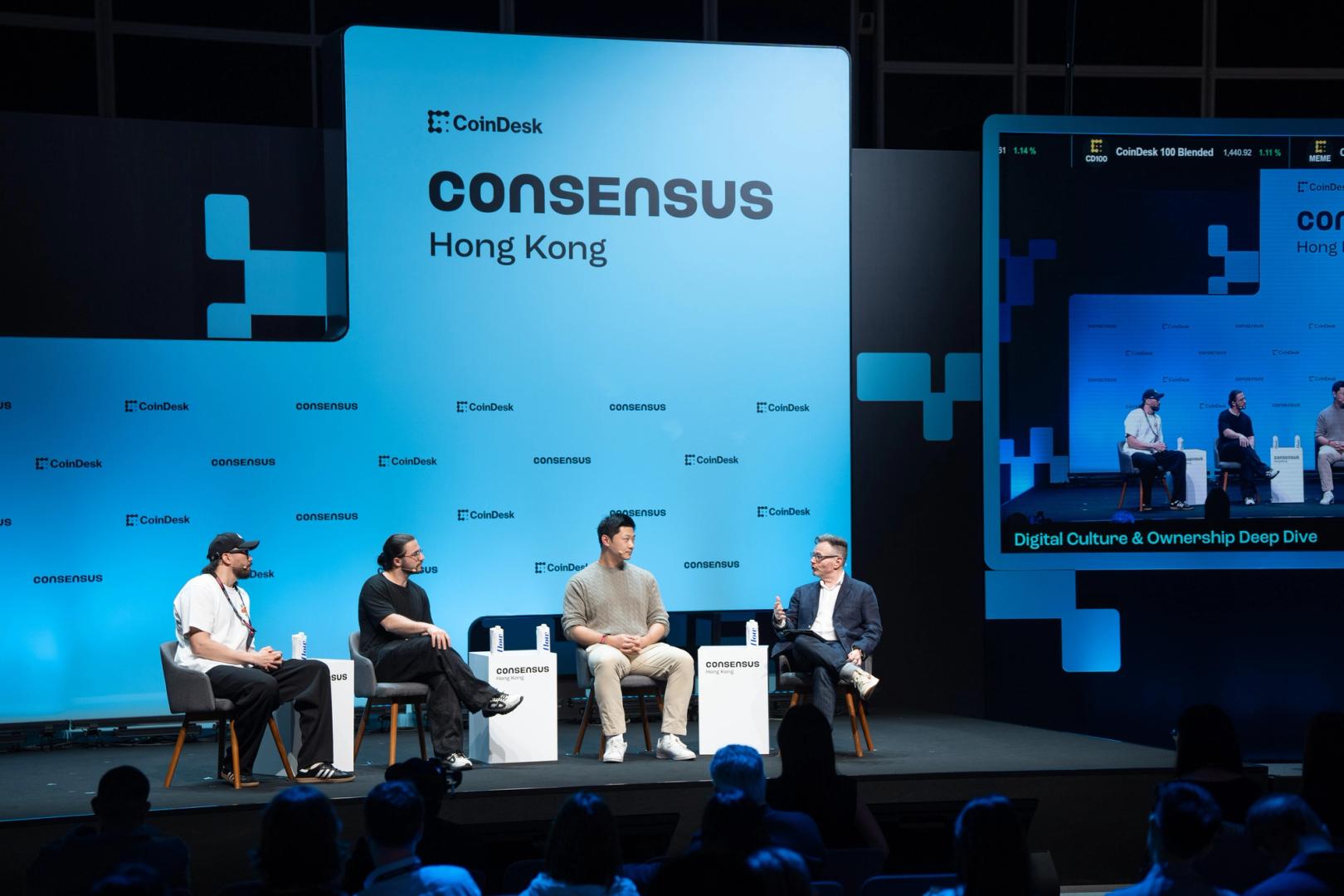
Finance Share Share this article Copy link X icon X (Twitter) LinkedIn Facebook Email Prediction markets vs. insider trading: Founders admit blockchain transparency is the only defense Prediction markets are increasingly being framed not as gambling platforms but as vehicles for monetizing information, though founders acknowledged the line can blur. By Jamie Crawley , AI Boost Feb 15, 2026, 6:00 p.m. Make us preferred on Google Jared Dillinger, CEO of New Prontera Group, Farokh Sarmad, co-founder of DASTAN and Ding X, founder of Predict.fun at Consensus Hong Kong 2026. (CoinDesk) What to know : Founders argue prediction markets monetize information, though user intent varies. Onchain transparency helps, but information asymmetry remains a core challenge. How platforms address manipulation and disclosure will shape institutional acceptance. Prediction markets are increasingly being framed not as gambling platforms but as vehicles for monetizing information, though founders acknowledged the line can blur depending on user intent at Consensus Hong Kong 2026 . Ding X, founder of Predict.fun, argued that prediction markets more closely resemble insurance underwriting or poker than roulette. “It’s more information trading and trying to hedge risk, rather than gambling,” he said, distinguishing skill-based forecasting from games where long-term odds guarantee losses. STORY CONTINUES BELOW Don't miss another story. Subscribe to the Crypto Daybook Americas Newsletter today . See all newsletters Sign me up By signing up, you will receive emails about CoinDesk products and you agree to our terms & conditions and privacy policy . Farokh Sarmad, co-founder of DASTAN, agreed that speculation exists but described the sector as “a multi-trillion dollar asset class in the making.” In his view, prediction markets are simply “financializing information,” allowing participants to monetize insight rather than leaving value solely with media companies or bookmakers. Jared Dillinger, CEO of New Prontera Group and a former professional athlete, said the classification depends largely on how platforms are built and used. “It just depends on the eyes of the beholder,” he said, adding that prediction markets function as “an information asset class,” even if some users approach them like bets. The more pressing challenge is insider trading. High-profile examples—from leaked entertainment setlists to geopolitical developments—have underscored the risk of information asymmetry. “Insider information is not okay,” Sarmad said, noting that blockchain transparency can make suspicious wallets visible. Still, Dillinger acknowledged enforcement limits. “There’s always going to be some loopholes that people will find.” As trading volumes rise and regulators take notice, founders agreed that surveillance tools, clearer disclosure norms and stronger platform governance will determine whether prediction markets mature into a recognized financial category—or remain viewed as speculative betting. Prediction Markets Consensus Hong Kong 2026 AI Disclaimer: Parts of this article were generated with the assistance from AI tools and reviewed by our editorial team to ensure accuracy and adherence to our standards . For more information, see CoinDesk's full AI Policy . More For You Accelerating Convergence Between Traditional and On-Chain Finance in 2026? By CoinDesk Jan 30, 2026 Commissioned by Societe Generale-FORGE Read full story More For You The Genius Act ripple effect: Sui executives say institutional demand has never been higher By Jamie Crawley , AI Boost Feb 14, 2026 Evan Cheng and Stephen Mackintosh said 2025 marked a turning point for institutional adoption, with tokenization and agentic commerce emerging as the next frontier. What to know : Executives cited ETF flows, DAT growth and major trading firms entering crypto. Tokenization and instant settlement could blur the line between traditional and decentralized markets. Low-latency design and composable tooling aim to power AI-driven and tokenized financial use cases. Read full story Latest Crypto News BlackRock's digital assets head: Leverage-driven volatility threatens bitcoin’s narrative 4 hours ago XRP outruns bitcoin, ether after investors piled into the recent crash 4 hours ago Wall Street remains bullish on bitcoin while offshore traders retreat 6 hours ago The Genius Act ripple effect: Sui executives say institutional demand has never been higher Feb 14, 2026 Elon Musk's X to launch crypto and stock trading in ‘couple weeks’ Feb 14, 2026 Galaxy’s Steve Kurz sees ‘great convergence’ driving crypto’s long-term outlook Feb 14, 2026 Top Stories Crypto group counters Wall Street bankers with its own stablecoin principles for bill Feb 13, 2026 Recapping Consensus Hong Kong Feb 13, 2026 Trump-linked Truth Social seeks SEC approval for two crypto ETFs Feb 13, 2026 Wall Street analysts slash Coinbase price targets after Q4 miss — but shares rally Feb 13, 2026 Ethereum Foundation leadership shake-up: Tomasz Stańczak out as co-executive director Feb 13, 2026