Only 5% of companies see AI improving profit, McKinsey China chairman tells Consensus
Analysis
Price Impact
LowMckinsey data indicates only 5% of companies see ai improving profit due to organizational bottlenecks, not technology. this tempers the immediate 'ai revolution' narrative for traditional enterprises, subtly cooling generalized ai hype in crypto but not causing direct significant impact.
Trustworthiness
HighReport from mckinsey's greater china chairman at consensus hong kong, a reputable source and event.
Price Direction
NeutralThe news primarily addresses real-world challenges in traditional ai adoption, not direct crypto market drivers. while it might slightly temper general ai optimism, it doesn't provide a strong catalyst for immediate price change.
Time Effect
LongOrganizational challenges and strategic shifts required for effective ai integration are long-term issues. any indirect impact on crypto markets, particularly ai-focused projects, would unfold over an extended period.
Original Article:
Article Content:
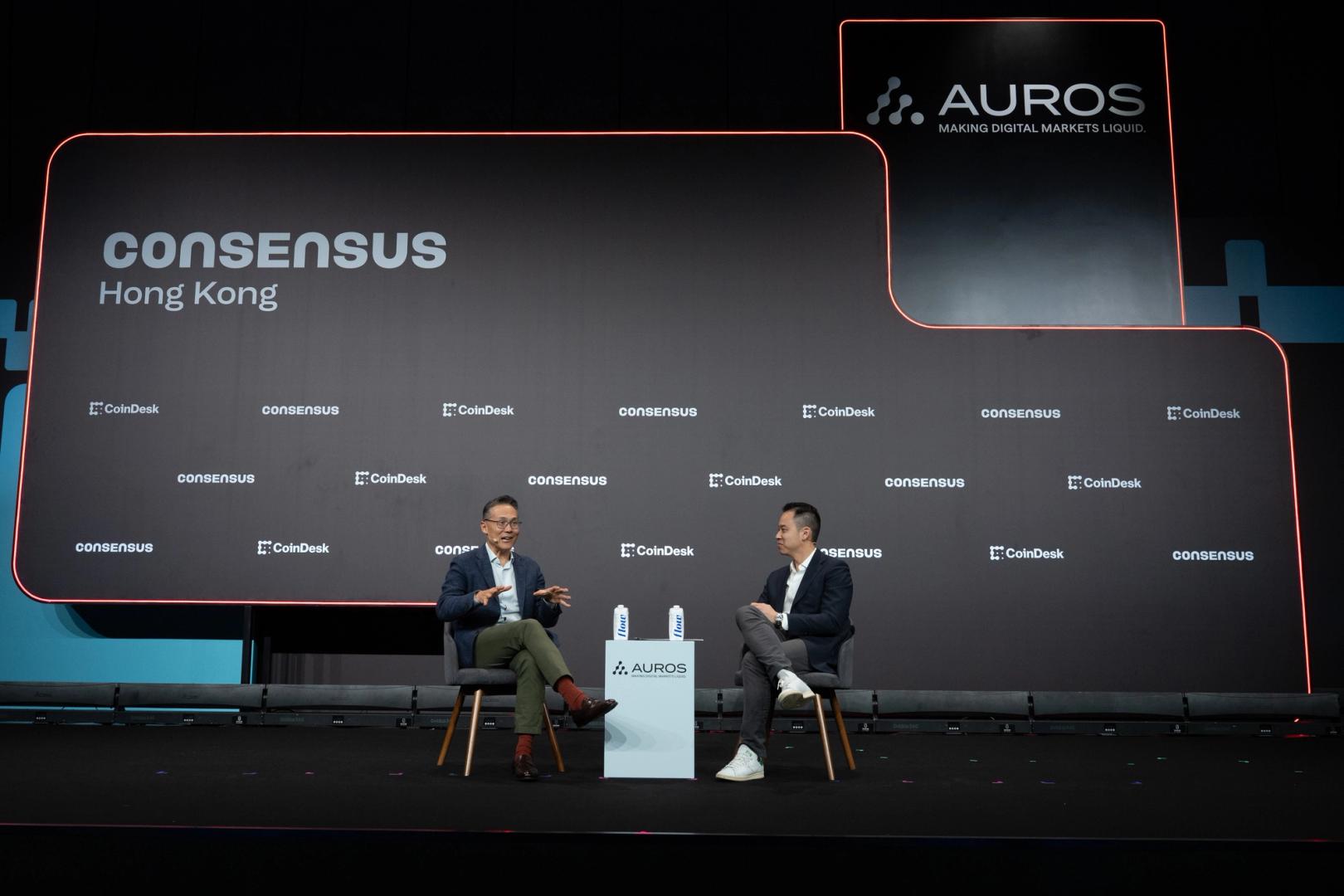
Finance Share Share this article Copy link X icon X (Twitter) LinkedIn Facebook Email Only 5% of companies see AI improving profit, McKinsey China chairman tells Consensus The chairman of Greater China at McKinsey said nearly every company is experimenting with AI, few are rethinking their organizations deeply enough to unlock profit. By Jamie Crawley , AI Boost | Edited by Sheldon Reback Feb 12, 2026, 2:25 p.m. Make us preferred on Google McKinsey Greater China Chairman Joe Ngai at Consensus Hong Kong 2026 (CoinDesk) What to know : While 98% of firms are testing AI, only about 5% report bottom-line gains, McKinsey's Joe Ngai told Consensus Hong Kong on Thursday. Hierarchical structures, not technology, are slowing large-scale transformation. Companies in China are focusing on usage and embodied AI, said Ngai, who predicted a coming “robot dividend.” Nearly every major company in the world is experimenting with artificial intelligence, but almost none are changing meaningfully as a result, McKinsey's chairman of Greater China, Joe Ngai, told Consensus Hong Kong on Thursday. Internal surveys show 98% of corporate executives report implementing some form of AI, Ngai said. But when asked how much of that is deployed at scale, “that number drops significantly" to less than 20%, he said. When it comes to measurable profit impact, it's 5%. STORY CONTINUES BELOW Don't miss another story. Subscribe to the Crypto Daybook Americas Newsletter today . See all newsletters Sign me up By signing up, you will receive emails about CoinDesk products and you agree to our terms & conditions and privacy policy . The bottleneck, Ngai argued, isn’t technical capability, it's organizational design. Modern corporations, he said, are built on “layers of people, hierarchies, managers and reporting.” In an AI-native world, that structure becomes friction. Instead of reimagining business models, most firms are layering AI pilots onto legacy processes, seeking approvals, testing small use cases and protecting reporting lines. “That is actually not where you get the most benefit out of AI,” Ngai said. “The bottleneck of AI implementation is actually people.” From his vantage point in China, Ngai sees a different approach. Chinese companies have spent a decade digitizing operations around mobile and data. As a result, the “receptance … on agentic and AI is far greater,” with less resistance from labor structures and legacy governance. Unlike Western discourse, which often centers on frontier models and artificial general intelligence, China’s focus is pragmatic: “There’s a lot less talk about the models … there’s a lot more talk around usage.” Ngai also highlighted embodied AI, such as robotics, automation and autonomous driving, as a major frontier. Given China’s supply chain scale, he predicts a coming “robot dividend,” arguing the country may soon deploy more robots than humans, offsetting demographic decline and reshaping industrial productivity. Ngai described 2026 as defined by two opposing forces: geopolitical uncertainty and technological acceleration. CEOs are navigating tariffs and fragmentation on one hand, and AI-driven transformation on the other. Yet corporate earnings remain resilient. AI China McKinsey & Company Consensus Hong Kong 2026 robotics AI Disclaimer: Parts of this article were generated with the assistance from AI tools and reviewed by our editorial team to ensure accuracy and adherence to our standards . For more information, see CoinDesk's full AI Policy . Di più per voi Bitcoin layer-2 builders pitch BTCFi as the next institutional unlock Di Margaux Nijkerk , AI Boost | Editor Stephen Alpher 29 minuti fa Leaders from Citrea, Rootstock Labs and BlockSpaceForce argued that bitcoin’s scaling layers are less about throughput and more about turning the asset into a programmable financial base layer. Cosa sapere : Bitcoin layer-2 builders made the case on Thursday that the next phase of crypto’s evolution won’t be about replacing bitcoin as “digital gold,” but making it productive. Speaking at Consensus Hong Kong 2026, leaders from Citrea, Rootstock Labs and investment firm BlockSpaceForce argued that Bitcoin’s scaling layers are less about raw throughput and more about turning the world’s largest cryptocurrency into a programmable financial base layer. Leggi tutta la storia Latest Crypto News CoinDesk 20 performance update: Hedera (HBAR) rises 6.7%, leading index higher 10 minuti fa Bitcoin layer-2 builders pitch BTCFi as the next institutional unlock 29 minuti fa From stablecoins to biotech: Why YZi Labs is betting on things that haven't happened yet 1 ora fa Recapping day 2 of Consensus Hong Kong 1 ora fa Forget $80k: Michael Terpin warns bitcoin could revisit the $40,000s before a real recovery 2 ore fa Crypto bulls ignore 'extreme fear' to push bitcoin higher 2 ore fa Top Stories Bitcoin defies 'extreme fear,' hot jobs report to show signs of resilience 2 ore fa Binance's Richard Teng breaks down the ‘10/10’ nightmare that rocked crypto 5 ore fa UK appoints HSBC for blockchain bond pilot 8 ore fa Charles Hoskinson confirms deal to onboard LayerZero on Cardano 12 ore fa Ark Invest buys Bullish stock for 9th straight day in $11.6 million purchase 3 ore fa AI-powered agents dominate the EasyA x Consensus Hong Kong hackathon 3 ore fa