Bitcoin layer-2 builders pitch BTCFi as the next institutional unlock
Analysis
Price Impact
HighThe pitch for btcfi as the next institutional unlock, transforming bitcoin from just 'digital gold' into a programmable financial base layer, could significantly increase its utility and demand over the long term. this opens up new avenues for lending, borrowing, and defi built directly on bitcoin's security.
Trustworthiness
HighThe information comes from leaders at consensus hong kong 2026, a major industry event, featuring reputable projects like citrea and rootstock labs, and investment firm blockspaceforce. the arguments are well-reasoned and address fundamental challenges and opportunities for bitcoin.
Price Direction
BullishIf bitcoin becomes a 'productive asset' through btcfi, enabling widespread institutional participation in lending, borrowing, and other defi activities directly on its l2s, it will unlock massive capital and significantly increase demand for btc. this shift would fundamentally alter its value proposition.
Time Effect
LongWhile the vision is strong, the article highlights current institutional caution regarding smart contract risk and protocol governance versus regulated centralized solutions. bridging this gap will take time, development, and regulatory clarity before widespread adoption of permissionless btcfi by institutions.
Original Article:
Article Content:
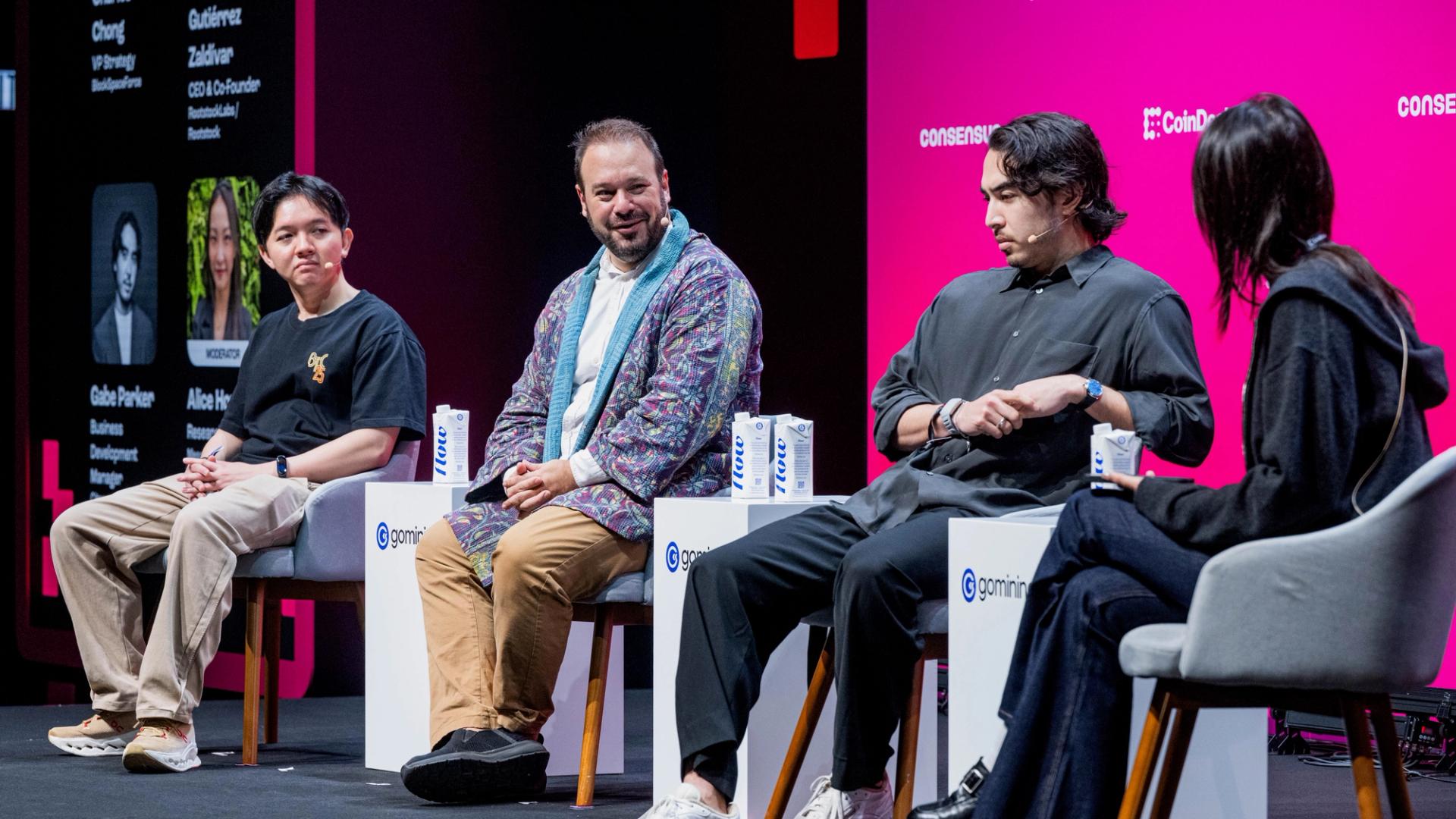
Finance Share Share this article Copy link X icon X (Twitter) LinkedIn Facebook Email Bitcoin layer-2 builders pitch BTCFi as the next institutional unlock Leaders from Citrea, Rootstock Labs and BlockSpaceForce argued that bitcoin’s scaling layers are less about throughput and more about turning the asset into a programmable financial base layer. By Margaux Nijkerk , AI Boost | Edited by Stephen Alpher Feb 12, 2026, 1:57 p.m. Make us preferred on Google Bitcoin layer-2 builders at Consensus Hong Kong 2026 (CoinDesk) What to know : Bitcoin layer-2 builders made the case on Thursday that the next phase of crypto’s evolution won’t be about replacing bitcoin as “digital gold,” but making it productive. Speaking at Consensus Hong Kong 2026, leaders from Citrea, Rootstock Labs and investment firm BlockSpaceForce argued that Bitcoin’s scaling layers are less about raw throughput and more about turning the world’s largest cryptocurrency into a programmable financial base layer. Hong Kong — Bitcoin layer-2 builders made the case on Thursday that the next phase of crypto’s evolution won’t be about replacing bitcoin as “digital gold,” but making it productive. Speaking at Consensus Hong Kong 2026, leaders from Citrea, Rootstock Labs and investment firm BlockSpaceForce argued that Bitcoin’s scaling layers are less about raw throughput and more about turning the world’s largest cryptocurrency into a programmable financial base layer. STORY CONTINUES BELOW Don't miss another story. Subscribe to the Crypto Daybook Americas Newsletter today . See all newsletters Sign me up By signing up, you will receive emails about CoinDesk products and you agree to our terms & conditions and privacy policy . “Most of it — the mission — is just making Bitcoin a productive asset,” said Gabe Parker, head of business development at Citrea, a zk-rollup built on Bitcoin. Bitcoin’s base layer, he noted, was never designed for expressive smart contracts. “It’s about introducing existing narratives like DeFi, lending, borrowing, and adding that stack to Bitcoin…It’s more of a programmability feature than scaling.” Diego Gutierrez Zaldivar, CEO of Rootstock Labs, pointed out that the industry’s obsession with the term “layer two” misses the point. “Layer one is a store of value. Layer two is an economic coordination layer…and layer three is a scaling layer that enables payments,” Gutierrez Zaldivar said. “We should start talking about networks that are economic coordination layers.” Panelists pointed to growing institutional demand for bitcoin-backed lending and yield strategies. “Bitcoin has grown into a macro financial asset that everyone wants to hold,” said Charles Chong of BlockSpaceForce. “The next unlock is to build a financial system around it.” But trust assumptions remain central to the debate. Parker of Citrea criticized the reliance on centralized custodians behind wrapped bitcoin products on Ethereum. “If you look at what secures wrapped bitcoin, it’s just a three-to-five multisig,” he said. “That model is not scalable. If you want to manage hundreds of billions or trillions, you need protocol-based assumptions, not counterparty-based assumptions.” Still, institutions are cautious. “On the one hand, they can work with regulated counterparties and have legal recourse in a centralized manner,” Chong of BlockSpaceForce said. “Or they can deploy in BTCFi permissionless manner, but in that case, you are trusting the protocol governance and assuming smart contract risk. I think with this in mind, a lot of institutions are actually going to pick the former solution today, at its current point.” Gutierrez Zaldivar of Rootstock Labs argued hybrid compliance models may bridge that gap in the interim, but emphasized the long-term vision goes further. “In order for Bitcoin to become relevant for the world, it’s not enough to be a store of value,” he said. For Bitcoin’s scaling advocates, the bet is that even a small portion of bitcoin flowing into decentralized finance could reshape both the network and global markets in the years ahead. Read more: As DATs Face Pressure, Institutions Could Soon Look to BTCFi for Their Next Strategic Shift Consensus Hong Kong 2026 Bitcoin Layer layer 2 AI Disclaimer: Parts of this article were generated with the assistance from AI tools and reviewed by our editorial team to ensure accuracy and adherence to our standards . For more information, see CoinDesk's full AI Policy . More For You From stablecoins to biotech: Why YZi Labs is betting on things that haven't happened yet By Jamie Crawley , AI Boost | Edited by Stephen Alpher 32 minutes ago Ella Zhang of YZi Labs says her firm invests in founders building what doesn’t yet exist, guided by first principles and long-term conviction across AI, biotech and Web3. What to know : YZi Labs backs AI, biotech and Web3 under a thesis of supporting founders building what doesn’t yet exist. Real user demand and product-market fit outweigh trend chasing. Zhang sees stablecoins as crypto’s first true mainstream application, with further infrastructure work still needed. Read full story Latest Crypto News From stablecoins to biotech: Why YZi Labs is betting on things that haven't happened yet 32 minutes ago Recapping day 2 of Consensus Hong Kong 1 hour ago Forget $80k: Michael Terpin warns bitcoin could revisit the $40,000s before a real recovery 1 hour ago Crypto bulls ignore 'extreme fear' to push bitcoin higher 1 hour ago Espresso network launches ESP token with 10% airdrop amid Ethereum layer-2 debate 1 hour ago Bitcoin defies 'extreme fear,' hot jobs report to show signs of resilience 2 hours ago Top Stories Binance's Richard Teng breaks down the ‘10/10’ nightmare that rocked crypto 5 hours ago UK appoints HSBC for blockchain bond pilot 8 hours ago Charles Hoskinson confirms deal to onboard LayerZero on Cardano 11 hours ago Ark Invest buys Bullish stock for 9th straight day in $11.6 million purchase 3 hours ago AI-powered agents dominate the EasyA x Consensus Hong Kong hackathon 2 hours ago Privacy-focused Midnight blockchain to go live next month, says Cardano's Charles Hoskinson 11 hours ago