Forget the bank account: EY warns firms they must own the wallet to keep their customers
Analysis
Price Impact
MedEy, a big four firm, strongly legitimizes blockchain technology and digital wallets as the 'new financial frontier' and 'primary strategic interface' for global finance. this signals increasing institutional adoption and integration of crypto infrastructure into traditional financial services, acting as a significant long-term bullish signal for the overall market and projects focused on tokenization and wallet solutions.
Trustworthiness
HighEy is a globally recognized big four consultancy firm with a dedicated digital assets consulting business for over a decade, providing credible analysis and deep insights into financial market trends.
Price Direction
BullishThe endorsement from ey suggests a strong future for tokenized assets and onchain finance. increased institutional participation and the view that 'whoever owns the wallet will win the client relationship' points to significant capital inflow and adoption of crypto-native infrastructure, benefiting the broader market and foundational assets.
Time Effect
LongEy's analysis describes a fundamental strategic shift for the 'next generation of global finance' and an 'evolving landscape' that will redefine client relationships and financial infrastructure over the long term, rather than triggering immediate price movements.
Original Article:
Article Content:
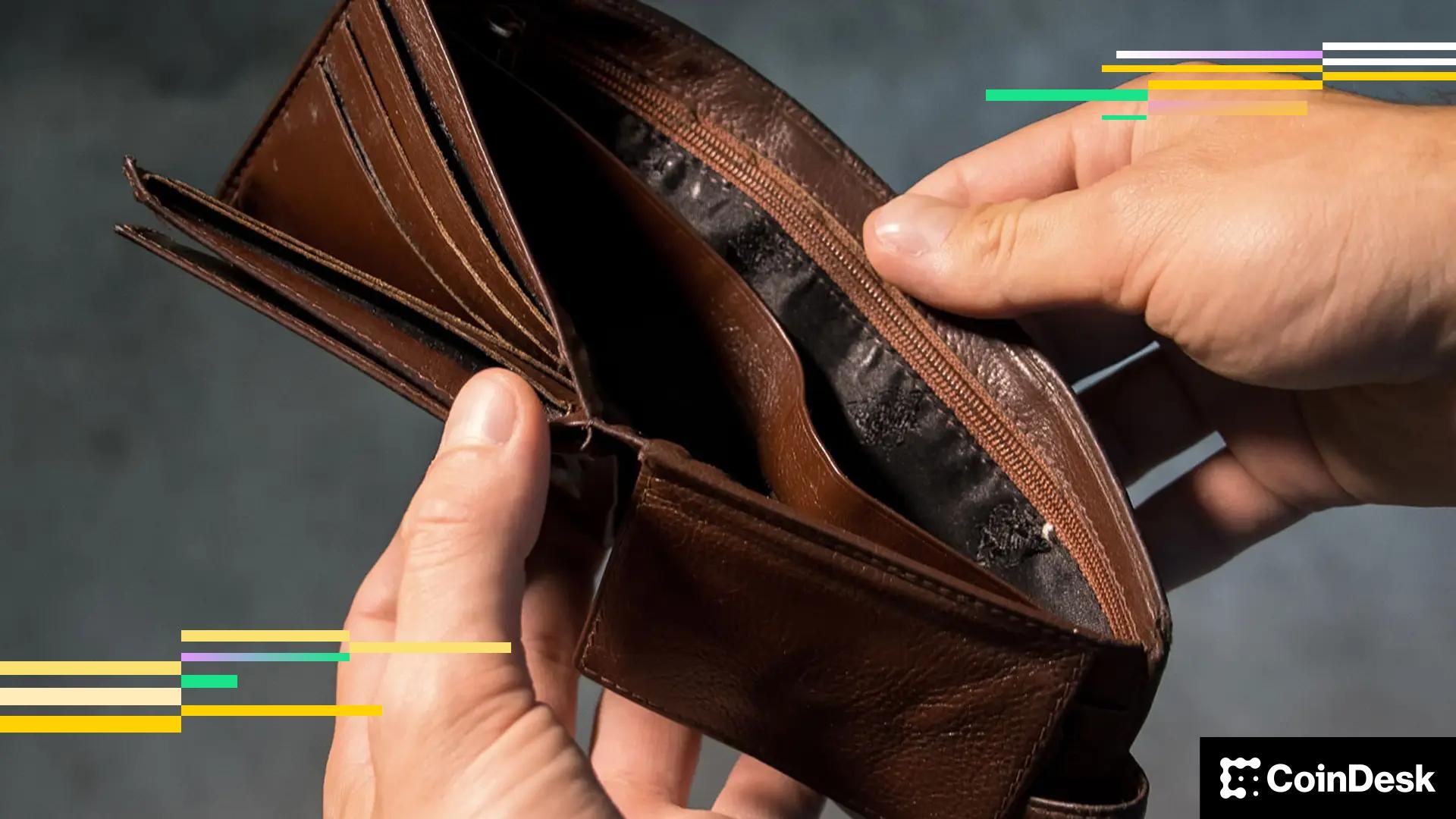
Finance Share Share this article Copy link X icon X (Twitter) LinkedIn Facebook Email Forget the bank account: EY warns firms they must own the wallet to keep their customers EY Digital Assets leaders Mark Nichols and Rebecca Carvatt argue that the wallet is no longer just a crypto tool, but the primary strategic interface for the next generation of global finance. By Will Canny , AI Boost | Edited by Jamie Crawley Feb 7, 2026, 2:00 p.m. Make us preferred on Google EY predicts the battle for digital access is the new financial frontier. (Pixabay, modified by CoinDesk) What to know : EY's digital assets leaders say wallet infrastructure, not just tokenization, will define market winners. Tokenization is already reshaping financial market infrastructure, but real disruption lies in capital efficiency and programmable transaction chains. With regulation catching up and wallet adoption accelerating, EY sees a strategic imperative for financial firms to act now. In the evolving landscape of digital finance, Big Four consultancy firm EY has zeroed in on what it believes is the next defining frontier: wallets. Wallets are fast becoming the critical interface for the next era of financial services, not just tools for holding cryptocurrency, according to Mark Nichols, principal at EY. STORY CONTINUES BELOW Don't miss another story. Subscribe to the Crypto Daybook Americas Newsletter today . See all newsletters Sign me up By signing up, you will receive emails about CoinDesk products and you agree to our terms & conditions and privacy policy . “The wallet is the strategy,” Nichols who co-leads the firm’s digital assets consulting business, told CoinDesk in an interview. “Who owns the wallet, who provisions the wallet, will win the client relationship.” Nichols and his West Coast counterpart, Rebecca Carvatt, view wallets as more than infrastructure. They’re the gateway to storing, moving and managing tokenized value in a world where financial instruments, from payments to private credit, are increasingly moving onchain, he said. Not just custody: Wallets as the hub of tokenized finance The vision is expansive. Far from being a niche utility for crypto enthusiasts, wallets are becoming the connective tissue of a broader tokenized financial system. Wallets will soon be indispensable for retail investors, asset managers, treasurers and even commercial banks, according to Carvatt, co-leader of EY's digital assets consulting business. “They’re going to be the access point for everything — payments, tokenized assets and stablecoins,” she said. EY’s perspective positions wallets as the new bank accounts of the future, with services tailored not just to individuals, but to corporates and institutional investors who require sophisticated integration with risk systems, compliance tools and real-time capital flows. The implication is clear: whoever controls the wallet controls the relationship. For financial institutions already losing ground to crypto-native platforms, the shift is existential. Beyond liquidity: The real promise of tokenization The broader shift to tokenization is often framed as a play for liquidity, but EY believes that narrative undersells the true impact. “It’s not just about liquidity," Nichols says. “Liquidity isn’t the be-all and end-all, it's about the utility that onchain finance enables.” What EY sees instead is the emergence of blockchain as a real-time infrastructure for financial markets, one that allows for programmable transaction chains, and fundamentally reshapes how capital is managed. Tokenization enables atomic settlement, sure, but its real power lies in margin optimization and operational efficiency. Nichols points to scenarios where firms can use stablecoins or tokenized assets to meet margin calls more frequently and precisely. That, in turn, reduces initial margin requirements, freeing up capital for investment. “It’s about better risk alignment and real-time capital management,” he says. “And the wallet becomes the gateway to making that possible.” A decade in the space: EY’s deep crypto bench While some firms are racing to catch up, EY has been building in the digital asset space for more than 12 years. Its early investments in crypto-native audit and compliance practices now span thousands of professionals, supporting everything from hedge fund tax returns to tokenized M&A advisory. “We’ve worked with every client profile - large banks, asset managers, exchanges, digital natives, infrastructure providers,” Nichols says. “and have been working in the digital asset ecosystem for over a decade." EY’s hedge fund audit business was one of the earliest to support crypto, and its advisory team has helped firms prepare for public listings and complex regulatory environments. The firm has developed bespoke services for wallet monitoring, onchain compliance, and token-native tax reporting. It also continues to advise traditional financial institutions on how to design safe, compliant digital asset strategies, particularly as they begin to develop or integrate wallet infrastructure. Wallets for everyone: A segment-by-segment view EY is clear that wallet needs are not monolithic. Consumers want seamless UX and secure access to payments and crypto. Corporates need integration with treasury functions and regulatory compliance across jurisdictions. Institutional clients demand secure custody, connectivity to decentralized finance (DeFi) and staking products, and embedded risk tooling. Self-custody, EY argues, won’t be mainstream. The average user or institution doesn’t want to manage their own private keys. Instead, trusted wallet providers will emerge, banks, fintechs, or specialized custodians; each tailoring their offering based on the segment they serve. Provisioning wallets, then, becomes a strategic imperative. Whether firms choose to build their own, acquire providers, or form partnerships, the wallet is the new front door to financial services. Firms that act now will reduce future customer acquisition costs and own a more defensible position in the digital asset ecosystem. Regulation: A catalyst, not a roadblock One of the most persistent beliefs about tokenization is that regulation is a blocker. But EY’s leaders disagree. “We already have the regulatory framework in core markets, and alongside the broader industry, the passage of market structure legislation will allow for remaining issues to be ironed out," Nichols says. “A security is a security, a commodity is a commodity. Blockchain is technology.” In the U.S., the GENIUS Act and existing Securities and Exchange Commission (SEC) exemptions provide pathways for compliant tokenized products. Globally, jurisdictions are racing to attract digital asset innovation with evolving licensing regimes. While harmonization is still in progress, the momentum is unmistakable. EY sees this moment as a call to maturity, an inflection point where infrastructure is catching up to vision. “We’re past the experimentation phase,” Carvatt says. “Now it’s about safe, scalable implementation.” Rethinking asset management from the ground up Perhaps nowhere is the impact of tokenization and wallet infrastructure more profound than in asset management. A typical fund currently requires a distribution network, an investment team, a custodian, a fund administrator, and regulatory reporting channels. With tokenization and smart contracts, much of that stack becomes programmable, and potentially obsolete. “Asset managers just want to build great portfolios,” Nichols says. “Blockchain lets them do that without all the legacy friction.” By tokenizing fund underliers and embedding logic into smart contracts, asset managers can automate functions like distribution, compliance, and reporting. This opens the door to lower fees, broader investor access, and new types of products, particularly in private credit and alternatives, where cost has historically been a barrier. “From the unbanked to the unbrokered, we’re seeing more people gain exposure to assets that were previously out of reach,” Carvatt says. “That’s powerful.” The future of finance is onchain Whether for crypto, payments, or tokenized assets, wallets will be the gateway to a new financial reality. Firms that ignore this will risk irrelevance. Those that embrace it will own the infrastructure, and the customer relationship, at the heart of digital finance. “The future of finance is on-chain,” Nichols says. “And the wallet is at its center.” Read more: R3 bets on Solana to bring institutional yield onchain EY Exclusive Wallets Tokenization AI Disclaimer: Parts of this article were generated with the assistance from AI tools and reviewed by our editorial team to ensure accuracy and adherence to our standards . For more information, see CoinDesk's full AI Policy .