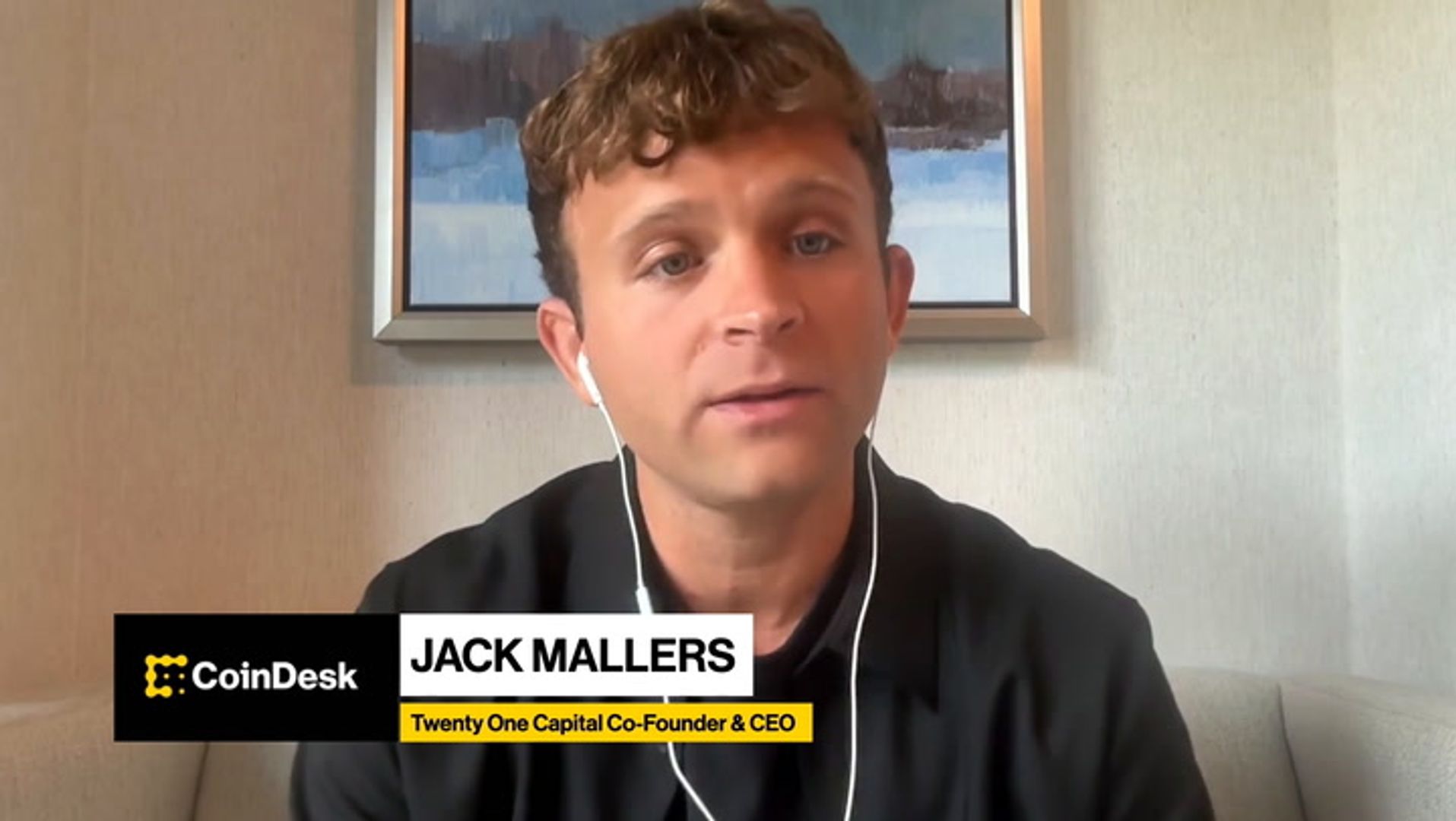
JPMorgan and Strike CEO Jack Mallers Go Silent, Leave 'Debanking' Questions Unanswered
Analysis
Price Impact
MedJpmorgan's debanking of strike ceo jack mallers, particularly without clear explanation and coinciding with the launch of jpmcoin, raises concerns about 'operation chokepoint 2.0' and potential anti-competitive practices by traditional financial institutions against the crypto industry. this adds regulatory uncertainty.
Trustworthiness
HighThe article is from coindesk, a reputable crypto news source. it quotes multiple stakeholders including mallers' team, jpmorgan sources, and various industry figures/politicians, providing a balanced, albeit unresolved, account of the events.
Price Direction
BearishConcerns about traditional banks actively debanking prominent crypto figures or companies, especially under opaque circumstances, can increase fud (fear, uncertainty, doubt) in the market. this suggests potential hurdles for crypto businesses interacting with traditional finance, which is generally a bearish signal for overall market sentiment, particularly for bitcoin given strike's focus.
Time Effect
LongIssues related to 'debanking' and regulatory pressure from major financial institutions like jpmorgan tend to have a prolonged psychological and structural impact on the crypto market. such events can influence future policy, banking relationships, and institutional adoption over an extended period, rather than just causing a short-term blip.
Original Article:
Article Content:
Finance Share Share this article Copy link X icon X (Twitter) LinkedIn Facebook Email JPMorgan and Strike CEO Jack Mallers Go Silent, Leave 'Debanking' Questions Unanswered For now, Jack Mallers decided to not comment any further and JPMorgan declined to explain why it debanked the CEO of a company very similar to newly launched JPM Coin. By Olivier Acuna | Edited by Sheldon Reback , Aoyon Ashraf Dec 1, 2025, 5:24 p.m. Strike CEO Jack Mallers stirred concerns over the return of debanking. (CoinDesk) What to know : Jack Mallers, CEO of Strike, accused JPMorgan of closing his accounts without explanation, sparking a viral reaction in the crypto community. The closure has raised questions of anti-competitive motives, coinciding with JPMorgan's launch of a similar payment token, JPMCoin. Both parties have remained largely silent. JPMC cites confidentiality rules under the Bank Secrecy Act as a reason for not disclosing details. When a Wall Street banking giant and a crypto CEO start a public fight over debanking, the world takes notice and the back-and-forth gets messy. Jack Mallers, CEO of crypto payments company Strike, dropped a social media bombshell on Nov. 23, saying JPMorgan closed all his accounts without cause. STORY CONTINUES BELOW Don't miss another story. Subscribe to the Crypto Daybook Americas Newsletter today . See all newsletters Sign me up By signing up, you will receive emails about CoinDesk products and you agree to our terms of use and privacy policy . “Last month (Sept. 2), J.P. Morgan Chase threw me out of the bank,” Mallers said in a post on X. “It was bizarre [...] Every time I asked them why, they said the same thing: ‘We aren’t allowed to tell you.’” The post went viral and received reactions from personalities including Tether CEO Paolo Ardoino who said : “I think it is for the best,” and Grant Cardone, a multibillionaire real estate mogul and equity fund manager, who, in an X post , called for a boycott and announced he transferred all his assets out of JPMorgan. Bo Hines, a former digital assets adviser to President Donald Trump and now a strategic adviser to Tether, r eminded the bank on X “you guys know Operation Chokepoint is over right? Just checking.” After the crypto-friendly president took office, regulators reversed many Biden-era directives against crypto entities. “Operation Chokepoint 2.0 regrettably lives on," said Senator Cynthia Lummis . "Policies like JP Morgan’s undermine confidence in traditional banks and send the digital asset industry overseas.” While a banking giant debanking a company isn't unusual and often gets unreported, this one hit a nerve with the crypto community, given Mallers' and Strike's positions in the industry and previous U.S. government crackdowns. “Although big banks freeze accounts frequently, it's difficult to ignore the timing of Mallers’ JPMorgan debanking,” said Timothy O’Regan, an emerging-market fund expert and IronWeave founder. The debanking letter Mallers sat on the debanking letter from JPMorgan Chase (JPMC) for two months before exposing it. In it, the bank notified the founder of Strike, a bitcoin payment app with an estimated 800,000 monthly active users, it closed his accounts due to concerning activity. “We have decided to close your accounts,” Chase’s letter to Mallers reads, which led many to believe the closure related to anti-money laundering (AML) and know-your-customer (KYC) concerns JPMorgan Chase might have linked to Strike users. “During the course of ongoing monitoring, we identified concerning activity on your account or an account that you are associated with. Under the Bank Secrecy Act and other regulations, financial institutions are obligated to periodically review our customers' relationships,” the letter adds. CoinDesk, seeking more clarity, contacted both parties for comments and to get to the bottom of this debanking saga. Patricia Wexler, a JPMorgan spokesperson, declined to comment. However, a source familiar with JPMorgan Chase told Coindesk that “JPMorgan banks crypto companies across the industry, provides payments services, and serves as a financial adviser.” While the debate rages, Mallers decided to lay the saga to rest, at least for now. Strike's press team declined to comment on the matter. “We aren’t commenting any further here,” said Alex Modiano, a spokesperson for Mallers. Randall Woods, another lead Strike press officer, responded in the same way What does this all mean? While both parties remain quiet, a source familiar with the banking giant pointed to secrecy rules and other issues by way of explanation. They also pointed to a Cato Institute X post published in connection with the topic, which says, "Reforming the confidentiality around the Bank Secrecy Act would go a long way toward achieving more transparency on debanking." A question of timing Under the BSA, all banks are compelled to remain silent because FinCEN (Financial Crimes Enforcement Network) guidance prohibits Suspicious Activity Report (SAR) disclosures to avoid tipping off suspects in potential money laundering or other illicit finance investigations. As for the timing, IronWeave's O'Regan hinted that the sudden closure of Mallers’ accounts could be related to JPMorgan's recent rollout of JPMCoin, which is similar to Strike. They both move money extremely quickly, although one, JPMCoin, is exclusive and controlled by the bank, while the other, Strike, is open to the broader public. Debanking a potential future competitor, just weeks after JPMorgan rolled out its own token, raised questions of potential conflict of interest, said O'Regan, who claimed that large U.S. banks are silently debanking crypto executives using the Banking Secrecy Act (BSA) as an excuse to provide no explanations. “Debanking the CEO of a major bitcoin finance company as you roll out quasi-computing products could easily be perceived as casting a shadow over a competitor,” he added. Jack Mallers JPMorgan Chase Operation Chokepoint Donald Trump More For You Protocol Research: GoPlus Security By CoinDesk Research Nov 14, 2025 Commissioned by GoPlus What to know : As of October 2025, GoPlus has generated $4.7M in total revenue across its product lines. The GoPlus App is the primary revenue driver, contributing $2.5M (approx. 53%), followed by the SafeToken Protocol at $1.7M. GoPlus Intelligence's Token Security API averaged 717 million monthly calls year-to-date in 2025 , with a peak of nearly 1 billion calls in February 2025. Total blockchain-level requests, including transaction simulations, averaged an additional 350 million per month. Since its January 2025 launch , the $GPS token has registered over $5B in total spot volume and $10B in derivatives volume in 2025. Monthly spot volume peaked in March 2025 at over $1.1B , while derivatives volume peaked the same month at over $4B. View Full Report More For You Tom Lee's BitMine Acquires 97K ETH, Eyeing Fusaka Upgrade, Fed Policy as Positive Catalysts By Krisztian Sandor , AI Boost | Edited by Stephen Alpher 3 hours ago The firm increased the pace of purchases from the previous week despite sitting on large unrealized losses on its ether bet. What to know : BitMine Immersion Technologies purchased 96,798 ETH last week, increasing its total holdings to 3.73 million tokens. Despite sitting on large unrealized losses, BitMine remained one of the few firms continuing to buy, while others have halted or sold digital assets. Tom Lee cited Ethereum's upcoming Fusaka upgrade and potential Federal Reserve policy changes as reasons for increasing the pace of ETH purchases. Read full story Latest Crypto News U.S. House Lawmakers Detail Grievances Over Government's 'Choke Point 2.0' 12 minutes ago Hedera Tumbles 10% to Crucial Support on Heavy Volume 15 minutes ago Chainlink's LINK Slides 11% as Technical Breakdown Overshadows ETF Launch News 26 minutes ago Bitcoin Mining Profitability Fell for Fourth Consecutive Month in November: JPMorgan 41 minutes ago ICP Slides as Breakdown Below $4.00 Triggers Elevated Volatility 57 minutes ago BONK Slides 9% as Technical Breakdown Overshadows Swiss ETP Debut 59 minutes ago Top Stories Digital Asset Treasuries Lead Crypto Stock Sell-Off as Bitcoin Falls to $84K 1 hour ago Strategy Establishes $1.44B Cash Reserve, Slashes 2025 Profit, BTC Yield Targets 3 hours ago U.S. House Lawmakers Detail Grievances Over Government's 'Choke Point 2.0' 12 minutes ago European Authorities Seize $1.51B Bitcoin-Mixing Service Cryptomixer 1 hour ago Tom Lee's BitMine Acquires 97K ETH, Eyeing Fusaka Upgrade, Fed Policy as Positive Catalysts 3 hours ago Crypto Markets Today: Hawkish BOJ Comments Spur Sharp BTC Downturn 4 hours ago