Crypto and the Fed: State of Crypto
Analysis
Price Impact
MedThe news involves potential regulatory integration and policy updates concerning digital assets in the us. while not directly impacting specific coin prices immediately, it suggests a path towards clearer regulatory frameworks, which could foster greater institutional adoption and market stability in the long term. the mention of the bank secrecy act and potential for crypto firms to get caught up could create short-term uncertainty for some projects.
Trustworthiness
HighPrice Direction
NeutralThe news presents a mixed outlook. on one hand, regulatory clarity and integration efforts could be bullish for the crypto market overall. on the other hand, the focus on bank secrecy act regulations and potential oversight could introduce bearish sentiment, especially for privacy-focused coins or those with less transparent operations. the senate's legislative timeline also adds uncertainty.
Time Effect
LongThe described events are policy proposals and executive orders, which indicate a direction for future regulation and integration. the actual impact on crypto prices will likely unfold over months and years as these policies are implemented and interpreted.
Original Article:
Article Content:
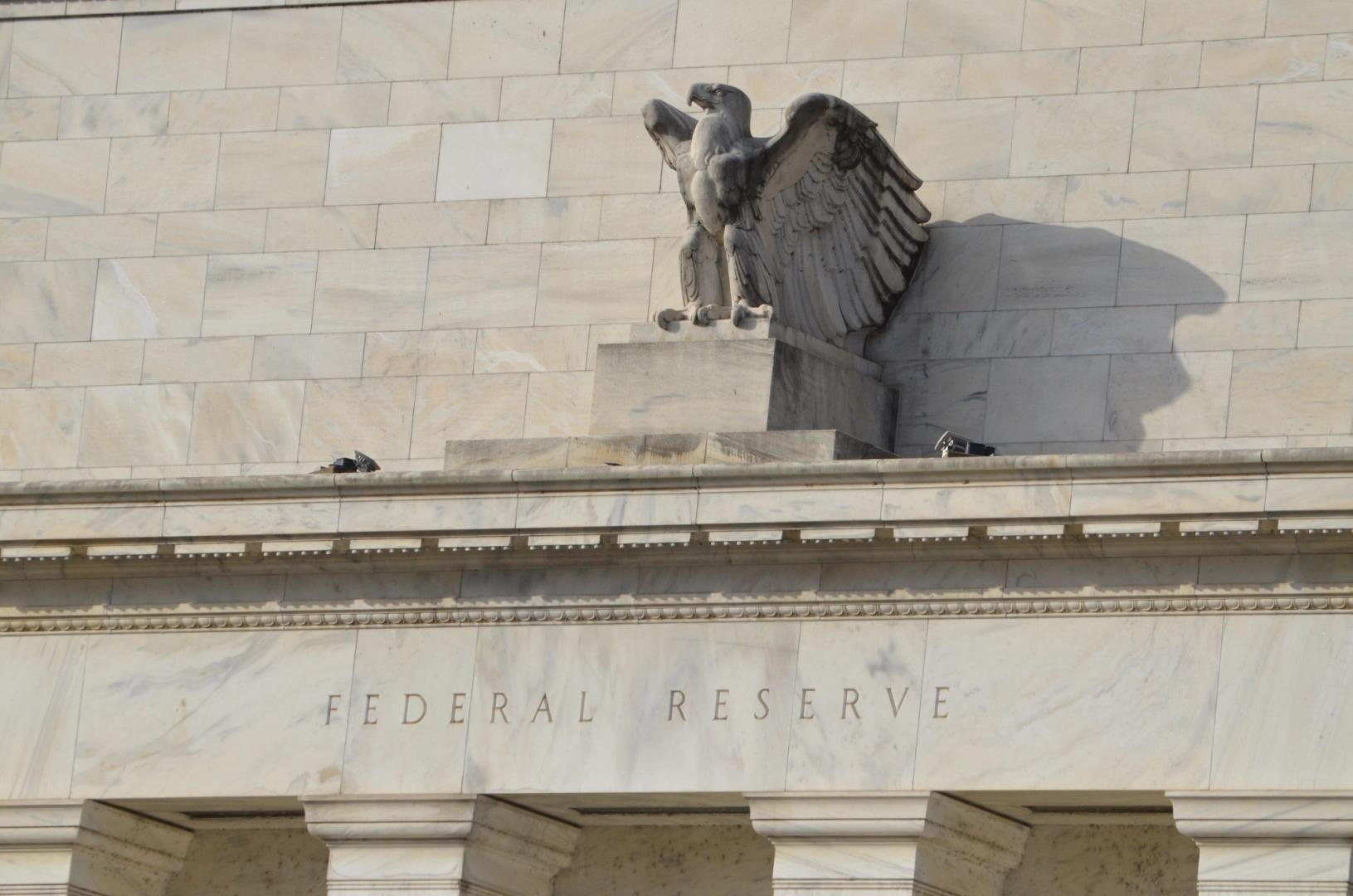
Policy Share Share this article Copy link X icon X (Twitter) LinkedIn Facebook Email Crypto and the Fed: State of Crypto This past week saw incremental, but potentially important steps. By Nikhilesh De May 24, 2026, 6:30 p.m. 4 min read Make preferred on U.S. Federal Reserve headquarters in Washington (Jesse Hamilton/CoinDesk) The Federal Reserve published the latest version of its proposal to create a "skinny" master account, updating the proposal first published last December. In the same week, President Donald Trump signed an executive order directing the greater integration of digital assets with existing payment networks. You’re reading State of Crypto, a CoinDesk newsletter looking at the intersection of cryptocurrency and government. Click here to sign up for future editions. Skinny charter The narrative U.S. President Donald Trump signed two executive orders this past Tuesday. One directed the broader government to update existing regulations to better integrate crypto into payment systems, while the other directed the Treasury Department and regulators to strengthen Bank Secrecy Act regulations. The next day, the Federal Reserve Board published its updated proposal for a skinny master account, laying out more detail about its approach to granting crypto firms access to its payment rails. Why it matters The crypto industry's integration with the broader federal payments system is certainly a goal for the industry at large. Last week's proposals may bring that a step closer. Breaking it down The Federal Reserve's proposal on Wednesday updates its skinny master account request for information first published in December 2025, laying out how the central bank envisions granting fintech and crypto firms access to its payment rails without requiring them to be full fledged, Office of the Comptroller of the Currency-chartered banks. The fintech-focused order directed federal regulators to review their existing policies to evaluate how they regulate financial institutions and identify rules that might block fintech firms from partnering with regulated entities. The order also directed the Fed to review how it handles uninsured depository institutions and their access to payment accounts. Part of that review includes having the Federal Reserve member banks evaluate if they can independently grant payment accounts to entities. The Fed cannot necessarily do all of this on its own; Congress may need to pass legislation further detailing what types of entities may be qualified for an account. The BSA-focused order directs the U.S. Treasury Department and regulators to issue guidance to banks and other entities. "My Administration will not tolerate national security and public safety risks caused by illicit cross-border financial activity, nor will it permit risks to our financial system posed by the extension of credit or financial services to the inadmissible and removable alien population," Trump's order said. This would include an advisory that notes "payroll tax evasion," shell companies and "the strategic use of unregistered money services businesses, third-party payment processors, or peer-to-peer platforms to facilitate 'off-the-books' wage payments intended to bypass Bank Secrecy Act reporting thresholds or tax obligations," among other types of entities. While the order did not explicitly mention cryptocurrency or decentralized finance trading platforms, they could get caught up in any ultimate guidance, said Nicholas Anthony, a research fellow at the Cato Institute. The next question is what might be in the guidance and advisory. "Right now it's in the hands of the Treasury, and the Treasury is able to apply it not only however it sees fit, but also to whoever it sees fit, because of the broader power that the Treasury has under the Bank Secrecy Act," he said. Senate shenanigans The Senate Banking Committee voted to advance the Clarity Act just over a week ago. The expectation was the overall Senate might get to this sometime in the next month, to sort out ethics and other outstanding issues and then vote on whether to send the bill to the House of Representatives. That timeline took a bit of a hit Thursday, when the Senate left town for the Memorial Day recess without voting on a reconciliation bill to fund the Department of Homeland Security, among other things. The issue is this: There's really only so much time to get stuff done on the Senate floor. There are 19 working days in June and 15 in July. There's another five in August and then everyone's gone for the rest of the summer. In that time, the Senate has to sort through reconciliation, a renewal of the Foreign Intelligence Surveillance Act (which will expire in mid-June) and possibly a housing bill. Adding to the tension is the reason why the Senate left town. President Donald Trump's administration wanted $1 billion for his planned East Wing ballroom and more recently another $1.8 billion for a weaponization fund, which members of both parties have referred to as a "slush fund." The Senate had already dropped the ballroom funding from the bill, but the other $1.8 billion appeared to be too much to negotiate this week. Negotiations over these issues — if there isn't any backroom dealing through the recess — can draw out the negotiation process, further limiting floor time for Clarity. And of course, there's still the ethics provision itself in the market structure bill. The White House hasn't yet indicated what exactly it might accept, so that's another negotiation to watch out for. This week This week The House and Senate are on recess this week. If you’ve got thoughts or questions on what I should discuss next week or any other feedback you’d like to share, feel free to email me at [email protected] or find me on Bluesky @nikhileshde.bsky.social . You can also join the group conversation on Telegram . See ya’ll next week! Newsletters State of Crypto More For You Clarity Act could spark a boom in crypto ‘yield-as-a-service’ By Will Canny , AI Boost | Edited by Nikhilesh De May 23, 2026 The bill’s restrictions on yield-bearing crypto products may push the industry away from passive "hold-to-earn" models and toward AI-driven, compliant yield infrastructure, according to STBL Chief Commercial Officer Joe Vollono. What to know : Proposed rules could force crypto firms to shift from passive yield to active, compliant capital strategies. STBL's Chief Commercial Officer Joe Vollono said AI-driven treasury, lending and collateral tools could become crypto’s next major infrastructure layer. Banks worried about deposit flight may ultimately become participants in the stablecoin economy rather... Read full story Latest Crypto News A massive $1 trillion hidden market is waiting to be unlocked in bitcoin, says new report 3 hours ago AI is speeding up the quantum threat to crypto, security experts warn 4 hours ago Crypto rails are becoming the default payment layer for AI agents, report says 5 hours ago Bitcoin heads higher as President Trump announces Iran peace agreement 21 hours ago Bitcoin is ready to beat stocks and bonds again after underperformance against Wall Street 23 hours ago Crypto trader sees Hyperliquid, AI tokens leading next altcoin rally May 23, 2026 Top Stories Clarity Act could spark a boom in crypto ‘yield-as-a-service’ May 23, 2026 SEC Commissioner Peirce counters views that crypto rule will foster synthetic tokens May 22, 2026 Robinhood Crypto COO Tanya Denisova is leaving company amid revenue slowdown May 22, 2026 F2Pool founder who controls 11% of bitcoin's hashrate to lead first SpaceX mission to Mars May 22, 2026 Why Minnesota is empowering local banks to fight Wall Street for crypto revenue May 22, 2026 Trump Media moved but 'did not sell' $205 million in bitcoin amid rising losses on crypto bets May 22, 2026